The History of Beer in California
Beer Pioneers: Brewers, Distributors, and 49ers
The 49ers rushed into California with an exuberant sense of adventure, boundless dreams of quick riches — and an enduring thirst for beer.
The earliest business enterprise devoted to producing beer to quench that thirst was William Bull’s Empire Brewery, established in San Francisco in 1849. Other enterprises catering to beer drinkers from various European nations quickly multiplied in gold rush communities. J. D. Borthwick, an early visitor to San Francisco, described saloons specializing in ale for discerning British customers and "lager bier" cellars which drew a boisterous German clientele.
Many of the earliest breweries in the Mother Lode were founded by German immigrants. For example, Ferdinand Bosch in 1853 began making Downieville Beer, a 7% brew that was sold in Sierra County for 60 years.
About the same time that Bosch went into business in Downieville, a competitor, Laurence Nessler, opened the Sierra Brewery. When the Sierra Brewery was destroyed by fire in the 1870s, Nessler bought the Monte Cristo Brewery, established in the 1860s. In a 1933 newspaper interview, Nessler’s son, Otto, recalled that during its early years the Monte Cristo Brewery produced 700 gallons of beer per week. Most of it was marketed in mining camps where a 10-gallon keg sold for $12; the price eventually dropped to $5 a keg.
Competition among the brewers in the rowdy early days could be friendly — or utterly cutthroat: In 1853, sales from the Sutterville Brewery in Sacramento collapsed after rivals circulated rumors that the company was using slough water to brew its beer.
As rickety gold rush camps evolved into stable communities in the 1850s and 1860s, persevering immigrants continued to open new breweries in northern California towns and cities, creating a market for hop and barley growers.
The Sacramento area, where Dan Flint and other farmers planted the first hop vines on Riverside Road in 1865, offered a particularly good climate for this key ingredient of beer. Hop farms and vineyards lined the main roads throughout the Central Valley.
Most California communities had one or more small breweries serving their needs. For example, Charles Lyons in 1865 established the Washington Brewing & Malting Company in Oakland, which later merged with several other East Bay breweries and became the Golden West Brewing Company.
In the 1860s, John Wieland, with access to locally-grown hops, opened a brewery in Sacramento that produced "steam" beer, and he continued to sell a "peculiar heavy beer" of that variety into the 1890s. Although he also produced Wieland’s Extra Pale Ale, steam beer remained California’s favorite brew throughout the 1800s.
Filling the air with its fragrance, steam beer was produced in immense copper vats and kettles and was an innovation of shrewd 49er brewers who were forced to make beer without refrigeration in California’s warm climate. The so-called "steam" was carbon dioxide that built up in fermentation barrels. According to customers who acquired a taste for it, the beer was best served within two weeks when it was sharp and gassy. Distributors who delayed delivering barrels of steam beer faced complaints by saloonkeepers who claimed the product had gone "sour."
Early Beer Distribution:
A Pack Mule and a Prayer
Mules were the engines of the early supply distribution network into the gold camps. Early California beer distributors strapped kegs of beer to the backs of mules and, where improved trails existed, loaded the kegs into carts and wagons pulled by horses or mules. William Brewer, an early botanist, said that his mule train loaded with sensitive scientific instruments "surmounted obstacles I would have thought entirely impassable. It was perfectly astonishing how the mules would go. We would get off, tie up the reins, lead them up to a rock; they would eye it well, and coolly, with a spring or two, mount rocks nearly perpendicular, six to 10 feet high, if they could only get a foothold."
Fueling this enterprise was not very expensive. Bayard Taylor, a news reporter sent to California by Horace Greeley, said the donkey he hitched to a cart carrying barrels of water in 1849 "had many curious ways about him; the most remarkable was his capacity for digestion. Cloth, canvas and shavings seemed as much his natural food as hay or green grass." Bayard claimed his donkey once chewed the hat and hair off a scruffy man who unfortunately fell asleep near the animal after indulging "rather freely in bad brandy."
Rise of the Saloon and the Monopolistic "Tied-House"
With the completion of the transcontinental railroad in 1869, enterprising brewers had a new means of transporting beer. They could quickly ship it by rail, storing it in depots along the tracks where it was picked up by distributors. Brewers began staking out exclusive saloon franchises along the railroad tracks leading west. Prohibition advocates pointed to these "tied-houses" as evidence of corruption in the industry. Controversy over the "tied-house," a retail establishment financially controlled by a brewer, gave rise to the popular expression, "I own you lock, stock and barrel." In a "tied-house" arrangement, a brewer advanced money for saloon construction (lock), and then provided the fixtures (stock), and an initial inventory of beer (barrel).
In Deliver Us From Evil: An Interpretation of American Prohibition, historian Norman Clark concludes that "there was an almost frenzied rush down each new mile of railroad track to stake out new territory [for saloons]."
"Refreshing" Lager Replaces Steam Beer
Reflecting changing tastes and new brewing techniques in the early 1880s, brewers in San Francisco, Los Angeles and San Jose began converting some of their facilities into lager beer production. Uncertain which way the winds of the market were blowing, California brewers produced both steam and lager beers in the 1890s. A notable exception by 1893 was the Fredericksburg Brewery of San Jose which, according to a newspaper report of the time, was producing only lager beer, known for its "refreshing and exhilarating qualities."
Voices of reason within the temperance movement began arguing that lager beer was a wholesome substitute for distilled spirits. An optimistic manager of the Buffalo Brewery in Sacramento was convinced in 1908 that "lager beer is fast becoming the national drink of America, and more especially of California É due to the purity and wholesomeness of this beverage."
Prohibition Forces Begin Organizing
In 1874, the California branch of the Women’s Christian Temperance Union (WCTU) began a public crusade against saloons and alcohol beverage dealers in San Jose and several areas of Alameda County. The Wholesale Liquor Dealers’ Association was established to fight these local-option campaigns in Northern California. When the WCTU moved its free lemonade and temperance lecturers across the Bay into San Francisco, the new alcohol beverage association countered by raising its own tent and offering pedestrians a buffet lunch washed down by free beer.
The Prohibition Party of California, led by John and Annie Bidwell, also became a formidable anti-drinking force in California. John Bidwell, who lived in Chico, was the national Prohibition Party’s candidate for president in 1892.
Prohibitionist attacks centered on saloons which were important places of socialization as well as sources of low-cost lunches for workers in many ethnic neighborhoods. Saloons became the focal point of American anxieties about the increasing immigration from Europe that was swelling the population of major cities. Leaders of temperance organizations were as likely to attack the ethnic origins of alcohol beverage sellers as they were to discuss the supposed ill effects of liquor consumption.
As temperance and Prohibition movements strengthened their attack near the end of the 19th century, anxious families who ran alcohol beverage establishments in Northern California tried to organize a counter-campaign. Worried that the industry had "reached a stage of opposition and attack when something had to be done or the entire business would be swept from the state," wholesale and retail alcohol beverage dealers joined forces in 1894 in a new organization, the California Protective Association.
In 1898, the politically powerful Anti-Saloon League began operating in California. By 1910, it claimed credit for banishing alcohol from 50 incorporated cities and scores of small towns throughout the state. California historian Gilman Ostrander in The Prohibition Movement in California 1848-1933 concluded that California’s alcohol beverage industry didn’t start to organize until it was mortally attacked: "Even when the entire industry was threatened with extinction, it was unable to present a united front against the Anti-Saloon League."
In Los Angeles, big breweries — gambling that local option restrictions would cause market values to eventually soar — acquired most of the saloons, and then required that whoever rented these businesses purchase their beer. It was another case of monopolistic "tied-house" arrangements that would return to discredit the industry.
The industry continued to respond, belatedly, to the prohibition campaign. In 1909, the California State Brewers’ Association was formed, representing 90% of all brewers in the state.
Round 1: Statewide Prohibition on Ballot in 1914
With the election of Hiram Johnson as Governor of California in 1911, the Republican-Progressive Party came to power, one faction of which was fiercely prohibitionist. Ballot measures to eliminate the manufacture, distribution and sale of alcohol in California became a regular feature of statewide political campaigns.
In 1914, the first statewide amendment to enact Prohibition was successfully defeated by a united beer and wine industry. More than 75 breweries in California employing over 4,000 people were at risk. An estimated 5,000 saloons and another 5,000 restaurants that served liquor would have been forced to close.
Women in the wine industry joined in the campaign against prohibition, appealing to other women in California who had won the right to vote in state elections just three years earlier. However, the beer industry, also filled with many small family businesses, neglected to organize a similar grassroots campaign.
Round 2: Defeating Second Prohibition Initiative, 1916
In 1916, the beer and wine industries again united to defeat a second Prohibition constitutional amendment in California. The "anti-saloon" measure would have required Californians to buy their alcohol beverages directly from breweries and wineries. Representatives of the beer-wine coalition pled that the potentially devastating effects of the proposed amendment "would put out of business the grocery store, the family liquor store, the wholesale house, the hotel, the restaurant, the cafe and the private club. É Without a means of selling or distributing, no business can exist."
By 1917, some breweries began to publicly distance themselves from their "tied-house" saloon interests and ran full-page advertisements depicting beer as a temperance beverage. It was a case of "too little, too late" as radical prohibitionists took advantage of World War I animosities between the United States and Germany, and linked their anti-beer drinking campaign to American patriotism.
Round 3: Prohibition Turns off the Tap
On January 29, 1919, the 18th Amendment to the Constitution was declared ratified by the required three-quarters of the states. Three months later, the California State Legislature voted to join the other states in ratification. The 18th Amendment took effect in January 16, 1920, almost one year from the date of ratification. The Amendment stated:
"The manufacture, sale or transportation of intoxicating liquors within, the importation thereof into, or the exportation thereof from the United States and all territory subject to the jurisdiction thereof for beverage purposes is hereby prohibited."
Shortly thereafter, Congress enacted the Volstead Prohibition Enforcement Act, which gave the federal government primary responsibility for the investigation and enforcement of Prohibition.
The "Noble Experiment" had begun.
Family Businesses Struggle Through 13 Years of Prohibition
Prohibition reshaped the physical landscape of California, eliminating many hop fields and vineyards. It also radically changed life for many of California’s hard-working families who relied on some aspect of the beer or wine industry to put food on the table.
One small-business man immediately impacted by Prohibition was the late Albert R. "Al" Markstein, who had invested in a horse and wagon and begun making deliveries of lager, steam and porter beers from the Golden West Brewing Company in Oakland. Encouraged and assisted by Joseph Raspiller who owned the brewery, Al had left his job as manager of the Pullman Hotel in Richmond to pursue a dream of establishing a business of his own. Beer distributed by the Markstein Beverage Company was warehoused in a small building adjoining the family home in Albany.
Some beer distributors such as Al, or "Pa" as his three sons still affectionately refer to him, survived by selling apple cider, soft drinks and "near-beer" — beer with an alcohol content of less than one-half of one percent or .5%.
Survival in those hard times demanded innovation and creative sales techniques. Al Jr. recalls that one of his father’s ideas involved taking bottles of near-beer from their bulky wooden cases, carefully wrapping them in tissue, and repacking them for delivery to select customers. Frequently, the job was done by the Markstein boys when they came home from school.
Among others who struggled to survive were Ray and Maria Chinca, who started their own business in Northern California after they immigrated from Italy in the 1910s. Before Prohibition, Ray had become an independent businessman, planting grapevines and establishing the Hooker Oak Winery in Chico. The family sold wine grapes throughout Prohibition. (They stopped making wine in 1949.)
Prohibition sidetracked many beer businessmen with families to support. For instance, the late Steve S. Sourapas, who had worked for Northwest Beverages in Seattle, moved to Los Angeles and became involved in a bakery business during Prohibition, only to return to the industry after Repeal.
Optimistic that legal beer-making would return to California, some former microbrewers kept their brass rails polished and, in order to survive, stocked their bars with soft drinks and near-beer obtained wholesale from former beer distributors.
Gone were many community gathering places inside stone buildings, cool in summer, with games of pinochle accompanied by foaming tankards of beer.
As the years went by, owners of California’s surviving vineyards and hop fields were rescued by a rebounding market, and they usually sold whatever they could grow to home brewers and vintners. By 1927, Mort Aronoff recognized a booming underground market for home-brewing products and opened a retail malt and hop business in San Bernardino. His shop answered a ready demand for concentrated malt syrup, yeast, brown sugar, bottle cappers and five-gallon clay jugs. "I made a good living at it," he remembers.
"We used to park the beer equipment outside the store so people would know they could walk in and buy what they needed," Aronoff recalls. "The police didn’t bother people who made beer at home. But you could definitely get into trouble for selling it."
For people who lacked the energy to brew their own beer in the privacy of their home, there was another option — the medical exemption written into Prohibition laws. Over 12,000 people in Northern California and Nevada — including 2,500 druggists, 7,000 physicians, 12 breweries and 30 vinegar companies — held permits to use alcohol during Prohibition.
Compassionate physicians made extra money writing prescriptions for alcohol treatments. Shortly before Prohibition took effect, a kind-hearted physician in Seattle wrote 230 prescriptions that called for a total of 2,450 quarts of beer and 60 quarts of whiskey. Twenty-four quarts of the beer were prescribed for "headache" and 15 bottles for "fatigue." One refillable beer prescription was "for night work as directed."
Many Northern California communities never enforced Prohibition, or, as many "old-timers" recall, they did so selectively with police officers making arrests only when local, small-time bootleggers failed to meet their relentless demands for payoffs.
Like many young people of the time, Joe Stemach (now retired from DelReka Distributing) needed to help his family survive the hard times of the Depression. During the height of the Depression, Joe’s father went bankrupt. "My dad was a wonderful guy and had a heart as big as a washtub. He would give anyone who walked in the store credit, and that was his downfall.
"My dad was ill for a period of eight or 10 months, and in bed all that time, and we had tough going. I had an excellent recipe for beer [obtained from European immigrants], so I would make beer, quite a bit of it. You would buy the malt and take it from there. On Saturday nights, we had a dance in town, and I would go up there and charge 35¢ a bottle for my beer. And that helped us along.
"In those days, we had three national breweries that were distributing in all the states, Budweiser, Schlitz and Pabst. They all made a malt syrup [sold for baking purposes], which you could buy in a two-pound can, and that was the basis of your beer. Then I would add some rice, and some diced potatoes on occasion for more potency [definitely not 3.2% beer]. There was a drink on the market at that time that came in two flavors, Mission Orange and Mission Grapefruit. They came in 11- or 12-ounce, dark bottles. Bootleggers used those juices to make highballs. The drinkers would toss the bottles away, and I would go out and collect them and use them for my beer bottles."
"I had no trouble selling the beer," says Stemach, who had just graduated from high school when he went into business for himself. "Actually, when you look back on those days, you remember some things you’re not proud of, but you had to exist."
Eventually, the Stemach family elders discovered the source of Joe’s contribution to the household budget:
"We had a spare bedroom in the upper story of the house where we kept whatever junk we weren’t using. It was directly over my mom and dad’s bedroom. So I would store my beer, for aging [at least a week, he joked] in that room. So one morning, my dad motioned to me to come here and took me into their bedroom. In those days, the walls and the ceiling were covered with about three layers of wallpaper. And there was a big bulge in the ceiling, full of beer. My dad was mad, wondering how we were going to get that beer out of there. One bottle of beer had exploded and there was a chain reaction through several cases."
In 1896, John Lagomarsino started Lagomarsino’s, a beer, wine and liquor distributorship in Ventura, eventually expanding into Santa Barbara and San Luis Obispo counties. During Prohibition, John left the business to pursue farming, banking and other endeavors. In 1934, his son Emilio "Red" Lagomarsino, capitalizing on his father’s contacts, resurrected the distributorship. Red’s sons, Bob and Richard, helped in the family business while growing up.
"I remember my father [Red] working all the time. He was in competition with the big liquor companies in Los Angeles. He always told us you have to work hard because the competition wasn’t resting on its rear," said Bob, a former California State Senator and U. S. Congressman. "He was practically like a doctor. He’d get up in the middle of the night to make deliveries. We all did. He’d say the only thing we had that the others didn’t, was service."
Today, Richard Lagomarsino is President of the distributorship. His son, Michael is a salesman for the company, and his daughter Lori’s husband, John Drysdale works as a mechanic in the business.
"Bring Back Beer!"
Prohibition became one of the major issues of the 1932 Presidential campaign. Franklin Delano Roosevelt was elected President in part for his promise to "bring back beer." During his first 100 days in office, Roosevelt quickly moved to legalize the production and sale of wine and 3.2% beer, termed "non-intoxicating liquors." Shortly following this "mini-Repeal" of low-alcohol beverages, Congress submitted to the states the 21st Amendment, to repeal the 18th Amendment — Prohibition. The required 36 states quickly ratified the 21st Amendment, and Congress adopted it on
December 5, 1933.
The "Noble Experiment" had ended.
California Prepares for Beer Sales
In response to "mini-Repeal," legislators in Sacramento worked furiously on April 6, 1933 to pass a beer tax to take effect at midnight when 3.2% beer sales could begin.
One minute before midnight, Governor James "Sunny Jim" Rolph — holding an empty beer stein in one hand, waiting for his barrel of beer to be delivered by airplane from the Rainier Brewery in San Francisco — signed the state tax legislation. Rolph, a popular "wet" Republican from San Francisco, announced that the return of beer to California "will put a heart in the people, will give them a ‘pick-me-up’ and make them forget the Depression."
Reporters interviewed Secretary of State Frank C. Jordan who had visions of his first legal beer in 13 years served in "a great big stein with the froth flowing over the top so I can blow off the foam and forget the world."
Some farsighted near-beer and beverage distributors had negotiated contracts with brewers immediately after Roosevelt’s election. However, related manufacturing industries were not quite as willing to risk capital in anticipation of increased sales. No one predicted the extraordinary enthusiasm with which Californians would celebrate the Repeal on beer prohibition. Soon the state would run short of beer bottles, kegs and wooden cases.
The Busiest Day in California Beer Distribution History
In the early hours of the morning on April 7, 1933, trucks lined the streets leading into the Los Angeles Brewing Company at 1920 North Main Street. Bob Lewis, 9 years old at the time, was there with his father Bronson G. "Bun" Lewis.
Bob Lewis had accompanied his father to a Los Angeles produce market where they purchased and loaded 100 sacks of potatoes onto the family truck. Now, they waited their turn to pick up 100 cases of beer. "We then drove back to the Redondo Beach area where our home was located," Lewis recalls. "My father had been in business as a building supplier there and had gone broke during the Depression.
"At 6 a.m. we could legally sell the beer. My father stopped the truck at a roadside vegetable stand and immediately made his first sale, a sack of potatoes and a case of beer for $2."
It was the single busiest day in California beer distribution history, and the state celebrated in the shimmering style for which it was already famous. In Los Angeles, actress Jean Harlow "christened" a beer delivery truck. Mae West was also on hand to help celebrate as the beer trucks left the warehouse.
At the Los Angeles Brewing Company, 500 newly-hired workers loaded 260,000 cases of beer onto 30 special railroad cars and hundreds of trucks, such as that driven by Bun Lewis. Truck drivers also delivered an additional 1,683 barrels of tap beer from the brewery on the first day Repeal took effect.
In Northern California at one minute after midnight on April 7, distributors began leaving local breweries for deliveries to San Francisco hotels. A delivery truck equipped with red police lights and a siren delivered kegs of beer to the Mark Hopkins which had temporarily transformed its dining room into a beer garden. A "Democratic donkey" delivered the first barrel of beer to the Fairmont. At most of the leading hotels, the first keg served to patrons was "on the house"; afterwards, they charged 15¢ for a 10-ounce glass.
In San Francisco, a crowd estimated at 100,000 "tossed and laughed, and pushed and jostled on Market Street." Another "floating population" of 75,000 crowded the streets around the Rainier, Acme and Milwaukee breweries, which sent an estimated 1,630,000 pints of beer by train to Southern California in the early hours of the day. San Francisco breweries produced the equivalent of 18 million glasses of beer that first day.
One beer driver lost the contents of his vehicle when a "cheering throng" stopped his truck at Market and Mason Streets in San Francisco. After that, the beer delivery trucks were escorted out of the city by motorcycle police.
Across the Bay, hundreds of men were standing beside small trucks loaded with cases of beer in the parking lot of the Golden West Brewery in Oakland waiting for 12:01 a.m. Among them was Ray Cavagnaro, a 20-year-old student at St. Mary’s College who recognized a potentially lucrative business opportunity when President Roosevelt declared he would remove the Prohibition on beer and wine sales. Cavagnaro was in the right place at the right time. "I was lucky," he recalls. "Nobody knew what was going to happen."
At the time that he read about the possibility of a "mini-Repeal," Ray Cavagnaro was working his way through college as a professional pallbearer, making $5 a day. Having just come from a funeral, a "dressed up" Cavagnaro, on the spur of the moment, visited the Golden West Brewery and negotiated a distributorship agreement. "I was young, full of spirit, and out-talked them." Cavagnaro borrowed a Ford truck from his father-in-law and a few minutes after midnight on April 7 drove out of the parking lot with 100 cases of beer bought on credit. "I parked the truck downtown and sold it right there on the street; I sold out before 6:00 a.m.," he says. Eight months later, Cavagnaro founded El Ray Distributing in Napa. El Ray Distributing is a combination of Ray and his wife Elma’s names. The family business continues today with Ray Cavagnaro’s grandchildren, Steve Tamburelli and Ted Cavagnaro.
Variations on the Bun Lewis and Cavagnaro marketing approaches played out across California. The law said that beer must be sold with food. A fellow operating a stand outside Visalia who sold a sandwich and a beer for "two bits," quickly exhausted his inventory. One local merchant there drank five beers [no word on whether he actually consumed five sandwiches as well], and reported he felt fine. In Merced, German bands played for a community celebration, "New Deal Day," sponsored by the Merced Merchants Association. Merced’s celebration attracted about 15,000 visitors from the outlying "dry" areas.
In Stockton, 1,000-1,500 residents crowded into the streets near the
El Dorado Brewing Company at midnight to watch trucks departing at
12:01 a.m. for the interior California cities.
Demand Outstrips Supply
Californians’ seemingly unquenchable thirst for beer caught brewers and distributors by surprise.
On April 8, 1933, distributors began transporting beer by private automobiles to fill their orders. By April 9, supplies dwindled and weary distributors sat down behind desks stacked with piles of unfilled orders as "desperate men were seen sourly sipping soda pop."
Sacramento distributors estimated they delivered 600,000-700,000 pints of beer on Friday and Saturday, and said they probably could have sold 10 times as much, had it been available.
Distributors throughout California began reporting a shortage of bottled beer. Brewers and bottling plants struggled to keep up with demand. Manufacturers of bottles, cases and barrels, had been reluctant to risk investment in unpredictable consumer demand for beer, so supplies of these items ran short. The shortage of bottled beer hit neighborhood grocery stores especially hard.
Distributors of Golden Glow said they had no idea when their Oakland brewer would deliver more beer. The manager at Golden West Distributing in Sacramento mused about the possibility that California would return to steam beer which could be made in "a matter of hours" compared to a six-week brewing and aging period for lagers. Ray Cavagnaro says the demand for beer in his distributorship area of Napa County outstripped production for nearly a year.
Beer Business Booms
A spokesman for the Sacramento Retail Merchants Association announced that "the return of legal beer after 13 years of aridity is having an exhilarating effect on business generally." Almost overnight, new jobs had been created for 150 men in seven local distributing plants in Sacramento (married men with families received preference).
The payroll of Pioneer Beverages Ltd. in Oakland doubled. The company, founded in 1885, was the oldest remaining bottler in the West.
An appreciative city official in Los Angeles estimated that legalization of beer had created jobs for 10,000 people in the area.
"It was beer’s greatest week" proclaimed the Sacramento Union, predicting that soon the excitement would wear off, and beer "will go on feeding the farmers a steady stream of cash; it will give work to hundreds of thousands of people and will be a comfortable thing to have in the refrigerator on a hot day."
Small Family Businesses Boom After Prohibition
In 1933, Albert Markstein Jr. answered his father’s appeal for help with the "beer rush" and returned home from college to help with sales and delivery of Golden Glow beer. Adolph Markstein left the Coast Guard in 1934 to work with his father and brother. In 1937, Walter Markstein joined the family business, which had grown by that time to four delivery trucks driven by the three brothers and one employee outside the family, Jim Crouch, who stayed with them until his retirement in 1975. Their mother, Elsie Markstein, worked as general office manager and bookkeeper.
After the death of her husband in 1944, Elsie Markstein gave her sons confidence, backing and guidance in carrying on the family business in Oakland and San Francisco. "We’ve had our ups and downs in the business," she said in a 1968 interview. "And so when we’re up we appreciate everything more."
With the next generation’s skillful assistance, the Markstein Beverage Company quickly expanded and was on its way to eventually becoming one of the largest independent family-owned group of wholesale beer distributorships in the United States.
Albert Markstein Jr. is Chairman of the Board, and his son Robert is President of Markstein Beverage Companies in Pittsburg, Union City and Danville. Adolph Markstein’s son Steven is President/CEO of Markstein Beverage Company of Sacramento. Adolph’s son Ken is President of Markstein Beverage Company in San Marcos. Adolph’s son Richard is Chairman of the Board of Markstein Beverage. Walter Markstein is President of Markstein Enterprises and a partner in Golden Pacific Brewing Company.
Immediately after Repeal, the Vincent Santoni family olive oil business diversified into wine production and distribution. Vincent Santoni had immigrated from the Lucca region of Italy in 1892 and four years later started V. Santoni and Company in Woodland, selling pickled olives and blanched almonds to the local Italian community. In 1902, he began producing olive oil which he wholesaled throughout the United States. Santoni’s olive oil won the prestigious Silver Medal at the Panama-Pacific Exposition in San Francisco in 1915. The company, then led by Vincent’s son, M. O. Santoni, was granted a Hamm’s Brewing Company Distributorship in 1950. Vincent’s grandson, Chuck Santoni, officially joined the business in 1971 — although Chuck says he actually started "one week after I was born." Chuck was born across the street from the family winery and warehouse in Woodland.
The four Jordano brothers in Santa Barbara — Peter, John, Dominic and Frank — opened Jordano’s Wholesale Liquor and Beer in 1933. Their original business enterprise was a grocery store established in 1915. They became the distributors for Anheuser-Busch in the area, later adding Lucky Lager to their warehouse. In 1950, Peter Jordano (Frank’s son) established a separate beer distribution business, the Pacific Beverage Company.
Another grocery store owner who realized that branching out into the alcohol beverage distribution business might help his family survive the Great Depression was Thomas Haralambos. Haralambos, a Greek immigrant, was a butcher from 1914 to 1920, when he bought the grocery store where he worked in Los Angeles. In 1933, he pooled his money with a cigarette salesman and founded Acme Distributing Company. His son, H. T. "Lambi," started his own beer distribution business in 1956. Today, Thomas’ grandson Tony Haralambos is President of Haralambos Beverage Company in San Gabriel, and another grandson Tom Haralambos is Vice President of Operations.
During Prohibition, Ben Santi, an immigrant from Switzerland, ran the Merced Dairy & Ice Company, making and distributing ice cream and other dairy products in Merced and Mariposa counties. In 1933, he added beer, wine and soft drinks to his line. Beer and wine were eventually sold separately under the name Ben Santi Beer & Wine. In 1948, Ben’s son-in-law, Don Stewart (who married Ben’s daughter Betty) joined the business. Fifteen years later, Don and Betty purchased Delta Distributing Company in Modesto, which became Delta Brands and today is managed by their youngest son Robert Stewart. His older son Don Stewart Jr. is President of Sierra Beverage in Merced.
Charles I. Daniels Sr., trying to recover from the 1929 stock market crash and heavy losses on mortgages in San Francisco real estate, entered the beer business. In December 1933, representatives of the Goldie and Fleishhacker families, who owned the Rainier Brewery in San Francisco, approached him and asked for assistance in developing distributorships. He offered to help with the Marin County location, bought a truck and found a driver. (Daniels had lost his right leg in a railroad accident in San Francisco.)
The new beer distributors were short on cash but were filled with optimism, energy and ingenuity. Once his truck was loaded with Rainier beer, Daniels wrote out a check as required by the brewery. He and the driver took the truck to the ferry that crossed the bay to Sausalito, sold the load, and Daniels quickly took the cash to the bank to cover his check. His son, Charles I. Daniels Jr., points out that 65 years later the family business still carries Rainier beer. In 1936, Golden Gate Distributing also became a distributor for the new product Adolph Coors wanted to introduce into California. It remains the oldest Coors distributorship still in business in the state. A member of the third generation, Peter Daniels, has joined his father in the business.
The Molakides brothers, Lampros "Louis," James and Gust became bottlers and beer distributors in 1933. Lampros and Gust concentrated their efforts in San Francisco and San Mateo counties, while James established his business in Alameda County. The Molakides became the major distributors of Blatz and Kingsbury beers in San Francisco, as well as private label bottlers of beer purchased from local breweries. A popular beer brand bottled by the family was Silver Moon.
Louis Molakides’ sons, James, George, Ted and Paul, have all worked in the family business. Today, Ted operates Golden Brands Marketing, and Paul is Vice Chairman of Golden Brands Bottling.
Don Saccani was literally born into the beverage distribution business. On the day of his birth, November 7, 1933, his father Al Saccani was in San Francisco filling out the federal permits necessary to begin a one-truck business. Al Saccani’s father, Dominic, had immigrated from Italy and worked in the Pennsylvania coal mines before moving to San Francisco where he found employment as a shop foreman.
One of Don’s earliest memories is playing in his father’s warehouse where his mother Evelyn worked as the bookkeeper. "My father used to keep me out of trouble by standing me on a stool, handing me a glue pot and setting me to work labeling wine bottles." He remembers riding in a truck as early as 1936-37 as his father made deliveries. As they grew older, Don and his brother Dick helped load the deliveries from the warehouse. In those days, he points out, the trucks were loaded by hand. Loading four or five semi-trucks with beer a day "got us in shape for football season during high school," Don says. Unloading trucks wasn’t much easier. Don describes "leveraging" 31-gallon kegs onto their sides, rolling them to the back of the truck, using braided "keg bumpers" to break the fall to the street, and then rolling them into the retail sales establishment.
Dealing with the weight of the kegs wasn’t always the biggest challenge in the business. Don remembers making deliveries to the Friendly Corner Liquor Store that used to stand on the corner of 2nd and K Streets in Sacramento. "While Dick and I were waiting for the cases to slide down a plank into the basement, we would have to beat the rats off with baseball bats." Today Don Saccani runs Anchor/Mariner Distributing Company in San Rafael. Gary and Roland Saccani (Don’s half-brothers), run Saccani Distributing Company in Sacramento.
During Prohibition, Atillio Varni drove a garbage route in Modesto. After Repeal in 1933, he bought a building turning it into a warehouse for beer and wine distribution, and in 1946, the family started a bottling plant in Merced. Today, Atillio’s sons, John D. and Fred, are President and Secretary/Treasurer, respectively, of Stanislaus Distributing Company. John D. Varni’s children, John, Diane and Jean, are involved in the family beer and wine distribution business. Larry works at the Varni’s Stockton 7-Up bottling plant, and Tony V. works at their Modesto 7-Up bottling plant. Fred’s Varni’s children, Tony C. and Mike, also work at the Modesto plant.
In 1934, Mort Aronoff’s retail malt and hops business was transformed into Gate City Beverage Company, a wholesale beer distributorship. Today, Mort’s son Jack is President of the company, and Mort’s daughter-in-law Leona is Chief Executive Officer.
Ray Chinca, who sold wine grapes during Prohibition, became one of the first distributors in Northern California for Lucky Lager in 1934. Today his daughter Stella Ricci and her husband Reno "who married the boss’s daughter" and their son Ron operate Hooker Oak Distributors in Chico.
Like many of his contemporaries in the business today, S. Steve Sourapas’ childhood was intertwined with his father’s business, a one-truck distributing company begun when Prohibition was repealed. One of Steve’s earliest memories is watching men paint the "Burgermeister" sign on his father’s truck. Today, Sourapas and his son Steve are the owners of Crest Beverage in San Diego.
Bun Lewis went to work for Louis Eckhart, a "German gentleman who opened a brewery in the shadow of the Los Angeles Brewing Company." (The Los Angeles Brewing Company produced Eastside Beer.) According to Bob Lewis, the new company experimented with the concept of home delivery using six small Chevrolet paneled vehicles. "They would go around the neighborhood and pick up the empties just like the milkman. They’d leave full bottles of beer on the doorstep."
In 1935, the Alcohol Beverage Control Act banned non-licensed home deliveries and Bun Lewis became sales manager for the Tacoma Brewery. Today, his son Bob is owner along with Bob’s son Jeff of Foothill Beverage Company in Pomona and Antelope Valley Distributing in Lancaster.
In November 1935, Andrew "Andy" Rosaia gave Joe Stemach a job "for a month or so" at DelReka Distributing (formerly Andrew Rosaia Distributing) in Eureka. On December 31, Rosaia apologetically told him he didn’t have any more work for him, so Joe went fishing. "When I came home my mom told me Mr. Rosaia was looking for me because that day he happened to get the Olympia Beer franchise. So I was out of work for one day. I used to kid Andy. He never told me in the 40 years I worked for him that I had a steady job." Joe Stemach’s share of the company was purchased by Craig Perrone in 1975. Craig’s grandfather, an Italian immigrant, established Perrone & Company, a liquor distributorship. Craig’s father Leo Perrone worked as a top salesman for Andrew Rosaia Distributing, the company his son would later acquire.
It was a "fluke" that Rudy Heimark became involved in the beer distribution business in Indio, according to Rudy’s son Don. Indio in the 1930s was a "rip-snorting" town, full of construction crews working on the Los Angeles River Aqueduct. There were seven saloons in the small town. Rudy was a citrus farmer and had purchased an old truck to transport produce to market in Los Angeles. One day in 1937, Rudy stopped to help a driver whose truck had broken down along the road. The driver was hauling draught beer from the Rainier Brewery. To save the beer from spoiling in the desert heat, Rudy loaded it onto the farm truck and delivered it to the retailer in Indio who expressed an interest in developing a business relationship with him.
Local saloon owners had also encouraged Rudy to load his emptied "bob-tail" flatbed truck with beer for the return trip from the produce market. Soon, Rudy was hauling more beer than produce, according to his son Gene Heimark. Today, Rudy’s sons Don and Gene are the owners of Triangle Distributing in Santa Fe Springs and Heimark Distributing in Indio, respectively.
In 1937, Bill Thompson founded W. A. Thompson Distributing in Barstow and went through some "wild times," according to Mary Trichell who now owns and directs the company distributorships. Bill drove over the "grapevine" (the road over the Tehachapi Mountains) every day to deliver beer from the Eastside Brewery in Los Angeles to the Central Valley. Mary’s late husband Ray Trichell went to work for W. A. Thompson in the late 1950s and later purchased the distributorship.
In the early 1940s, Russ Maita quit his job driving a bus and went into business for himself. In the beginning he distributed Buffalo and Golden Glow beer from a small warehouse in Hayward. He also sold wine that he bought in barrels from the Ruby Hill Winery in Livermore, and then bottled in one-gallon jugs under his own label. "He kept plugging along," according to his son Chuck Maita, and in 1950 built a large new warehouse in Hayward.
Throughout his young life, Chuck worked in his father’s business after school, on weekends and during summer breaks. On Saturdays, he swept floors and washed trucks. Today he runs Maita Distributing Company in San Jose. Chuck’s daughter Gina Maita has entered the business, and his son Marcus Maita, a college student, will soon join her.
The Industry Polices Itself
In 1935, California’s astute brewers established a public relations department to protect the industry from attacks by a new generation of Prohibition advocates. One of its first activities was a letter-writing campaign to newspapers requesting that they stop referring to all retailers of beer as "beer taverns."
In 1936, Bun Lewis went to work for the industry trade association, the California State Brewers’ Institute. "Just having a job was a big relief during the Depression," recalls Bob Lewis. "When my father came home and announced that he was employed by the Brewers’ Institute at $125 a month, the whole family rejoiced. We felt we were on easy street."
In 1937, California State Brewers’ Institute published the following "Code of Ethics" for the industry to "ensure orderly marketing and distribution":
1. To use only the best materials in brewing beer and wherever possible to use California products.
2. To employ only the most experienced and competent labor and supervision in control of the brewing process that our beer may conform to the best standards in the world.
3. To pay labor a fair and adequate wage and to maintain the best possible working conditions in order that our friendly relationship may continue.
4. To encourage the use of beer as a food and non-intoxicating beverage.
5. To restrict the sale of beer to retail outlets which maintain a high moral tone and sanitary dispensing conditions.
6. To maintain the parallel systems of distribution by wholesalers, buying organizations and distributors, and make possible the adjustment of their interests in a harmonious and friendly manner.
7. To cooperate with every other member of the Brewing Industry in the interests of stabilization of the Brewing Industry which will protect invested capital, and to encourage the investment of new capital.
8. To make prompt payments of all taxes to Federal, State and Local Governments.
9. To defend the Brewing Industry from attacks of fanatics, criminals, gangsters, and corrupt officials protected and fostered by discriminatory local option laws.
The 1940s: World War II and Beyond
A beer shortage developed in California during World War II. "For some distributors it was a tough four years," says Walter Markstein. "We tried to keep supplies flowing to our loyal customers." Beer and beer cans were rationed. Only bottled beer could be sold. Anheuser-Busch ceased shipping beer to California, Oregon and Washington due to federal rationing of grain and other beer-making ingredients.
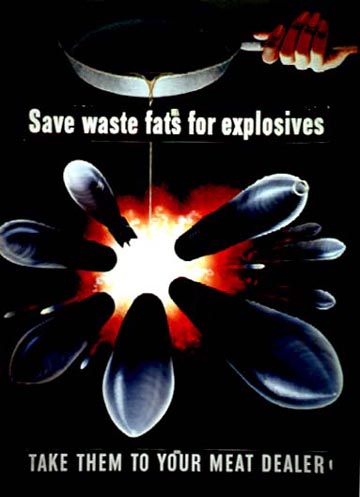
Home-front salvage campaign: save waste fats for explosives.
Don Saccani recalls some West Coast beer was shipped overseas, forcing his father Al Saccani to "travel all over the U. S. searching for breweries with excess production." To make ends meet, Al Saccani branched out into the trucking business, hauling torpedoes for the Navy.
During the shortage, a black market developed. When he was 17 years old and driving a truck for his father’s distributorship, S. Steve Sourapas "literally had a guy chase me down the street, throwing money into the front seat of the truck." Sourapas recalls the fellow "would have paid any sum of money to get every case of beer I had on the truck."
In 1941, the U. S. government began developing Ford Ord near Monterey, and local grocery store owner Francis Sparolini realized that the encampment of construction workers at the installation represented an excellent new market for beer. He started out "small," with one delivery truck and driver, delivering ABC Beer which was produced by the Aztec Brewing Company of San Diego. Since they received 10¢ a case under the wartime pricing schedule, Sparolini’s family depended upon high volume to make ends meet.
Like many women whose husbands, fathers and brothers served their country during World War II, Josephine Sparolini ran the beer and grocery business from 1942 to 1946 while her brother Francis was in the service. The family-owned business grew after the war, distributing Burgermeister and later Coors beer. Francis remembers being "nearly broke" after the war and recalls the hard physical work involved in loading and unloading trucks and railcars full of beer. "It didn’t hurt me a bit," he says, pointing out he is still "going strong" at 85. Today, his son Jim runs Sparolini Distributing Company.
During the war, business boomed for Rudy Heimark in Indio. He became the distributor for the Schlitz Brewing Company in the early 1940s when General Patton’s desert training center was located nearby at Chiraco Summit. Humane government war officials made sure beer continued to flow to soldiers, those stationed overseas as well as those training in the U. S.
By the end of World War II, the federal government had restricted breweries to 80% of their pre-war production capacity. Despite these restrictions, high wartime and civilian demand for beer kept brewers and beer bottlers working feverishly. When the war ended, demand suddenly dropped, leaving some bottlers and distributors with a beer surplus. This was the case with Roy G. Deary, a Sacramento area bottler and beer distributor. One day, he instructed his teenage sons, Grant and Don, to open the bottles of spoiled "skunk" beer, and pour it out. Being the big brother, Grant "accidentally" drenched younger brother Don in the old beer. Young Don had to suffer through the rest of the day working and then trudging home in clothes starched and reeking from skunky beer, brother Grant mischievously recalls. The late Roy G. Deary founded Nor-Cal Beverage Company in 1937, a soft-drink bottling operation. He added beer to his product line in 1947. Today, there are 10 immediate family members of the Deary clan working at seven Nor-Cal Beverage Company distributorship locations.
Many California beer wholesalers entered the business after fighting in World War II. Among them was Vince Burcham, whose own distributorship will soon be celebrating its 50th anniversary. After he left the army in 1946, Burcham worked in the hotel-restaurant supply business for a year. In December 1946, he started his own company, Pasadena Beverage. "I kicked myself throughout the next year," Burcham says. "It was tough going with little money to be made."
In the late 1940s, the beer Burcham distributed was produced by the Maier Brewing Company of Los Angeles. In 1950, the brewery introduced a new beer, Brew 102, into the market. It was "an instantaneous success," boosted in part by the brewery’s decision to buy advertising time during wrestling programs on early television broadcasts. Vince Burcham persevered, business improved, and the next generation, sons Dirk and Bruce, have followed him into the company.
Another World War II veteran, the late Rupert W. Lawing, obtained a job as a sales manager for Home Ice Company once he left the service. Like all alcohol beverage distribution companies, Home Ice, which became Southland Beverage Company, benefitted from California’s "three-tier" and "anti-tied-house" laws. These laws called for a separation of ownership between manufacturers, wholesalers and retailers thereby requiring brewers to do business with independent distributors. According to Rupert’s son Pat Lawing, "Immediately after Prohibition, the brewers cared about two things when selecting a distributor: Did you have a warehouse? And, if they shipped you a railcar of beer, could you pay for it?"
Pat Lawing followed his father into the beer distribution business in 1973, obtaining a license to run Stash Distributing of Chico on Friday, April 13, a day that has not proved to be unlucky for him. One of Pat Lawing’s earliest memories is working with his father every summer from the time he was old enough to drive a beer truck. Pat especially remembers, in the days before automated systems, swinging beer one case at a time from the railcar in 105¼ heat in San Bernardino County.
Louis James Basso ran a produce business called Basso Produce before he and his uncle, another World War II veteran who served in the Navy, formed Basso Distributing in Ventura in 1946. Some of the early brands they sold were Valley Forge Beer, Prior Beer, Brew 102 and Mother’s Pride Soda. The business "really took off" when they obtained the distributorship for Regal Pale, and again in 1952, with Coors. Twenty years later, Louis relocated his warehouse to Camarillo. Today, his son, James, is President of Basso Distributing and his grandson Steven is Vice President.
Changes and Challenges in the Delivery System
The design of delivery trucks has changed significantly since World War II. Many members of the association remember driving open-sided trucks. "Before World War I, you would park an open-sided truck on a busy city street where someone could easily reach over and take a case of beer. Yet, I never found an item missing," says Charles I. Daniels Jr.
"Down in the Valley, we covered the trucks with canvas," said Don Stewart of Delta Distributing in Modesto. "I remember getting our first palletized delivery trucks from Paoletti’s of Oakland in the early 1950s. Up until then, we didn’t have forklifts; we used conveyor belts with rollers and unloaded the trucks one case at a time."
One of the most challenging beer delivery problems was solved by Joe McNalley, whose territory in the late 1940s and early 1950s included Southern California ski areas. McNally, an Owens Valley rancher and founder of Eastern Sierra Wholesalers in 1946, carried kegs of beer in his lap, one at a time, while riding a "rickety old ski lift" up June Mountain. He used toboggans to haul kegs into Mammoth. This unhailed hero of thirsty skiers of bygone years passed away in 1962. For many years, Joe’s wife Thelma ran the company which is located in Bishop. Thelma’s son-in-law Don Cortez took over the company when she retired, and today, Don’s son Kevin is in charge of Eastern Sierra Wholesalers.
Changes in marketing also occurred after the war. "Very little beer was sold in grocery stores in the late 1940s. More than 80% was sold in on-premises locations," said Bob Stewart. "Today the bar or
on-premise business is only
15-18% of our total sales. This is one of the most significant shifts in the market."
A New Beer Wholesalers Association is Formed
In 1947, the first meeting of the Northern California Beer Wholesalers Association was in an Italian restaurant operated by Mary Bonfiglio in Santa Rosa. According to Charles I. Daniels Jr., one of the original founders who is still active in the business, the restaurant was a popular gathering place for beer distributors. It had the two prerequisites for an official meeting place: a private back room and good food, including the steak and homemade ravioli served at that first dinner 50 years ago.
"It was soon after the war. As industrial production began dropping and as the federal government started looking around for ways to raise more money, they increased the tax on beer and wine," according to Joe Stemach, another of the original founders. "The state also wanted to get into the act, and we looked around and realized that we didn’t have much representation in Sacramento.
"The liquor and wine industries already were well organized. The beer distributors were competitors [among themselves], but we also realized that we needed to get together. É A brewery could knock on our door on a Monday and announce that we would no longer be representing them. We had no recourse. Often there were no written contracts, no franchise agreements."
Joe Stemach recalls that although "most of us did not have an ax to grind with the brewers, at first they felt threatened; they were suspicious of our motives." Soon, however, the brewers took an active interest in the association and held hospitality suites at the annual conventions.
"We also discussed the possibility of creating a central buying organization to save money on trucks and gas, for instance. It was on the agenda but never worked out since each distributor had his own favorite supplier."
The founder of the Northern California Beer Wholesalers Association was the late Max Koehn, remembered by founding members Joe Stemach and Charles I. Daniels Jr. as a "great organizer" and "a great motivator." "He was a scrapper, a fighter. We were lucky to have him," Daniels says.
A forerunner of the Northern California association was the Alameda County Beer Distributors Association founded in the 1930s. Albert Markstein Sr., who passed away in 1944, was a leader of that organization.
The Association Grows in Size and Strength
Enthusiastic wholesaler support for the new association is evident in reporters’ descriptions of the "jam-packed" 1952 annual convention. The Northern California Beer Distributors Association drew a crowd of 700 wholesalers and brewery representatives to its fifth annual convention at the St. Francis Hotel in San Francisco. Al Markstein from the Markstein Beverage Company of Oakland was elected president. (In 1968, Al Markstein became the first president of the National Beer Wholesalers Association to come from a western state.) Keynote speaker Albert P. Browne, president of the Rainier Brewery, urged the closest possible cooperation between wholesalers and brewers. Brewers were nervous about figures indicating that production facilities were operating at only 68% of capacity and were trying to enlist the help of distributors to generate public support for the industry.
Shortly after the 1952 convention, Al Evans, a San Francisco attorney who previously had represented the canners and packers in Monterey, replaced Max Koehn as Executive Secretary of the association. Al and his wife Estelle "brought a degree of sophistication to the organization," according to Daniels.
Al Evans "helped bring in the Southern California contingent" during the 1950s. Previously, many of the Southern California distributors had been informally allied with the Northern California Beer Wholesalers. Four of the largest distributors in Southern California, including Home Ice, previously had their own association. Small family-owned companies were unrepresented before the merger. At the merger meeting in "neutral" Fresno, the name of the new statewide organization was changed to the California Beer Wholesalers Association.
One of the Southern California wholesalers who participated in the successful merger was the late Arthur "Bud" Straub. He is fondly remembered by his fellow distributors as a gregarious, humorous and generally enjoyable individual.
"Bud had a salutary effect on every gathering of wholesalers," said Bob Lewis. Bud was one of the original Southern California wholesalers appointed by Anheuser-Busch, St. Louis, to reopen the distribution of Budweiser on the West coast following World War II. A relative of the Busch family, Bud founded Straub Distributing Company in 1948.
About the time of the merger, the Southern California wholesalers had hired Paul DeNio, a former investigator with the Alcoholic Beverage Control Board who had started his own investigation business. Wholesalers in the Southern part of the state decided the industry needed to police itself. Daniels recounts that they needed "to ferret out the troublemakers, the people who were bringing discredit upon the industry." DeNio was hired to help enforce the laws governing trade practices.
In the late 1950s, the association headquarters was moved from San Francisco to Sacramento. Paul DeNio was named Executive Secretary while Al Evans continued to serve as its attorney. DeNio served in that capacity until his retirement in 1994.
Following a nationwide search, Victoria G. Horton was voted President in October 1994. Horton, an attorney, brings to the association an extensive knowledge of alcohol beverage law and policy, and experience in state and national politics. A former legal and legislative counsel for The Wine Institute and the Distilled Spirits Council of the United States, she is also a past legislative advocate for Anheuser-Busch.
California Leadership Signs National Franchise Plan
In 1966, former association President Al Markstein Jr. was the first distributor in the country to sign the groundbreaking Falstaff franchise agreement that became the standard for the wholesaling industry. Renewable annually, the contract formalized what had been a "gentlemen’s agreement."
50 Years of Association History
Contrary to the anti-government stereotype of businessmen, "old-timers" among the beer distributors strongly support government regulation of their industry. "We’re under scrutiny at all times, and that’s the way it should be," says Charles I. Daniels, Jr.
According to Daniels, from its inception the association (which changed its name in 1996 to the California Beer and Beverage Distributors) has played an important role in the oversight of the industry. "When we started the association, the distributors were very interested in promulgating rules and regulations that would make our industry viable. We knew those rules would assist distributors in being good business people in their communities."
"We’ve passed some sound laws to protect the industry from demands for free goods and services that are not conducive to good business practices," agrees Don Heimark.
Heimark, who joined the association in 1957, his first year in business, hasn’t missed an annual convention. "A lot of families are involved in the beer distributing business," he says. "So the conventions are a good time to get together, to renew acquaintances."
According to Pat Lawing, it used to be important to attend association conventions in order to "protect your turf." "Back in the 1950s and 1960s business between wholesalers and brewers was done on a handshake. And brand switching occurred at times. Much of this politicking took place at the convention. Distributors would attend the general business meeting in the morning and spend the rest of the afternoon attending 50-60 hospitality suites. It was good-natured competition," said Lawing.
Mary Trichell, who attended many years of conventions with her late husband Ray, says she has enjoyed being part of the industry. "Beer distributors traditionally have been a resilient group," she says. "They work hard. They’re good citizens, down-to-earth people who enjoy their jobs."
Commemorating 50 Years of Family Beer Distributorships
In recognition of the California Beer and Beverage Distributors’ (CBBD) 50th Anniversary, this commemorative edition focuses on the early years of our industry and the development of California’s post-Prohibition beer wholesaling businesses.
CBBD especially appreciates the assistance of our 50-year members who contributed their time, personal stories, photographs and other memorabilia to make this publication possible. Additional stories were drawn from early California memoirs, journals, correspondence, newspapers, and political campaign materials in the collection of the California State Library.
This is the beginning of a larger project dedicated to telling the story of the families involved in the business of beer distribution in California. It is our hope that this initial effort draws additional historical facts and reminiscences from the memories of our members and other knowledgeable people associated with our industry.
We are grateful to our historian Dian Self for her enthusiasm and creativity in researching and writing California’s beer wholesaling story.
California Beer and Beverage Distributors
One Capitol Mall, Suite 230 • Sacramento, California 95814 • (916) 441-5402
"Working in the family business gave you an education that money couldn’t buy. As the old man’s son, you had to work twice as hard at first, but once the men accepted you and taught you the ropes, a real camaraderie developed."
— Don Saccani
After a low voter turnout in 1918, anti-alcohol forces gained strength in the California State Legislature. Prohibitionists got their supporters to the polls while many "wet" men were away fighting the war and other "wet" voters were afraid to leave their homes fearing contagion during the deadly influenza pandemic.
At dawn in San Francisco, "the crowds were still storming every downtown bar and jamming about it like human sardines. É Noon still found the drinkers there. Dinner time brought reinforcements. The crowd became thicker as night advanced, and at midnight [after 24 hours on their feet], bartenders on the edge of nervous breakdowns rebelled and demanded a little rest."
"Lager beer and whiskey cannot be classed together, and the human body is better for a cool draught of beer. But let the lager be pure and wholesome, and then instead of drawn and weary faces, cheerfulness and contentment will prevail." — The Morning Call, 1893, a San Francisco Newspaper
"Before World War I, you would park an open-sided truck on a busy city street where someone easily could reach over and take a case of beer. Yet, I never found an item missing."
— Charles I. Daniels Jr.
"This is a good early example of the industry regulating itself in an accountable and mature fashion. The industry was just emerging from Prohibition and was learning to responsibly handle alcohol beverages."
— Bob Lewis , Speaking of his father’s work on alcohol beverage control laws and the brewers "Code of Ethics."
Californians’ love of steam beer was immortalized in McTeague, a bestselling novel written by Frank Norris in 1899. In the opening scene, McTeague buys a pitcher of steam beer from the neighborhood saloon, and after his Sunday dinner, he relaxes in his dental office, leans back in his operating chair near a bay window while "reading the paper, drinking his beer, and smoking his huge porcelain pipe while his food digested. É By and by, gorged with steam beer and overcome by the heat of the room, the cheap tobacco, and the effects of his heavy meal, he dropped off to sleep."
In an attempt to save the wine and beer industry from Prohibition forces, the following legislative compromise was offered in 1915. While unsuccessful (because of pressure from hard-liquor interests) these concepts would become law after Prohibition.
1. Brewers, winemakers and distillers are prohibited from owning any financial stake in a saloon.
2. Harsher penalties to be established for selling alcohol to minors and drunks.
3. Separate licenses to be issued for establishments selling wine and beer.
Under the Volstead Act, alcohol for medicinal purposes was legal. Doctors prescribed it and druggists dispensed it freely.
California Beer and Beverage Distributors was founded by families whose roots are deeply embedded in California history. We look forward to working with and serving the next generation of California beer distributors. Congratulations and thank you to our 50-year members!
50-Year Members
Basso Distributing Company
Coors West
DelReka Distributing
Delta Brands
Eagle Distributing Company
Eastern Sierra Wholesalers, Inc.
El Ray Distributing Company
Gate City Beverage Distributing, Indio
Gate City Beverage Distributing, San Bernardino
Golden Brands Bottling Company
Golden Gate Distributing Company
Haralambos Beverage Company
Harbor Distributing Company
Heimark Distributing Company
Hooker Oak Distributors, Inc.
Lagomarsino’s
Maita Distributing Inc.
Markstein Beverage Company, Danville
Markstein Beverage Company, Pittsburg
Markstein Beverage Company, Sacramento
Markstein Beverage Company, San Marcos
Markstein Beverage Company, Union City
Markstein Enterprises
Nor-Cal Beverage Company, Diamond Springs
Nor-Cal Beverage Company, Loomis
Nor-Cal Beverage Company, South Lake Tahoe
Nor-Cal Beverage Company, West Sacramento
Pacific Beverage Company
Pasadena Beverage Company, El Monte
Pasadena Beverage Company, Pomona
Saccani Distributing Company
Sierra Beverage Company
Sparolini Distributing Company
Straub Distributing Company, Inc.
V. Santoni and Company
Varni Brothers DBA Stanislaus Distributing
W. A. Thompson, Inc., Bakersfield
W. A. Thompson, Inc., Barstow
W. A. Thompson, Inc., Lancaster
Wonderland Distributing, Inc.
Past Chairmen
1951 William Cannon
1952 Albert Markstein
1953 Virgil Vieria
1954 Paul Ciampi
1956 Bud Rhinehard
1957 Joseph H. Davi
1958 Kenneth Clark
1959 Unidentified
1960 David Anderson
1961 Kenneth Ostander
1962 Bruno Roveda
1963 Don Stewart Sr.
1964 Ken Clark
1965 Al Saccani
1966 Bob Lewis
1967 Joseph H. Davi
1968 John R. Cuchna
1969 Charles I. Daniels Jr.
1970 Martin H. Schinnerer
1971 Lloyd B. Henry Sr.
1972 Mandell Luskin
1973 William Del Biaggio Sr.
1974 Al Passino
1975 Robert Franceschini
1976 H. W. Pingree Jr.
1977 John Bracco
1978 Phil Hannah
1979 Bruce Hill
1980 Roy Rosenberger
1981 B. Gene Wilson
1982 Steve Markstein
1983 Ed Lara
1984 Tom Louderback Sr.
1985 Kevin Forth
1986 Glenn George
1986-88 Tommy Mason
1988-90 Doug Bennett
1990-92 George W. Couch III
1992-94 Bill Del Biaggio Jr.
1994-96 John E. Anderson Jr.
1996-98 Donald Saccani