Banning General Hospital
History
On April 10, 1942, the War Department acquired 100 acres through four leaseholds for a hospital supporting the California-Arizona Maneuver Area. The site lay within the city of Banning, bounded by Wilson Street, Jacinto View Road, Omar Street, and Sunset Avenue.
The installation was built as a 1,000-bed general hospital. The museum source attributes the construction to the 1st Battalion, 369th Engineer Regiment between 1942 and 1943, and identifies the 297th Field Hospital as the operating unit.
Construction and Facilities
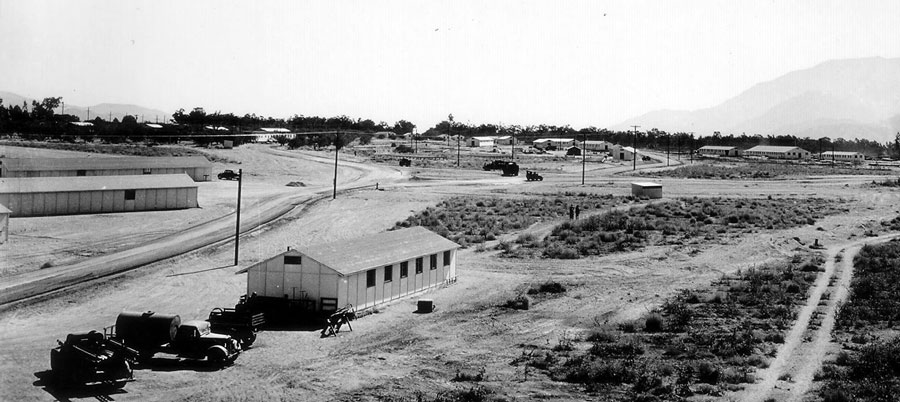
The museum construction list records a substantial cantonment-style medical plant that included 34 wards, officers' and nurses' quarters, 13 enlisted barracks, a clinic and surgical building, administration and laboratory buildings, patient receiving and evacuation, an infirmary, bath and disinfection, three mess halls, four recreation buildings, a post exchange, morgue, guard house, fire station, engineer shop, laundry, and a 12,000-gallon water tower.
The same source gives a tight construction chronology: the 369th Engineers were ordered onto the project in late July 1943, moved in on August 6, 1943, completed major construction by October 9, and had the hospital in operation by October 15.
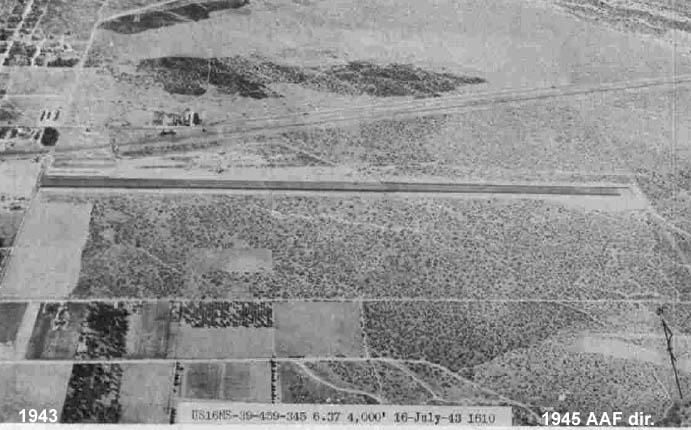
Banning also served as the initial headquarters of the Communications Zone and included a landing strip, an aid station, and a range in addition to the hospital complex itself.
Transfer and Disposition
The site was declared surplus by the War Department on May 26, 1944. On July 6, 1944, the Army transferred the lease to the Department of the Navy for use as the Naval Convalescent Hospital, Banning.
The Navy declared the site surplus in 1948. According to the INPR, the government removed all structures, including underground tanks and utility lines encountered during later grading, and the land was returned to its original owners.
Later Site Condition
The 1993 Corps of Engineers survey reported that the former hospital ground had been redeveloped into private homes, a mobile-home park, an apartment complex, a church, and a fire station. The survey recorded no remaining visible evidence of Department of Defense use and no reported ordnance or chemical incidents.