
Search This Dossier
Search the page narrative, captions, and a broader research index built from selected extracted source text, scanned-document OCR, and a wider detector-only corpus layer drawn from longer source runs. This is meant to surface working details quickly, not replace the fuller documents.
Scientific Basis
The magnetic detector belongs to a line of thought that runs from Joseph Henry's observations of magnetic disturbance, through Ernest Rutherford's magnetic wave detector work in the mid-1890s, and into Marconi's search for something sturdier than the coherer.
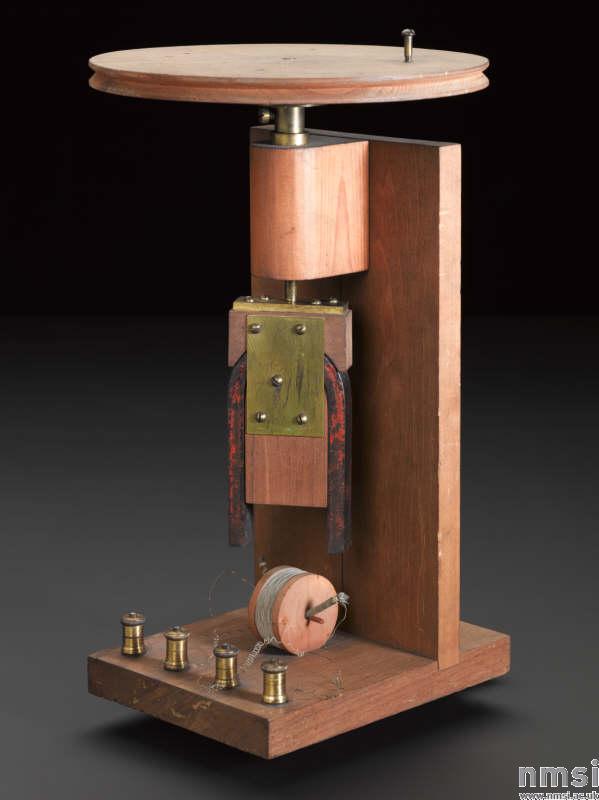
In the working detector, a continuously moving band of fine iron wires passes through a magnetic field created by permanent magnets. A signal coil and a telephone coil surround the active region. When received radio impulses arrive, they disturb the hysteresis state of the moving iron band, abruptly shifting the point at which magnetization reverses. That sudden change induces a pulse in the telephone circuit, heard as a click or buzz.
Marconi's own 1902 note described the effect as a decrease of magnetic hysteresis under high-frequency waves, and stressed a practical fact that operators quickly learned for themselves: the instrument ceased to respond if the magnet or its motion was stopped. Kennelly's 1906 textbook then translated the behavior into a vivid mechanical analogy, comparing the delayed reversal of the iron to a ball hesitating at the crown of a turtle-back deck before running down with sudden speed. Pierce's 1910 treatment kept that same physical core but made clearer why the operator heard not radio frequency itself, but a train of clicks or a musical buzz whose pitch followed the spark rhythm of the sending station.
Later writers could finally name what Marconi and his early interpreters were feeling their way toward. In 1993, T. H. O'Dell revisited the detector in Electronics World + Wireless World using the language of magnetic domain walls and magnetostriction. That later interpretation does not replace the early descriptions; it explains why the older language of instability, sudden reversal, and hysteresis proved so useful long before solid-state magnetic theory had fully matured.
Marconi reported the detector as more reliable than the coherer and suitable for syntonic work because its response was more uniform and repeatable under actual operating conditions.

Development Of The Type
The magnetic detector did not appear fully formed in one fixed model. Marconi's working practice evolved from experimental arrangements into service versions better suited to shipboard routine. A 1904 internal practical note is especially revealing because it states that Marconi detectors were then of three types: a phonograph-speed clockwork pattern, an inker-speed clockwork pattern, and a more compact electro-magnetic type.
That note also preserves the kind of day-to-day operational wisdom that formal histories often lose: cautions about band twist, pulley handling, Vaseline on the band, telephone clearance, and the interaction of the detector with tuning components. In other words, it shows the detector as an operating machine, not just as a patent.
Later recollections make the first prototype more vivid. Roberta Spada's reconstruction of the cigar-box story traces a memoir tradition in which Marconi, unable to find sufficiently fine wire in Bournemouth shops, remembered a florist he knew and bought the stem-support wire there before returning to Poole, where Kemp produced a cigar box for the first experimental build. The anecdote belongs on this page because it captures the detector's improvised birth, but it is later recollection, not testimony from Marconi's 1902 note itself.


At Sea: Why Operators Trusted It
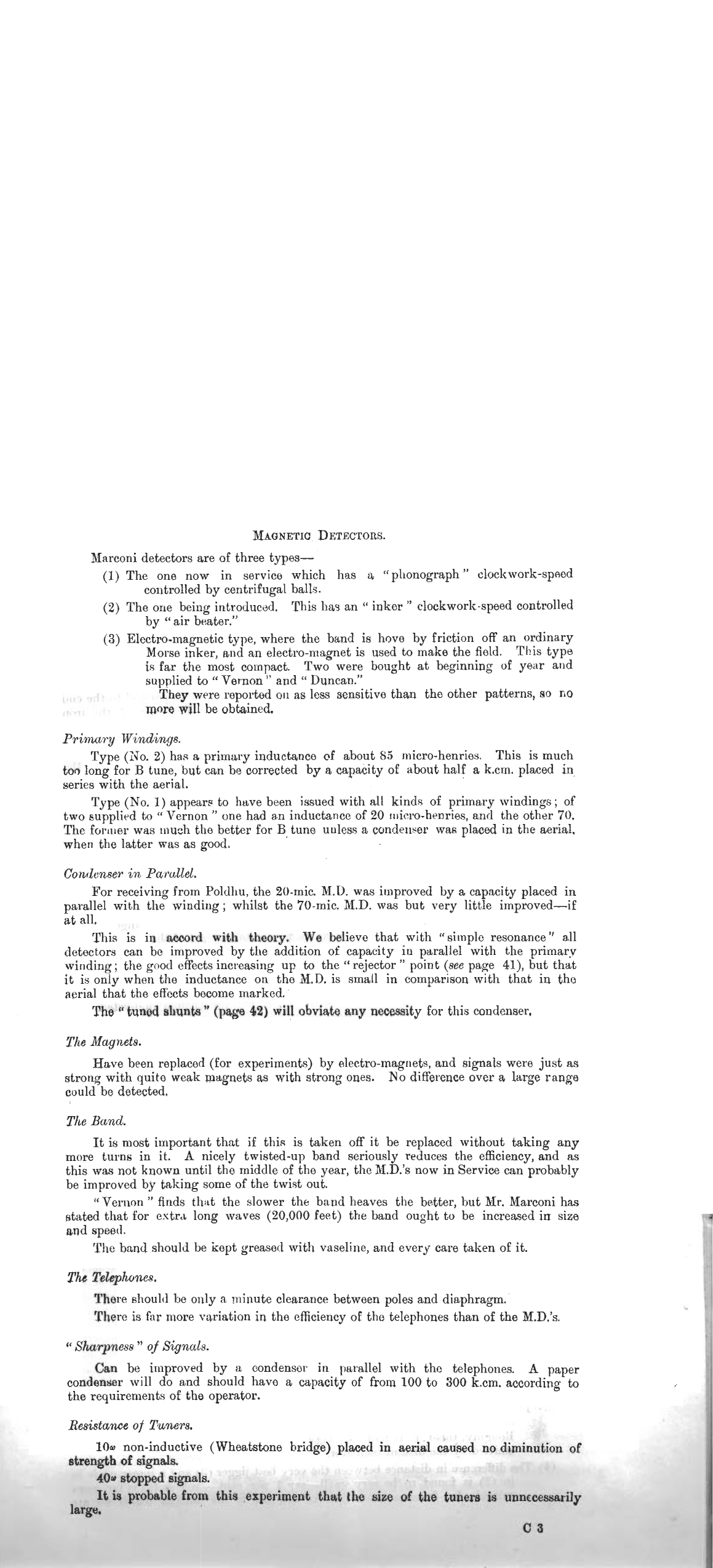
The magnetic detector mattered because it worked where the coherer too often became a nuisance. It tolerated vibration and ship motion better, it let the operator hear traffic directly in telephones, and it helped push wireless from stop-and-start demonstration work toward an everyday communications tool.
By the first decade of the twentieth century the magnetic detector was commonly paired with Marconi's multiple tuner in marine receiving stations. In stand-by operation, the detector could be heard across a broad range; in tuned work, the operator tightened the receiving circuit for the station wanted. That receiving discipline matters because the detector was never a lone object aboard ship. It lived in a system.
That mattered most when routine traffic turned into emergency work. In the Titanic generation of installations, the magnetic detector sat inside a larger Marconi receiving chain and helped make prolonged telephone watch practical. It should not be romanticized into a solitary lifesaving talisman, but it absolutely belongs inside the story of why shipboard distress reception became dependable enough to matter.


The Printed Record
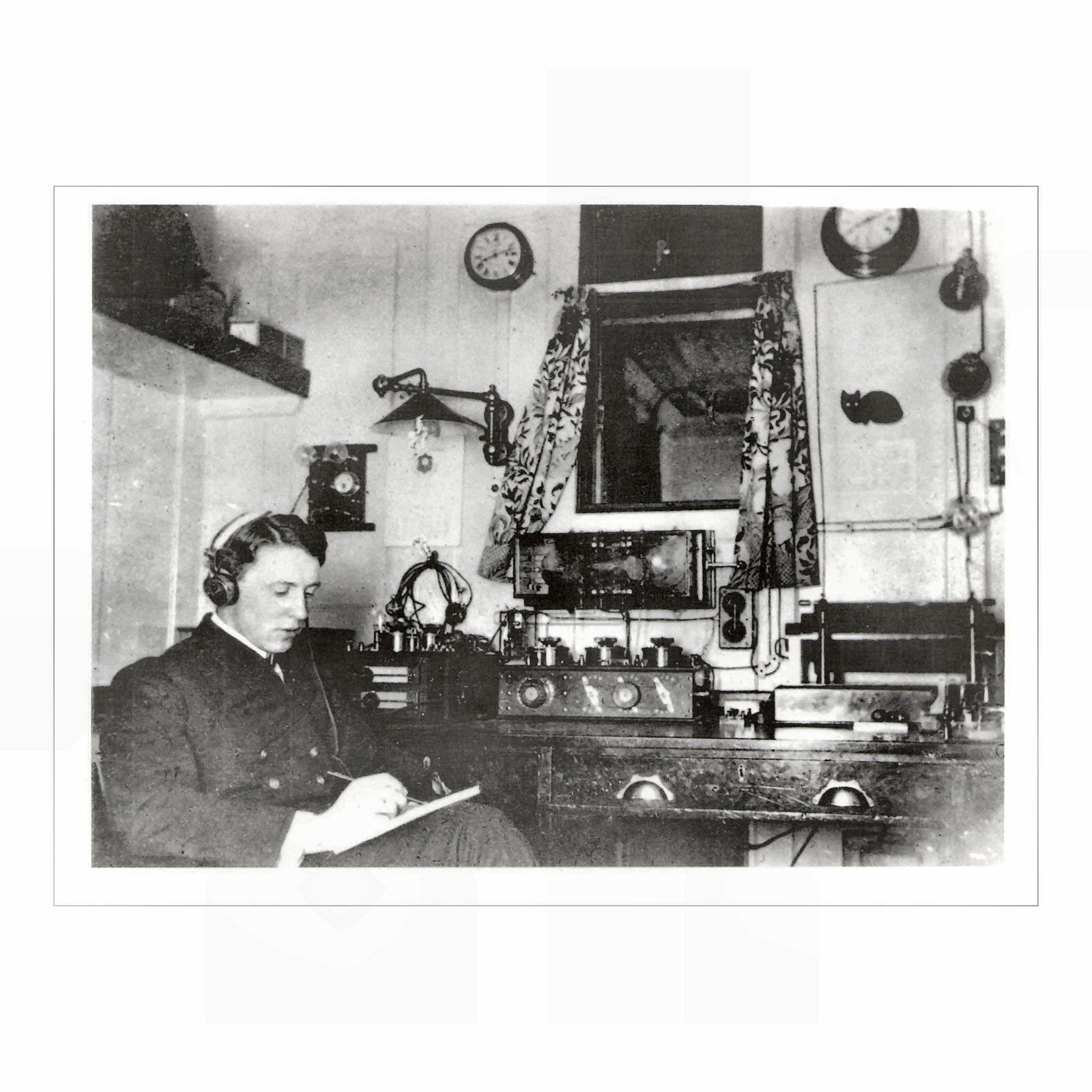
The detector's history is unusually well documented if one reads the sources in sequence rather than isolation. The earliest papers explain what Marconi and his contemporaries thought they were observing. The textbook writers translate the effect into teachable language. Later historians and experimenters then revisit the same apparatus with a fuller magnetic vocabulary and a better sense of its place in marine service.
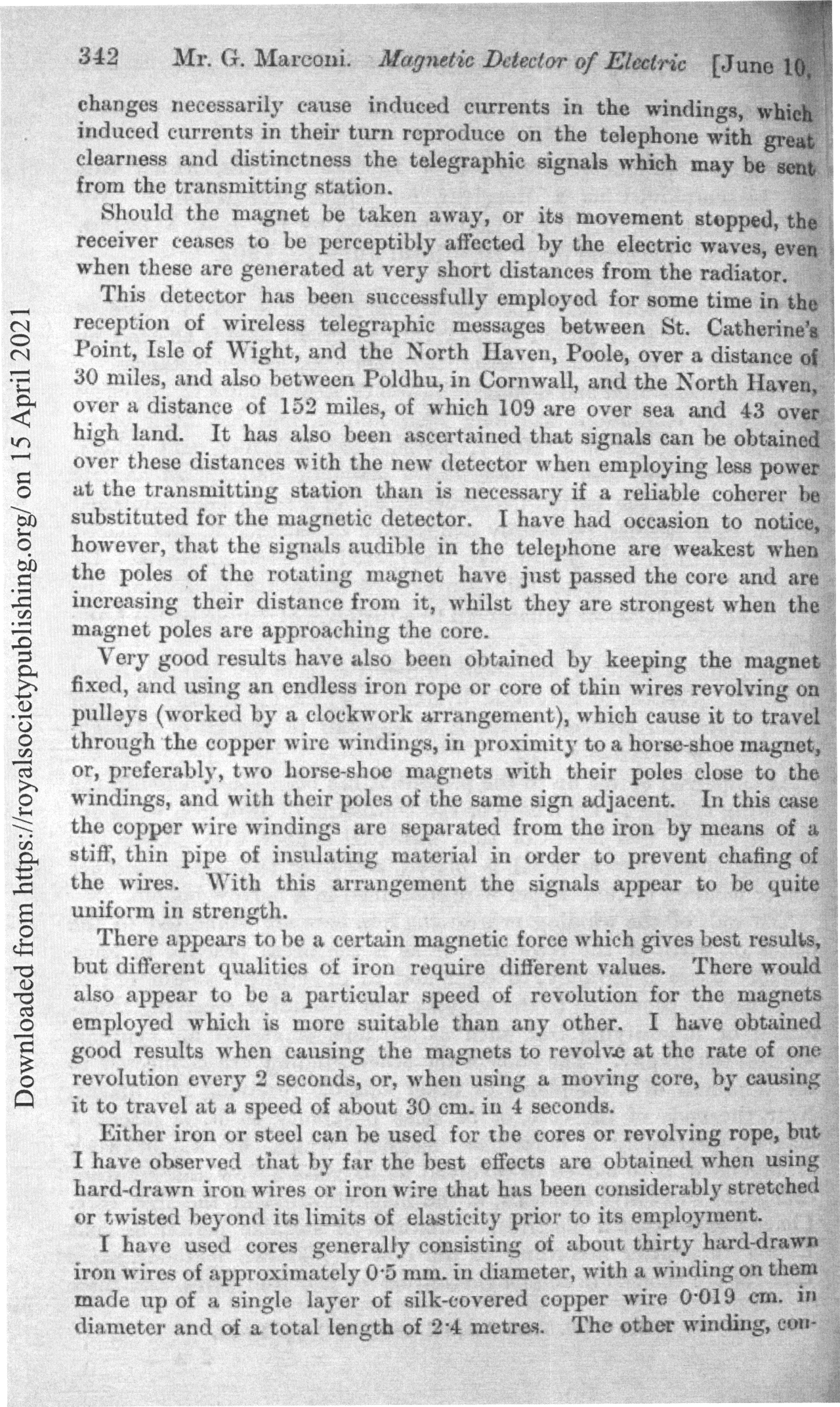
Marconi's Royal Society note is still the anchor document. It states the detector principle in contemporary language, insists on the necessity of motion, and reports successful reception over working distances up to 152 miles. Site copy. Original source.
Kennelly's Wireless Telegraphy, pages 142 to 145, explains the moving iron band, the two permanent magnets, and the abrupt reversal with a memorable rolling-ship or "turtle-back" analogy that is still one of the clearest period explanations of the detector's action. Site copy. Original source.
Pierce's Principles of Wireless Telegraphy, pages 145 to 153, gives the best compact technical description in this file of the continuous-band detector, including why a series of spark trains becomes a click sequence or musical note in the telephone. Site copy. Original source.
Vivian J. Phillips' chapter on magnetic detectors gathers the detector into a broader family history, comparing Marconi's Maggie with related magnetic schemes and preserving the kind of model sequence that later collectors and historians needed. Local study scans from chapter 5 informed this dossier. Original source.
Roberta Spada's study of the magnetic detector in a cigar box is the most useful modern source for the Bournemouth wire-hunt anecdote. It traces the florist version through Luigi Solari's memoir tradition and notes a competing De Souza account that replaces the florist with a lingerie shop. That makes the story valuable, but as later recollection rather than as evidence from Marconi's 1902 technical note. Original source.
T. H. O'Dell's "Marconi's magnetic domain that stretches into the ether," in the August 1993 issue of Electronics World + Wireless World, reinterprets the detector in terms of domain-wall motion and argues that technology outran the formal scientific explanation. This is a valuable retrospective source, though this page does not adopt every later claim made in it about Titanic-era apparatus without cross-checking. Site copy. Original source.
The user-supplied OZ6GH page belongs in the research trail, but it must be treated cautiously. As checked on May 7, 2026, the original host was suspended and the exact URL had no Wayback snapshot. It is therefore listed here as a dead reference trail, not as a presently verifiable source used to support factual claims on this page. Original URL.
Document Room
The NAS archive now preserves a deeper page-image record than the earlier detector page could show. Rather than reduce those scans to a few quotations, this section presents them as document artifacts in their own right: title pages, margins, paper stains, and page numbers included. Click any page for a larger view, then use the lightbox link to open the original scan in a new window.
Marconi's 1902 Note: Local Scan Sequence
This five-page run preserves a local page-image sequence of Marconi's Royal Society note, Note on a Magnetic Detector of Electric Waves, which can be employed as a Receiver for Space Telegraphy. Site copy. Original source.


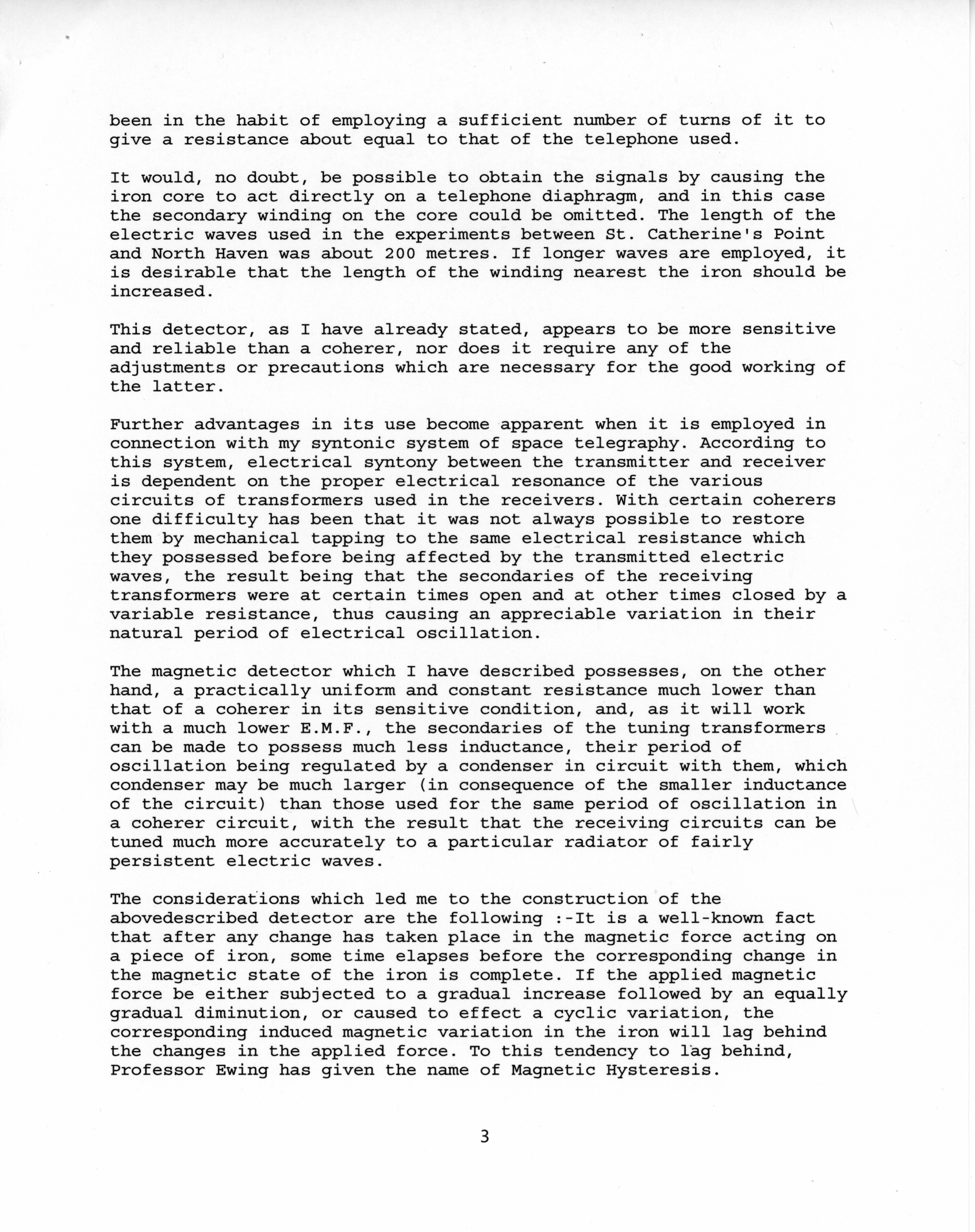


1902 Note: Later Reprint Pages 341 To 344
A second scan set preserves the same paper as later reprinted under the running head Magnetic Detector of Electric Waves. The clean page 341 is shown here instead of the duplicate copy that carries a later Royal Society download margin.



The Marconigraph, January 1912
This page from The Marconigraph shows the detector as a mature practical instrument in a 1912 exhibition context, alongside the multiple tuner and related apparatus. It is particularly useful for the page's own statement that the selective receiver was then "preferably used with the magnetic detector."

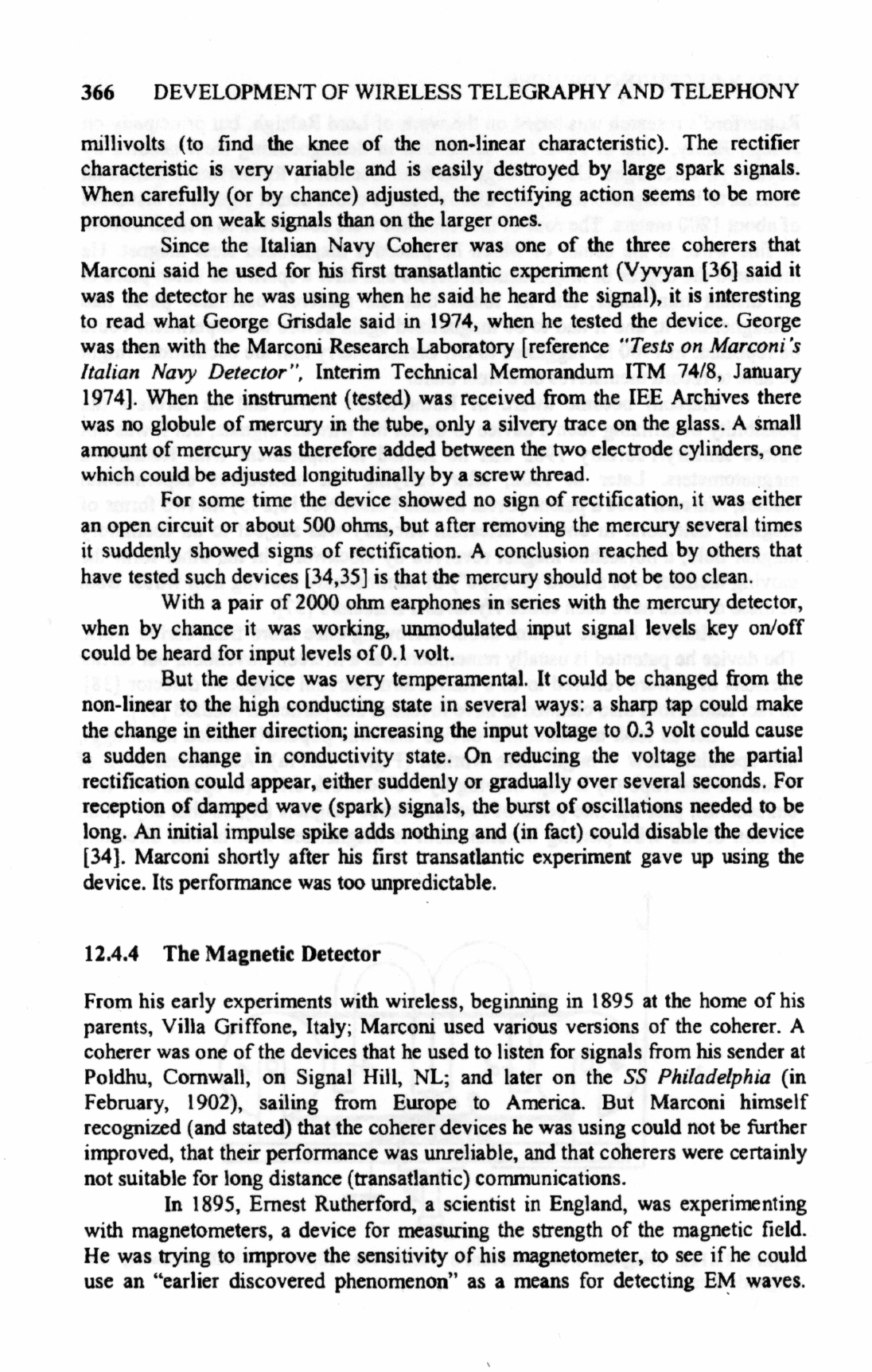
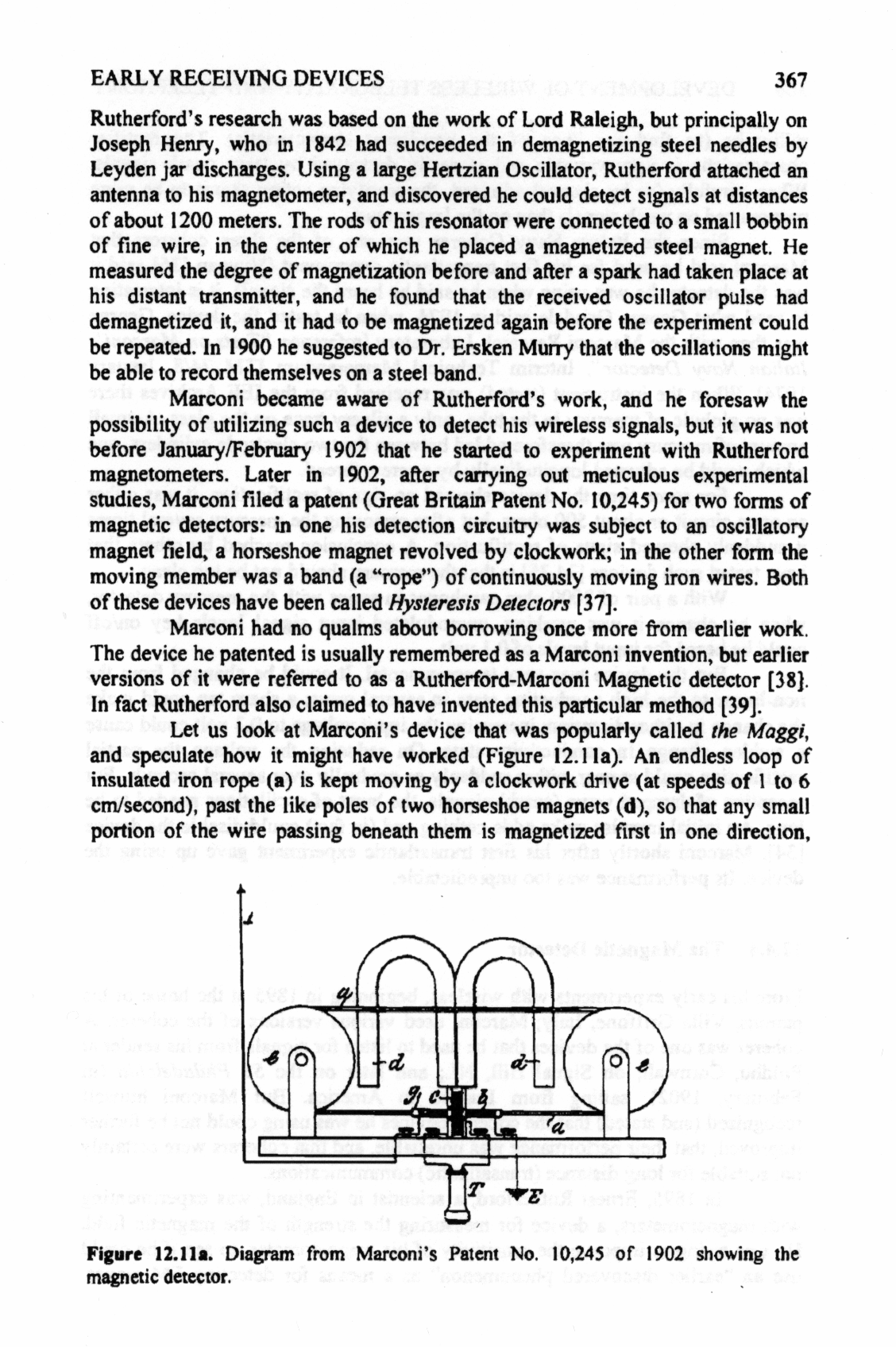
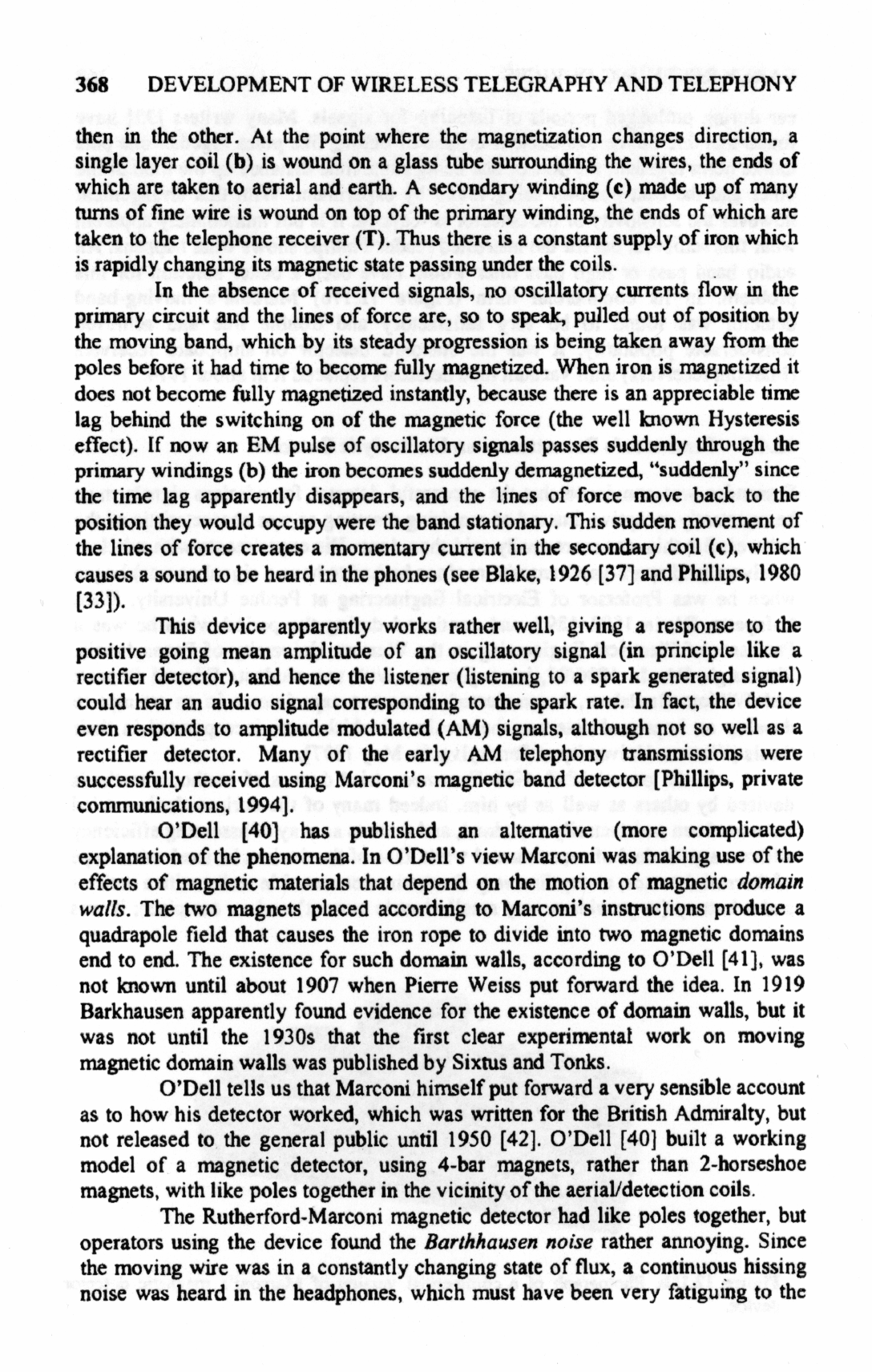
Development Of Wireless Telegraphy And Telephony
This later historical treatment bridges Rutherford's precedent, Marconi's own explanation, the coherer problem, and the detector's place in the broader history of wave receivers. The surviving scan run in the ZIP covers pages 366 to 369 and 378 to 383.
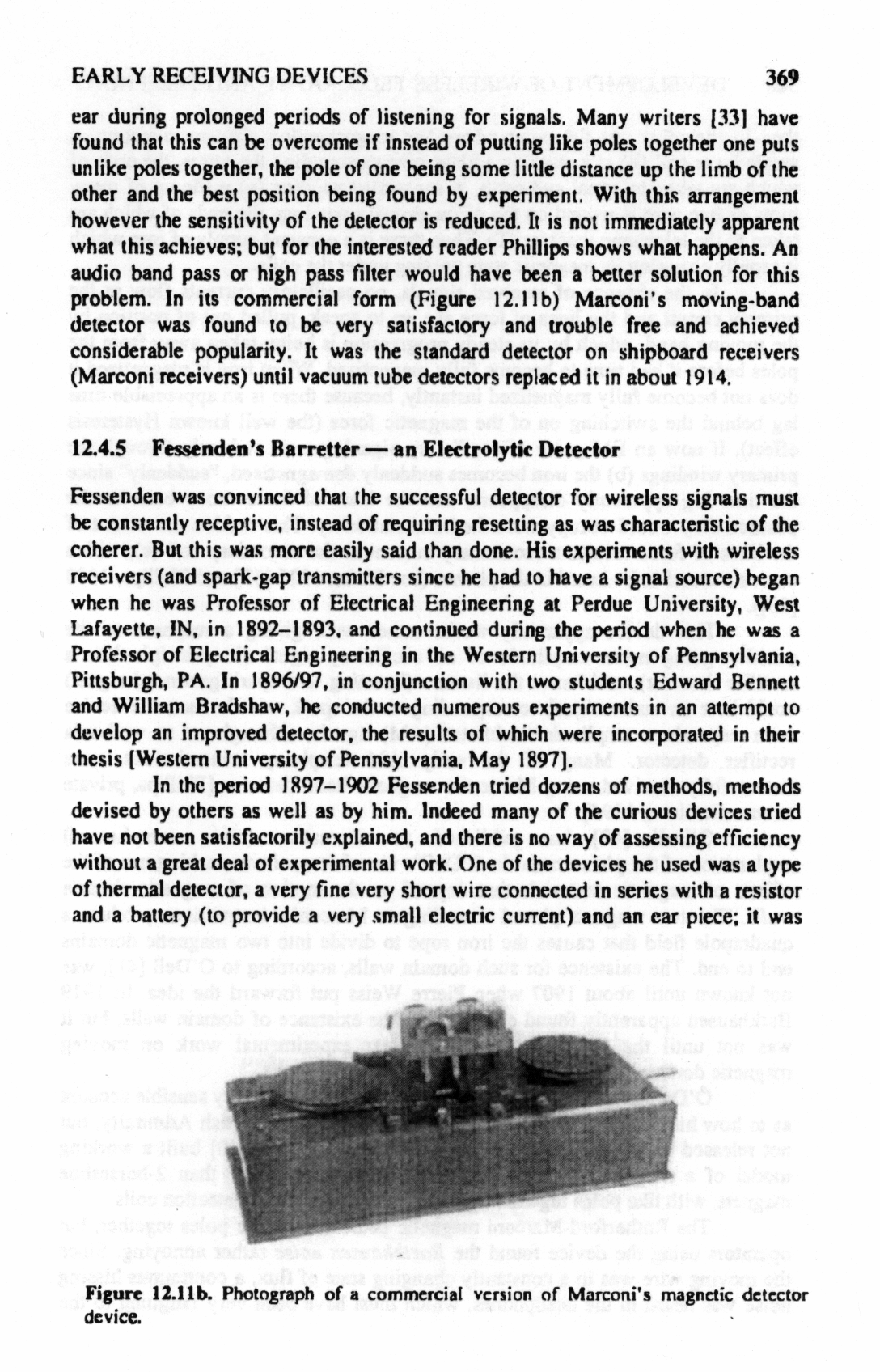


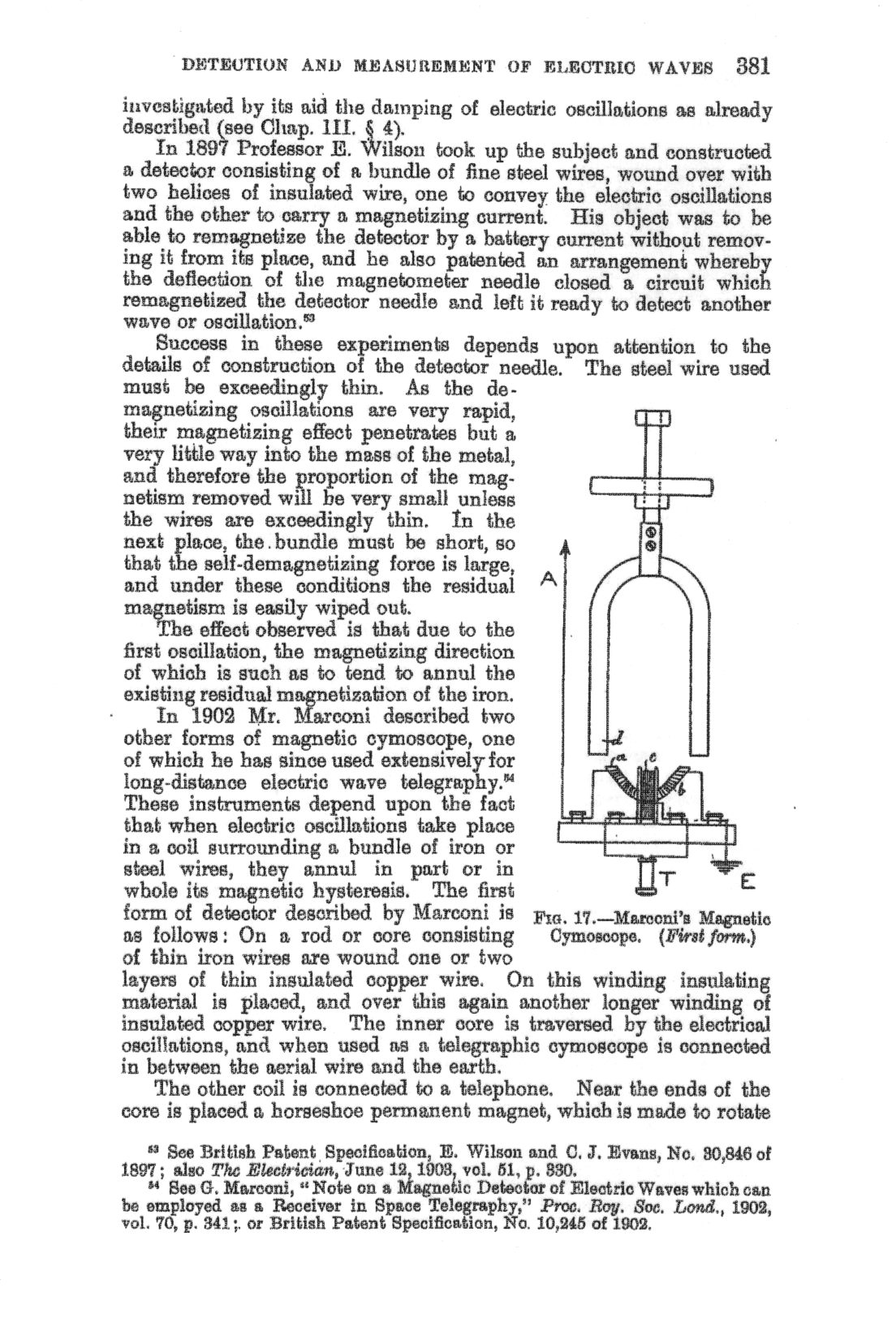
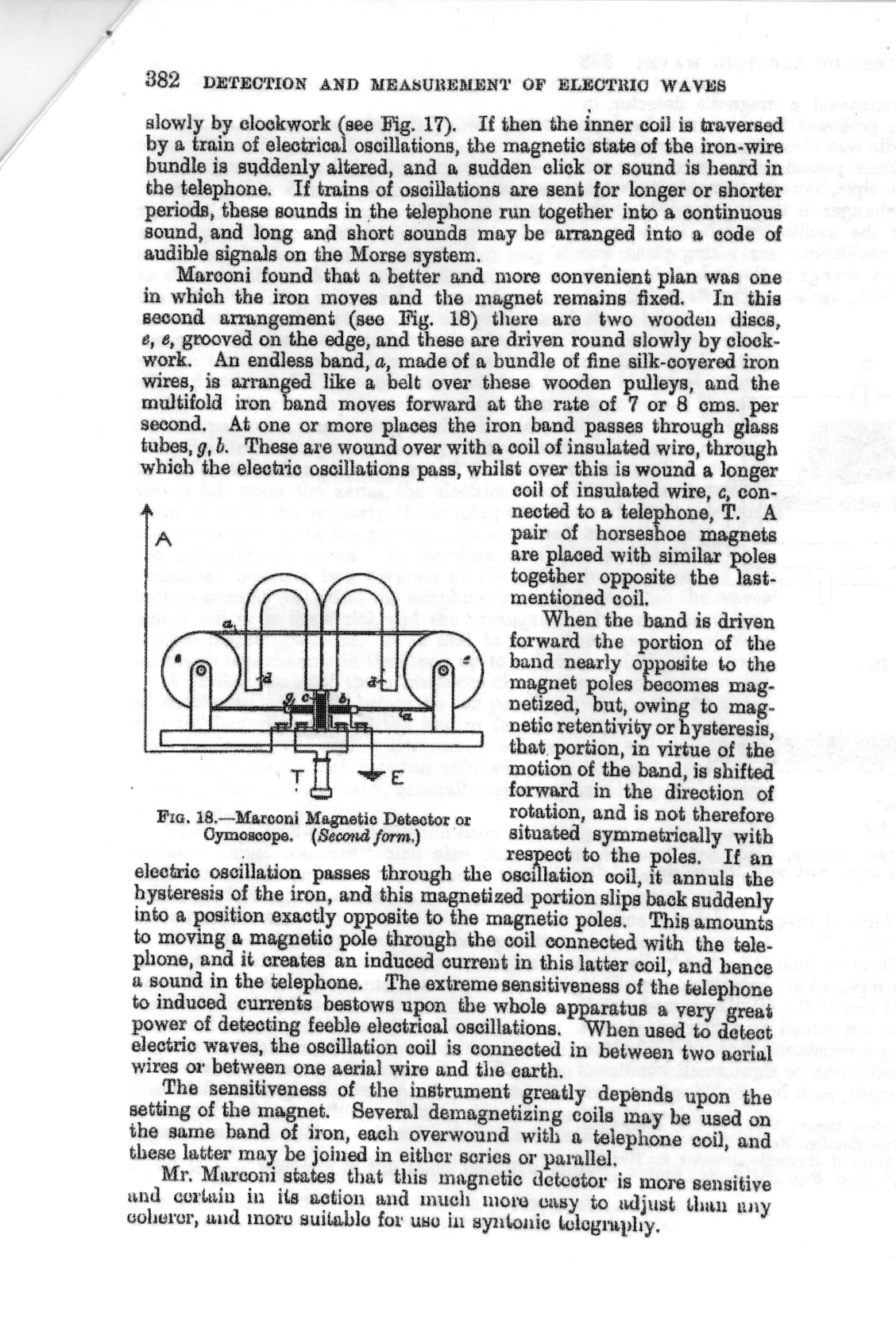

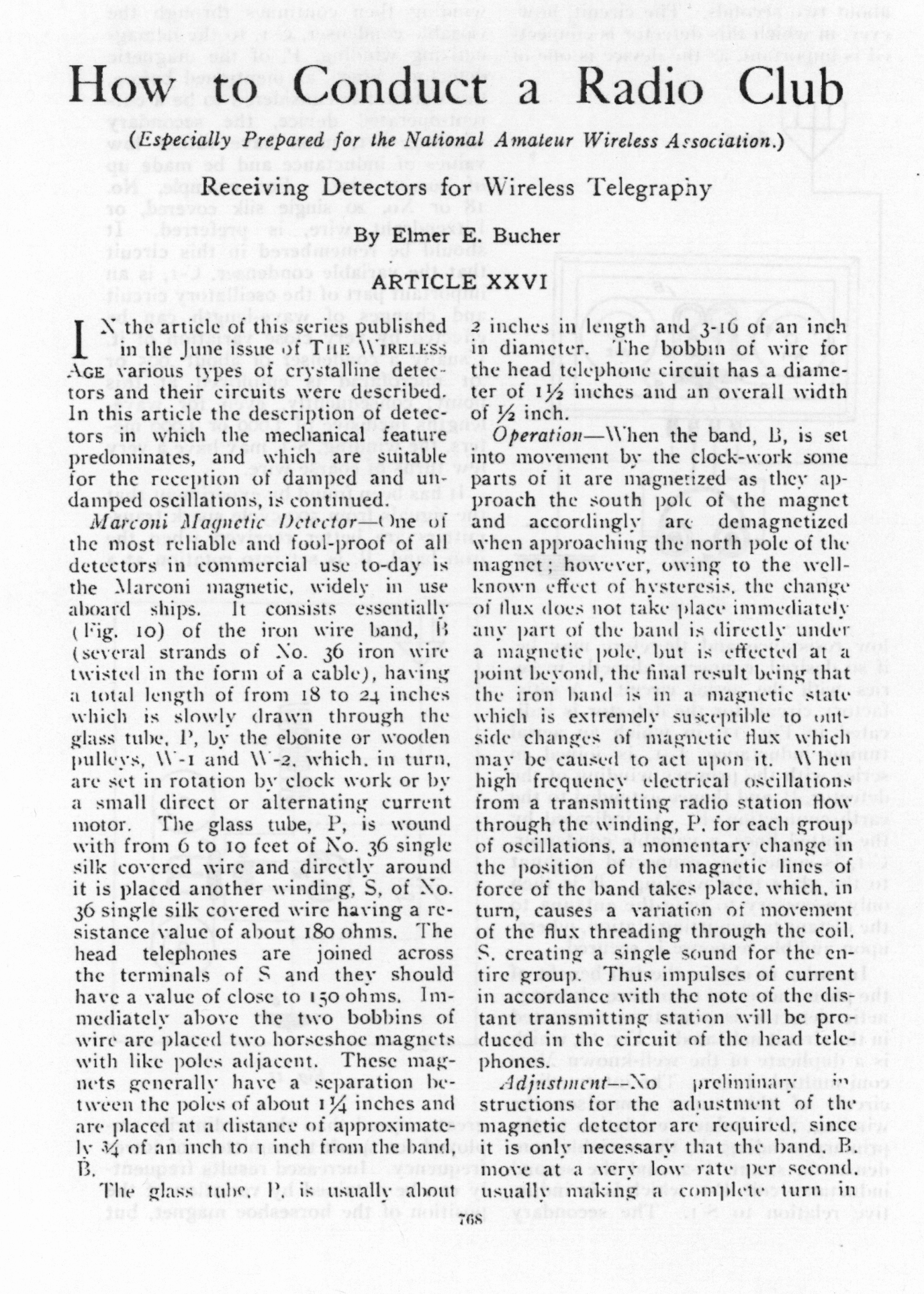
Elmer E. Bucher On Receiving Detectors
Bucher's article, Receiving Detectors for Wireless Telegraphy, is valuable because it translates the magnetic detector into practical dimensions, wire gauges, adjustment, and working behavior for amateur and club readers rather than only historians.


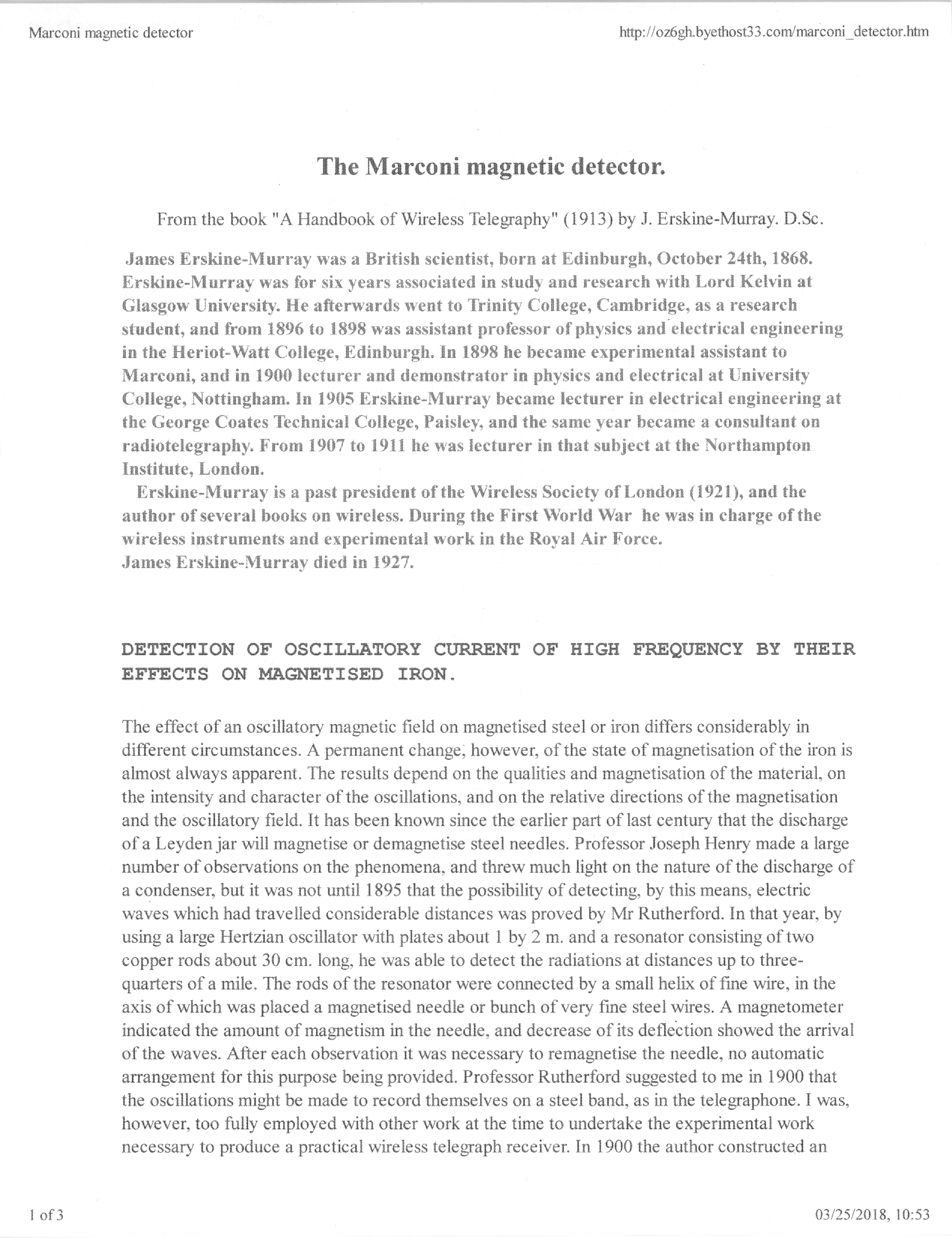
Preserved OZ6GH Scan Set
The original OZ6GH page is now dead, but this three-page preserved scan set keeps the enthusiast treatment in the archive. It belongs in the research trail as a later reference path, not as a primary source. Original URL.


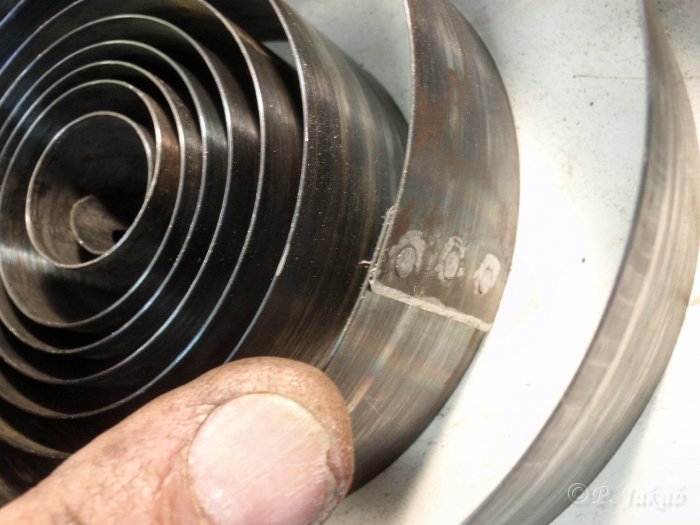
Repair Of This Instrument
Your Santa Barbara Hideaway gallery preserves something unusually valuable: not just static beauty shots, but a real record of disassembly, diagnosis, spring failure, riveted repair, and the return of the spring motor to running condition. That makes this detector a documented restoration case as well as a historic object.
The gallery shows the broken spring, the preparation for drilling and riveting, the repaired splice, the motor-winding mechanism, the pickup transformer, and the serial plate. Two short motion clips then show the repaired motor turning again.
A useful operating clue also survives in the printed record. Hill's reproduced example of a Marconi magnetic detector carries the instruction "Rewind every half-hour," suggesting a roughly thirty-minute spring-motor run between windings. That figure should not be confused with Bucher's practical speed note that the moving band usually made a complete turn in about two seconds: the first is a rewind interval, the second a band-speed description.




Provenance Dossier
The provenance evidence is now strong enough to present in layers: documented facts first, likely interpretation second, and unresolved points plainly marked as unresolved.
James Kreuzer's appraisal identifies the detector as serial no. 14880, circa 1905, made in London and containing all original parts. The surviving number plate agrees with the serial.
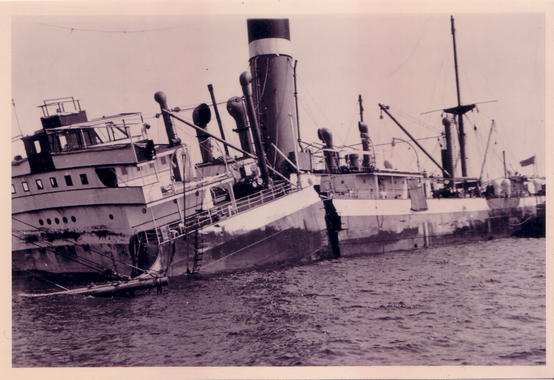
Walter Butterworth, W1GM, signed a statement saying this British Marconi magnetic detector had been aboard a British cargo vessel damaged off Massachusetts, that the vessel was later sold for scrap, and that the instrument was given to him by the division superintendent of the Radio-marine Corporation of America acting for British Marconi.
Kreuzer's appraisal to John V. Smith gives the detector a market value of $9,500.00 and lists it alongside a multiple tuner. The tuner appears on the appraisal because the two objects were then together, but this page follows the detector rather than the tuner.
The present City of Salisbury lead still fits Butterworth's place and date surprisingly well, but it is now under strain because the known casualty was a grounding rather than a collision and because the ship is recorded as a 1924 vessel, late for normal magnetic-detector service.
The name of the RMCA superintendent, any salvage or inventory sheet naming the detector, and the chain between Butterworth and later owners remain undocumented in the present research file.


The City Of Salisbury Lead
The detector research file preserves a real provenance lead here, not just a romantic shipwreck anecdote. Butterworth's affidavit places the Maggie aboard an unnamed British cargo vessel off Massachusetts, badly damaged, later sold for scrap, and remembered in 1978 as an event of "some forty or more years ago." That description is close enough to the 1938 City of Salisbury casualty to justify the attention the ship has received in this research file.
Butterworth wrote that the detector had been aboard a British cargo vessel "in collision ... off the coast of Massachusetts some forty or more years ago."
Online wreck histories make clear why this ship remained vivid in local memory. The National Park Service describes City of Salisbury as a 419-foot steamer that struck the reef near Graves Light in 1938 because the available depth charts were wrong. Aboard was not merely a routine cargo but a small traveling menagerie: pythons, cobras, monkeys, and crates of rare birds among the commercial freight. Later retellings preserve the voyage as a near-comic ordeal even before the wreck, with escaped animals, difficult handling, and a harbor approach ending on rocks that were not supposed to be there.
That richer story helps explain the staying power of the Salisbury lead. Here was a British freighter arriving after a long and troubled passage, carrying unusually valuable and memorable cargo, grounding in fog off Boston Harbor, then hanging on the ledge long enough for crew and much of the cargo to be removed before the hull split. The local picture set and clipping reinforce that public drama: a ship down by the bow, later broken apart, and a headline declaring that all hands were taken off. A casualty like that is exactly the sort of event a radio inspector or wireless man might remember decades later, even if some details blurred with time.
At the same time, the outside wreck record pushes back hard. The official Massachusetts wreck entry and related wreck summaries describe City of Salisbury as a British Hall Line freighter built in 1924 and stranded on Graves Ledge in dense fog on April 22, 1938. That means two things. First, the known casualty mechanism was a grounding, not a collision. Second, a circa-1905 magnetic detector would have been anachronistic as normal shipboard receiving equipment on a 1924 cargo steamer unless it had been retained unusually late, kept as a spare, or come aboard by some secondary route that is not yet documented.
- MatchBritish cargo vessel off Massachusetts in the right broad period: this still fits well.
- MatchSevere damage followed by a salvage or scrap context: also fits Butterworth's memory.
- ConflictButterworth remembered a collision; the known City of Salisbury casualty is a grounding or stranding on Graves Ledge.
- ConflictThe ship is recorded as built in 1924, which makes a 1905 magnetic detector a poor normal equipment fit.
- UnprovenNo salvage paper, RMCA handoff record, or shipboard inventory yet ties serial no. 14880 to the vessel by name.
For that reason the page should no longer treat City of Salisbury as the favored solution. It remains a working lead because it gives the provenance hunt a concrete archive trail to follow. It also gives the detector a historically meaningful maritime setting: a wreck remembered for chart error, salvage, exotic cargo, and a dramatic escape from loss of life. But as provenance it now stands as a candidate under test rather than a likely identification.



Selected Sources And Working References
These are the documents and reference points that presently carry the most weight in understanding the detector, its marine use, and the surviving provenance file.
- Marconi's 1902 note on the magnetic detector; original source.
- Kennelly, Wireless Telegraphy (1906); original source.
- Pierce, Principles of Wireless Telegraphy (1910), pages 145 to 153; original source.
- 1904 practical note describing three detector types
- Hill, Radio! Radio! magnetic detector chapter
- Phillips, chapter 5 on magnetic detectors in Early Radio Wave Detectors
- Roberta Spada, Guglielmo Marconi's magnetic detector in a cigar box: Biography of a material myth
- T. H. O'Dell, "Marconi's magnetic domain that stretches into the ether," August 1993; original source.
- Local scan set: The Marconigraph, January 1912, page 15, "Some Marconi Instruments at the Physical Society Exhibition."
- Local scan set: magnetic-detector excerpt from Development of Wireless Telegraphy and Telephony, pages 366 to 369 and 378 to 383.
- Local scan set: Elmer E. Bucher, "Receiving Detectors for Wireless Telegraphy," pages 768 to 773.
- OZ6GH magnetic detector page (checked May 7, 2026: host suspended, no exact Wayback snapshot found).
- Santa Barbara Hideaway repair gallery for the actual detector
- Titanic installation reference used for receiving-chain context
- Massachusetts wreck entry for the City of Salisbury
- National Park Service history of Graves Light and the City of Salisbury casualty
- Boston Harbor Islands narrative summary of the Graves Light wreck story
- Atlas Obscura retelling of the ship's tropical-animal cargo and voyage folklore