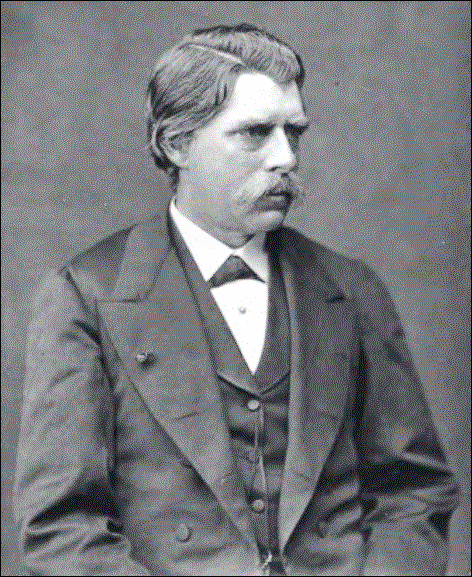
1879: Pre-Hertz Transmission and Portable Reception
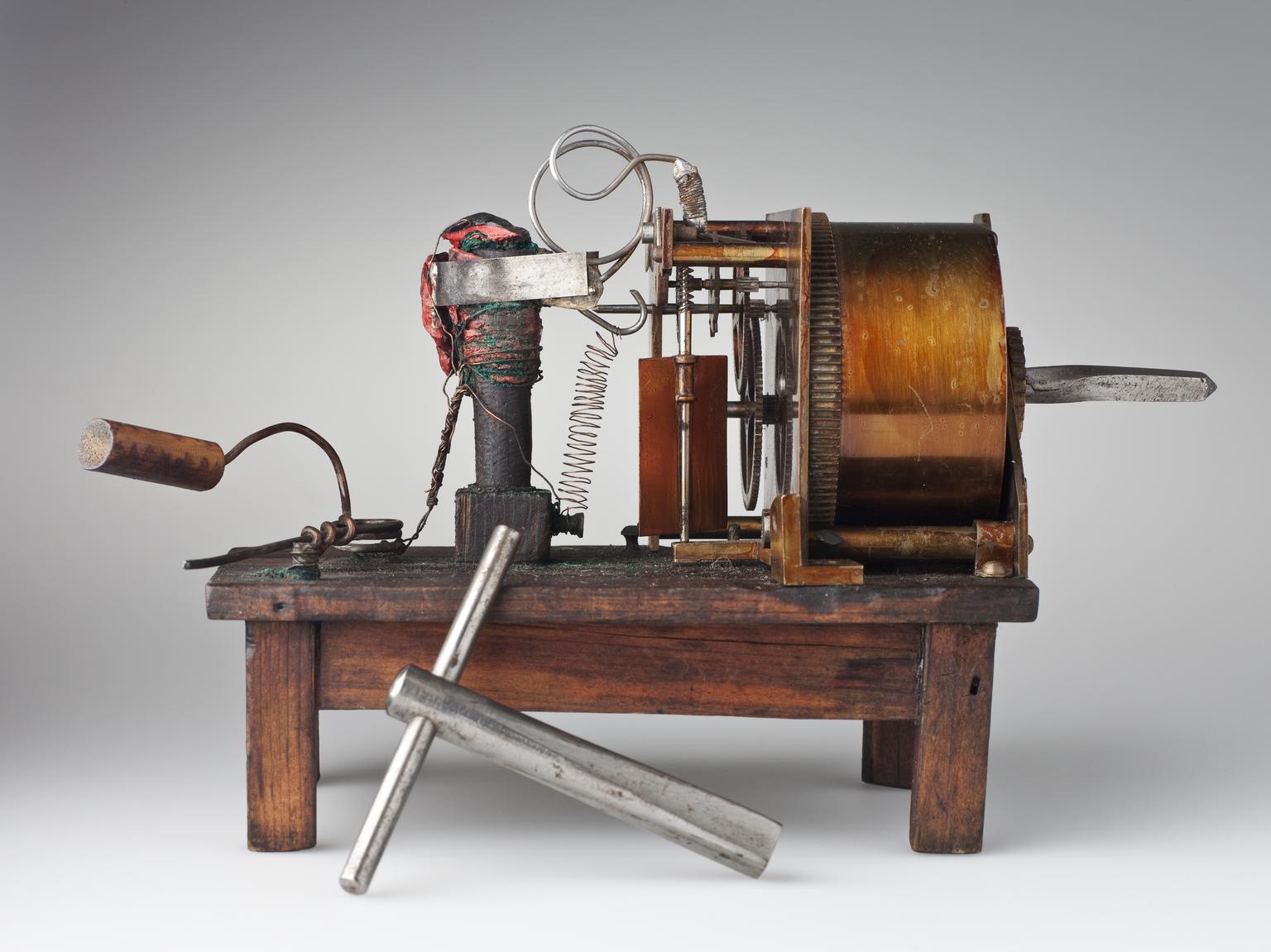
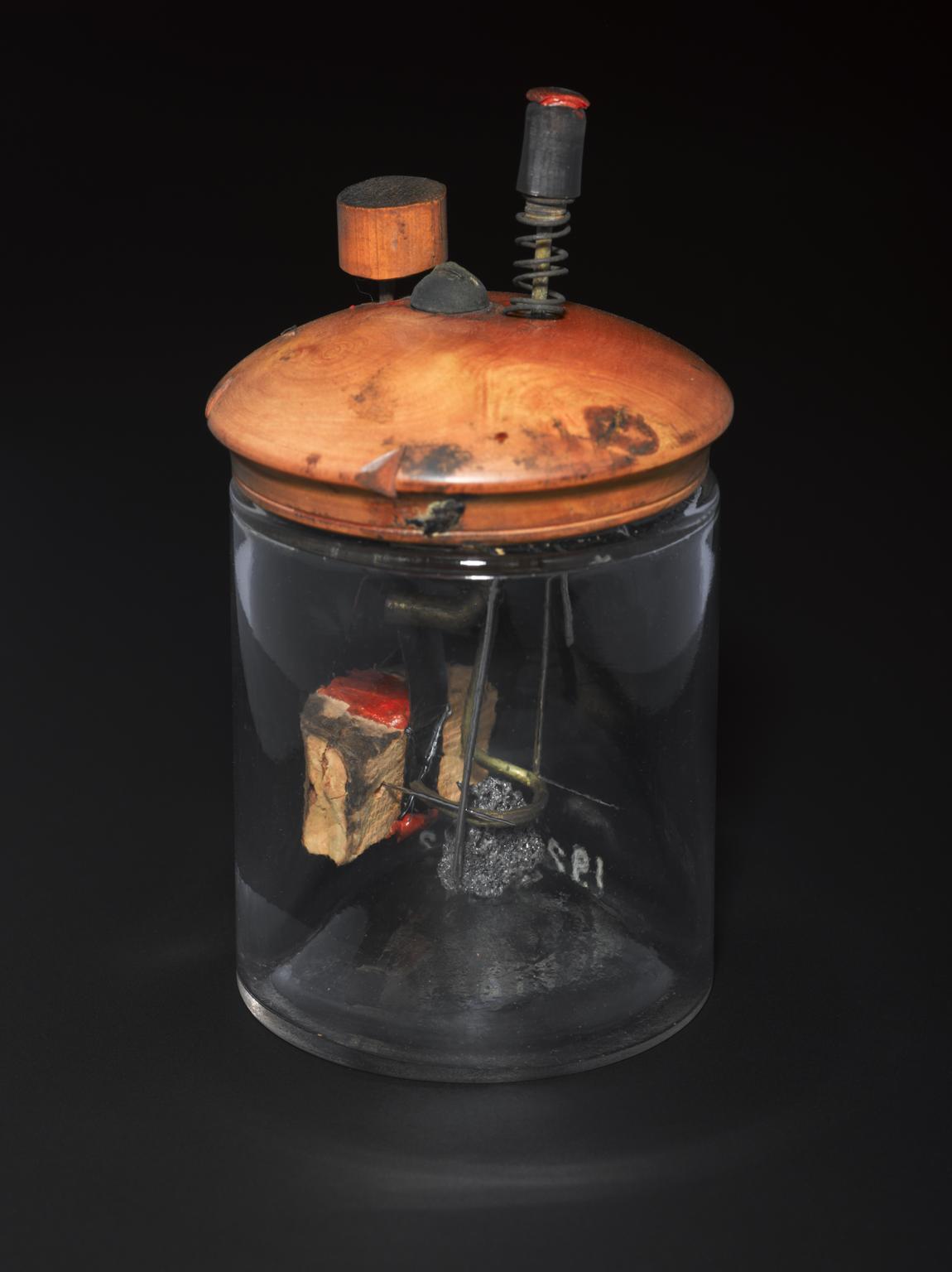
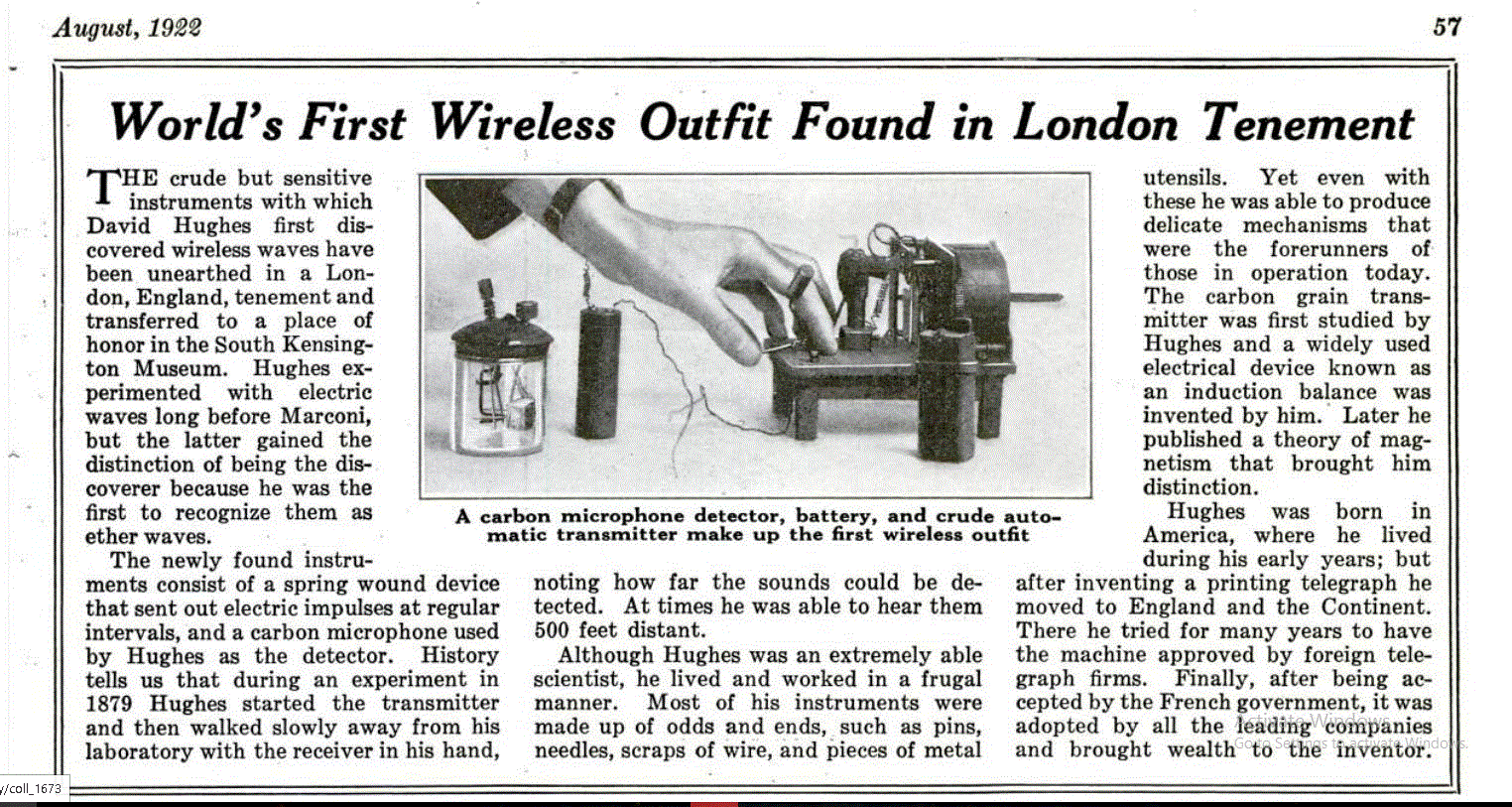
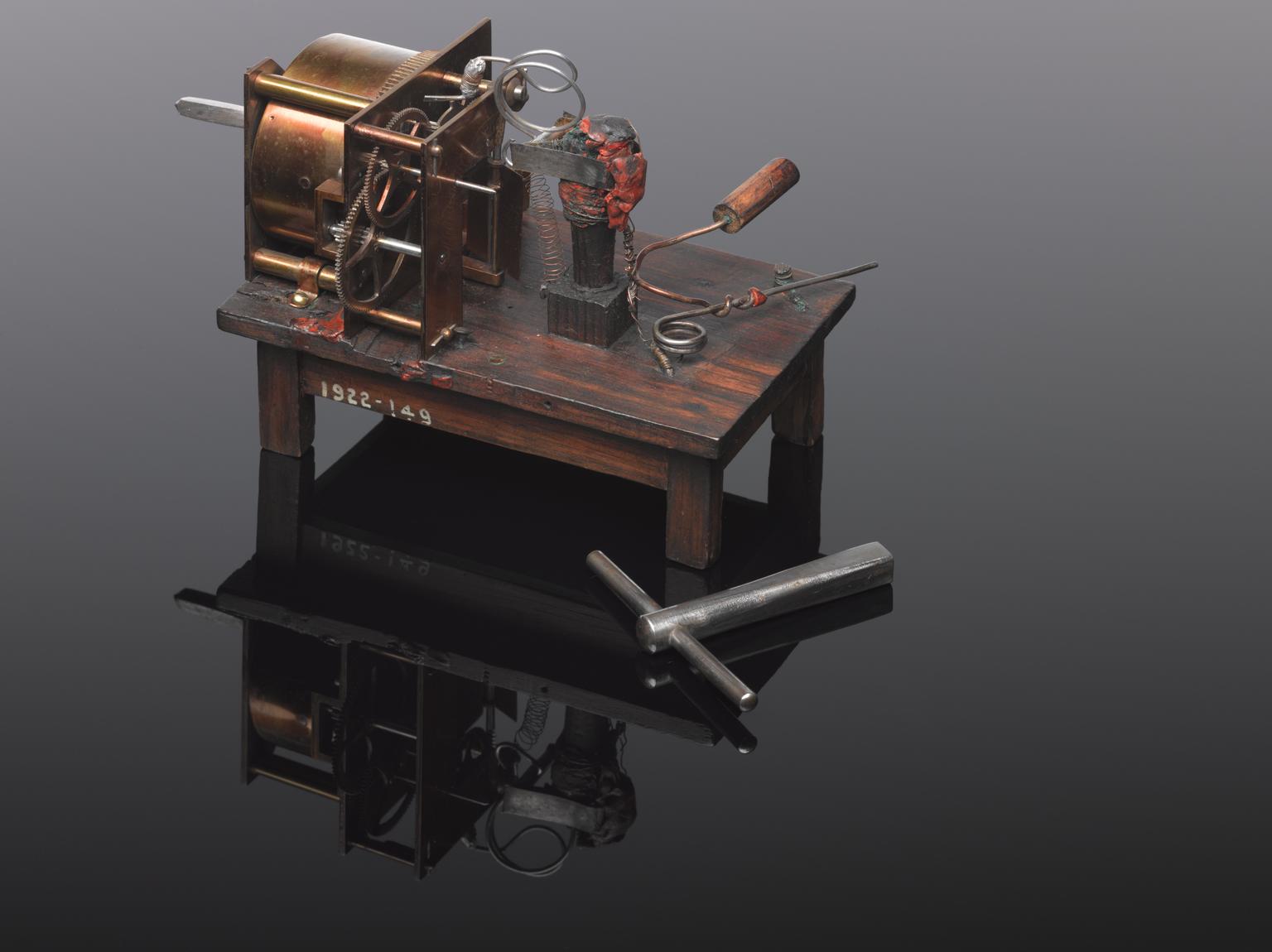
Hughes's strongest claim to wireless history is not merely that he noticed an odd spark effect. By late 1879 he had assembled the main parts of a pre-Hertz transmitter and portable receiver: a clockwork interrupter, a small induction-balance coil, a battery, a loose-contact microphonic detector, and a telephone receiver sensitive enough to make the disturbance audible.
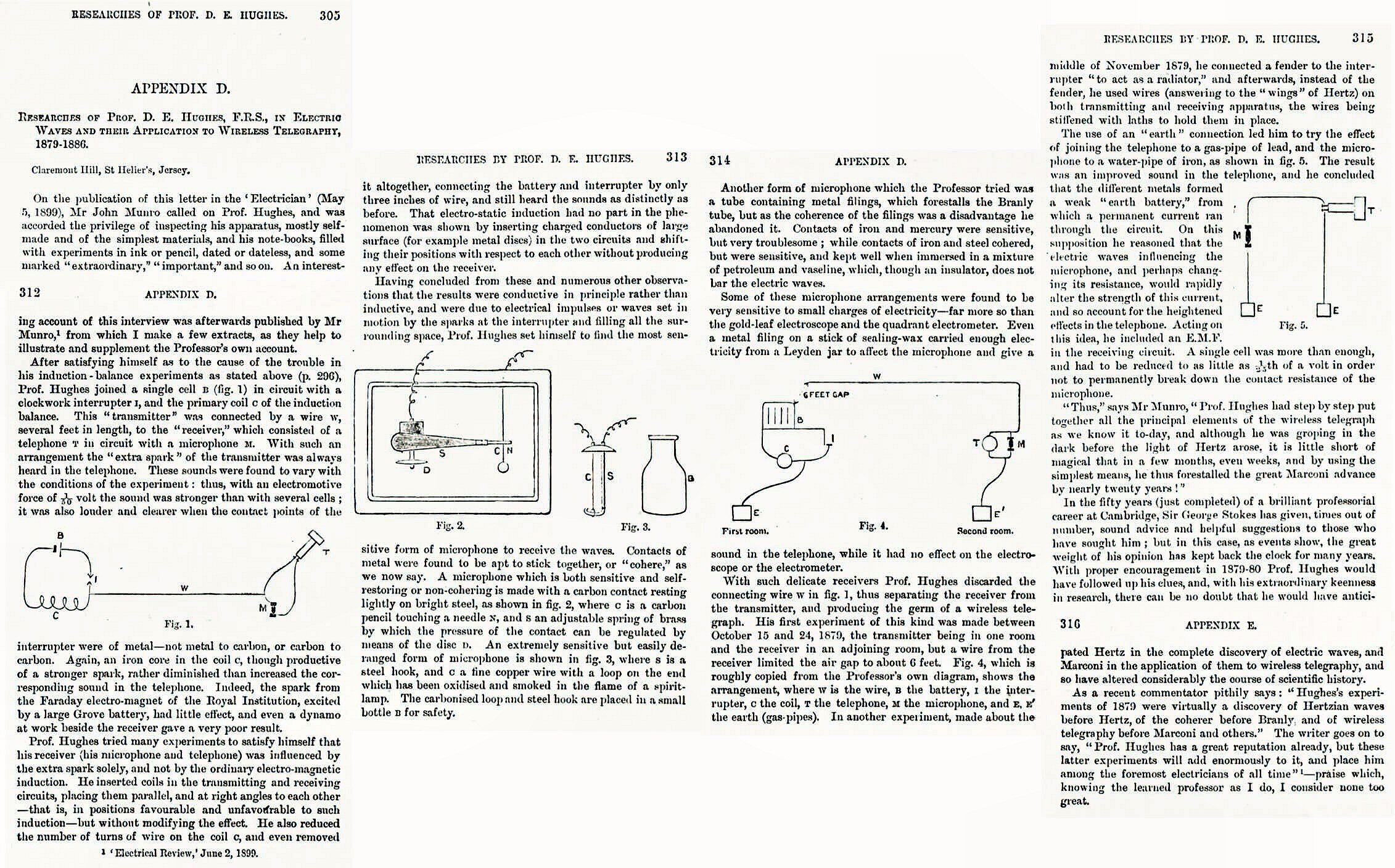
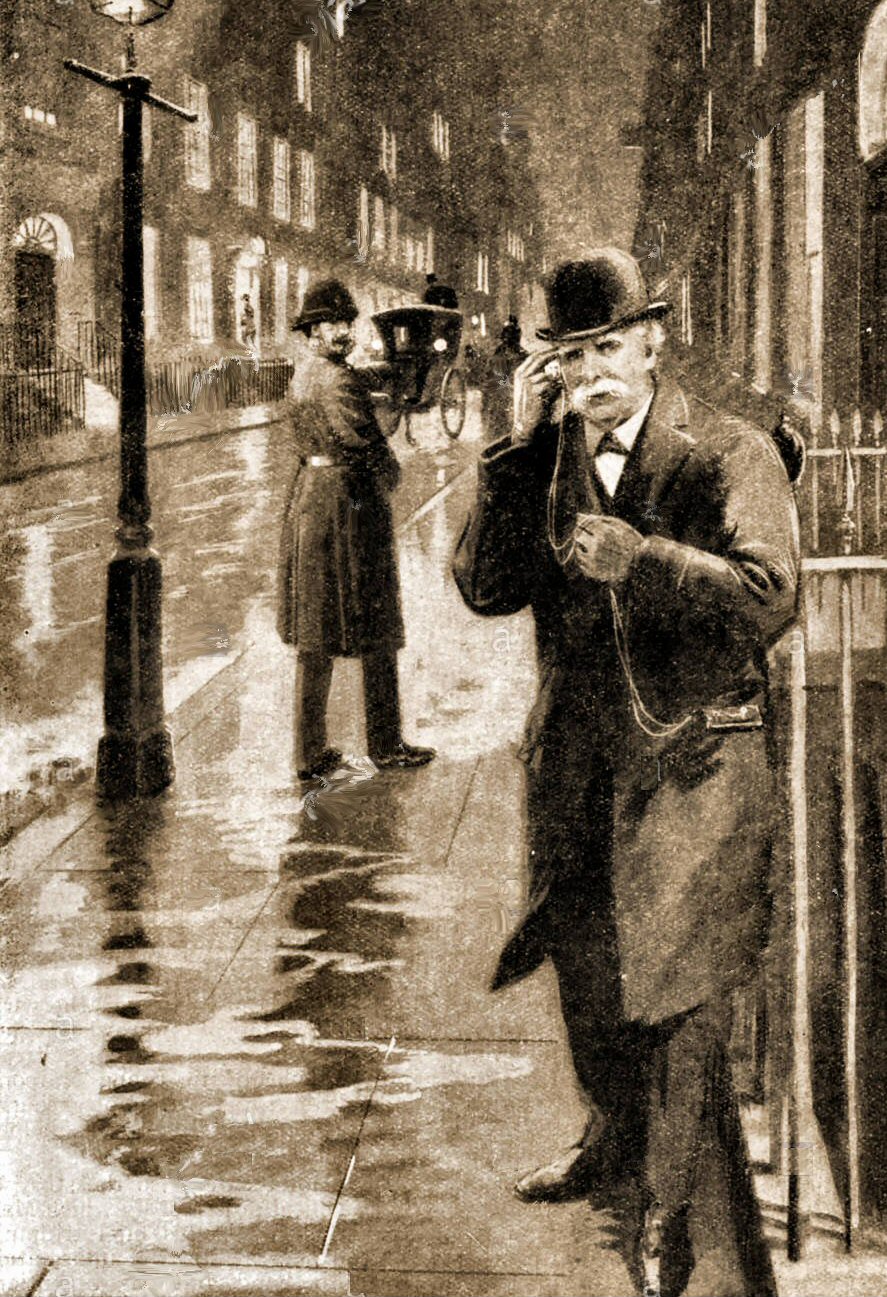
Hughes later told J. J. Fahie that after exhausting the distances available inside his Portland Street residence, he put the transmitter in operation and walked Great Portland Street with the receiver in his hand and the telephone to his ear. The signal reportedly became stronger out to about 60 yards and then faded until it could no longer be heard with certainty at 500 yards - about 1,500 feet.
Wireless Evidence and Local Source Documents
The 1879 claim rests on several mutually reinforcing sources: Hughes's own 1899 account to Fahie, Crookes's recollection of having seen the experiments, Ivor Hughes's later archival reconstruction, Pierce's 1910 technical summary, and surviving apparatus records for the microphone detector and clockwork interrupter.
Used for the notebook-based 1879 reconstruction.
Wireless-history background document.
Notes Hughes's microphonic detector in wireless practice.
Transmission-Line Theory
Hughes and Heaviside's Turning Point
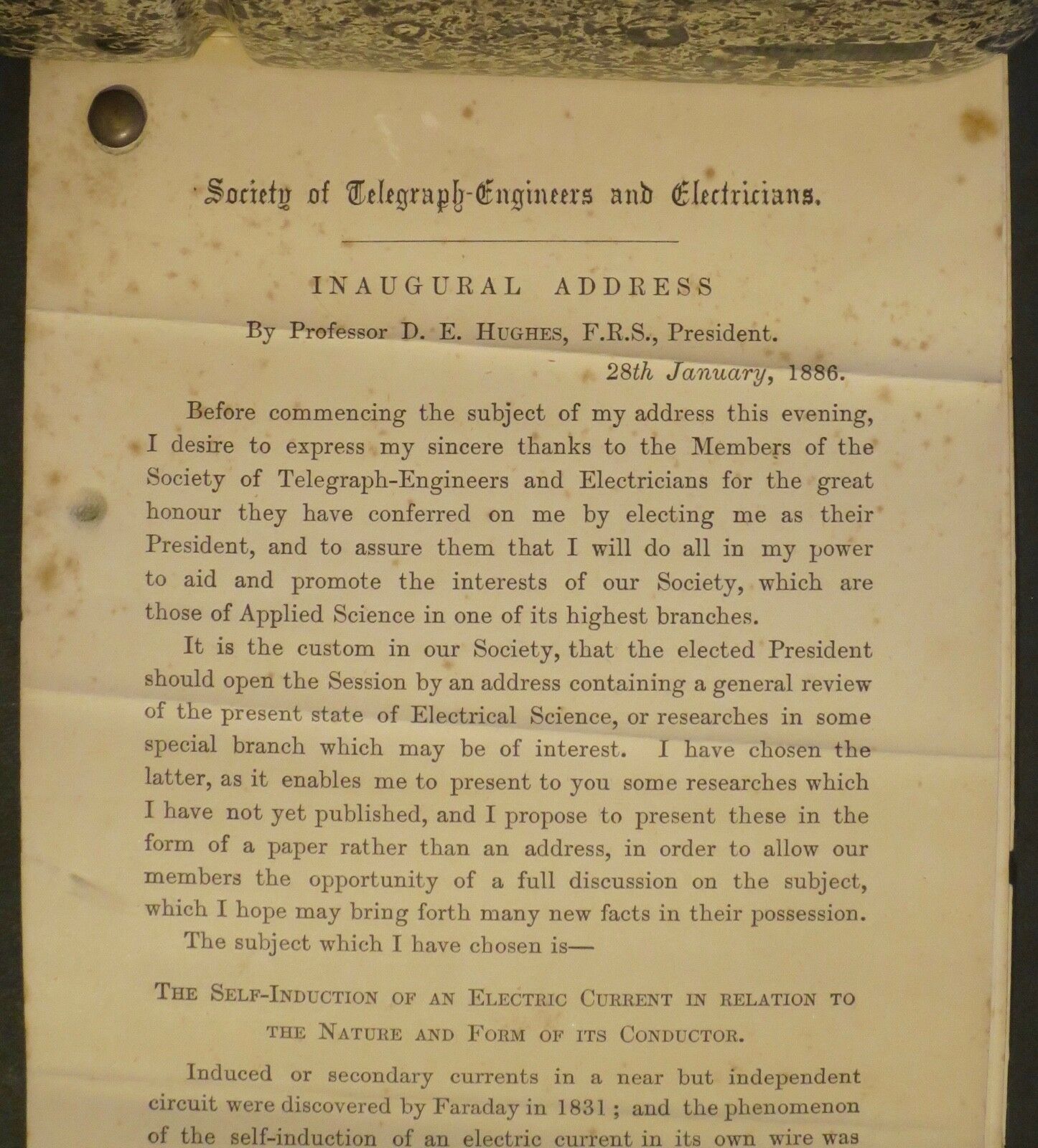
In 1886 Hughes, as president of the Society of Telegraph-Engineers and Electricians, opened the session with "The Self-Induction of an Electric Current in Relation to the Nature and Form of its Conductor." His subject was not radio signalling, but it sat directly on the boundary of radio physics: how rapidly changing currents behave in real conductors.
Heaviside's central thesis was that electrical signalling on wires must be treated as electromagnetic wave propagation guided by conductors and their surrounding dielectric, not as simple current flowing through metal. His distributed-line theory used resistance, inductance, capacitance, and leakage as line constants. It also showed that self-induction can be beneficial, that high-frequency current crowds toward conductor surfaces, and that a properly proportioned line can reduce waveform distortion.
The importance is large: this is the theoretical foundation behind long distance telephony, loading coils, the distortionless line, skin effect, transmission lines, feed lines, and the later engineering language of radio-frequency currents. Heaviside had developed the theory before Hughes's address, but Heaviside's own collected papers credit Hughes's 1886 experiments with providing the first ordinary experimental evidence for surface conduction and with stirring the interest that led Heaviside to publish his wire, dielectric, and self-induction work.
Includes the page-6 inaugural-address scan.
Telegraphy Before Wireless
The Printing Telegraph: Hughes's First Great Success
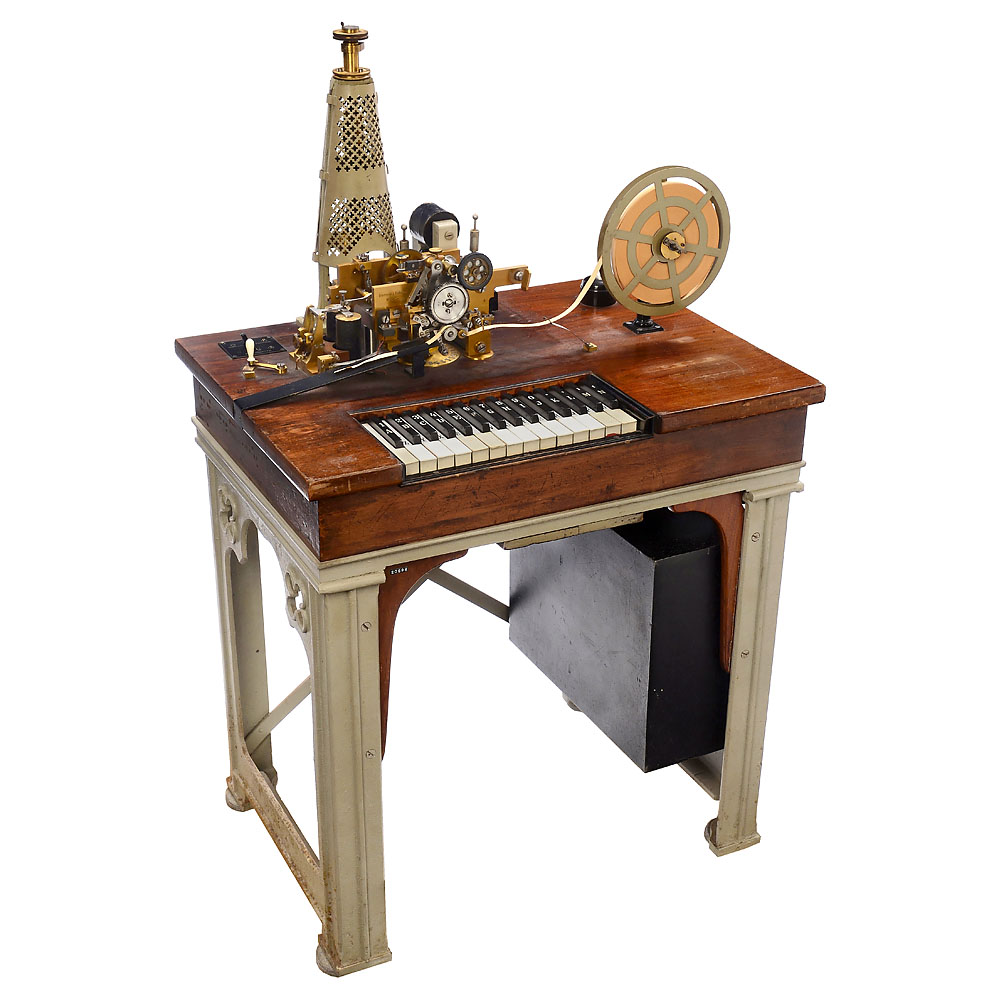
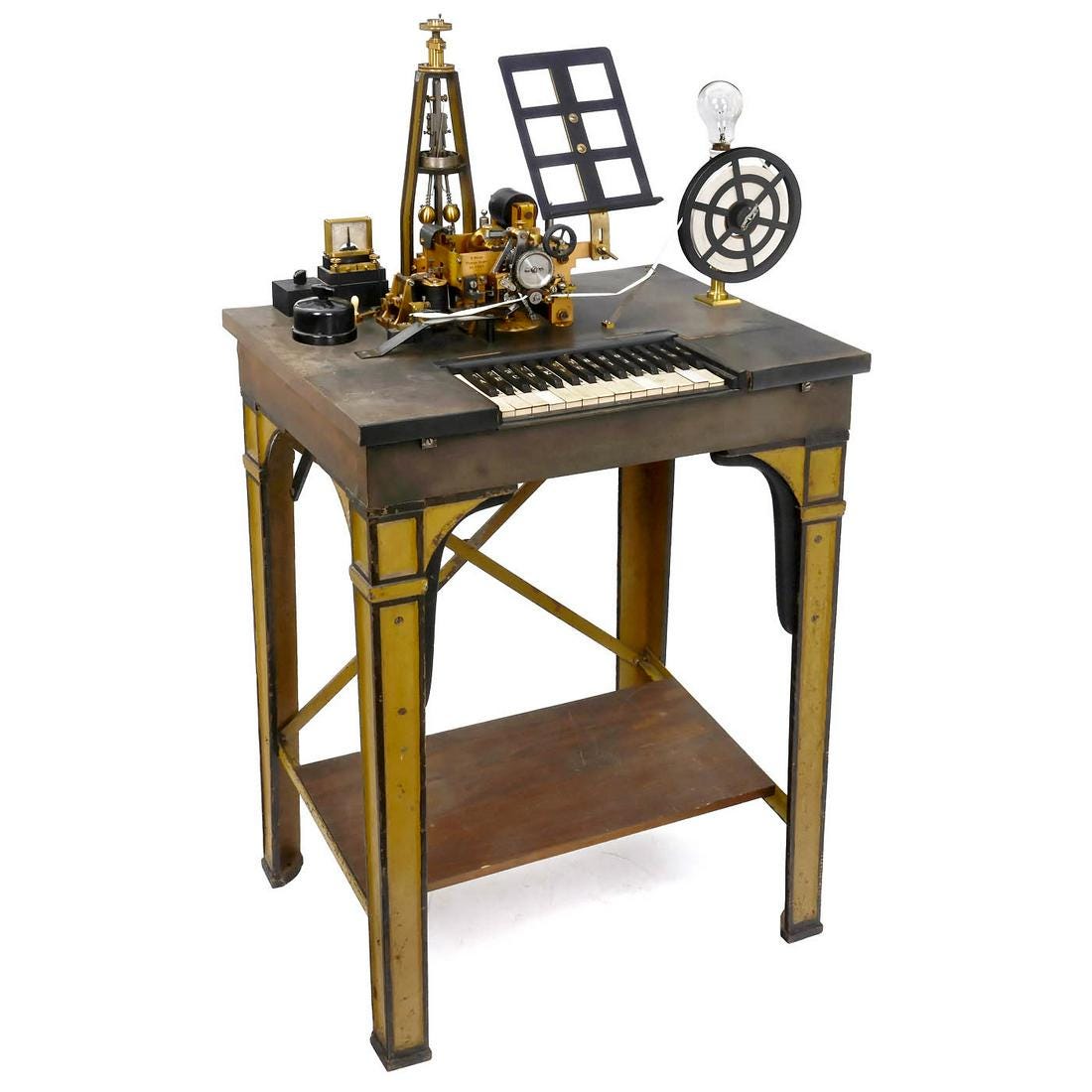
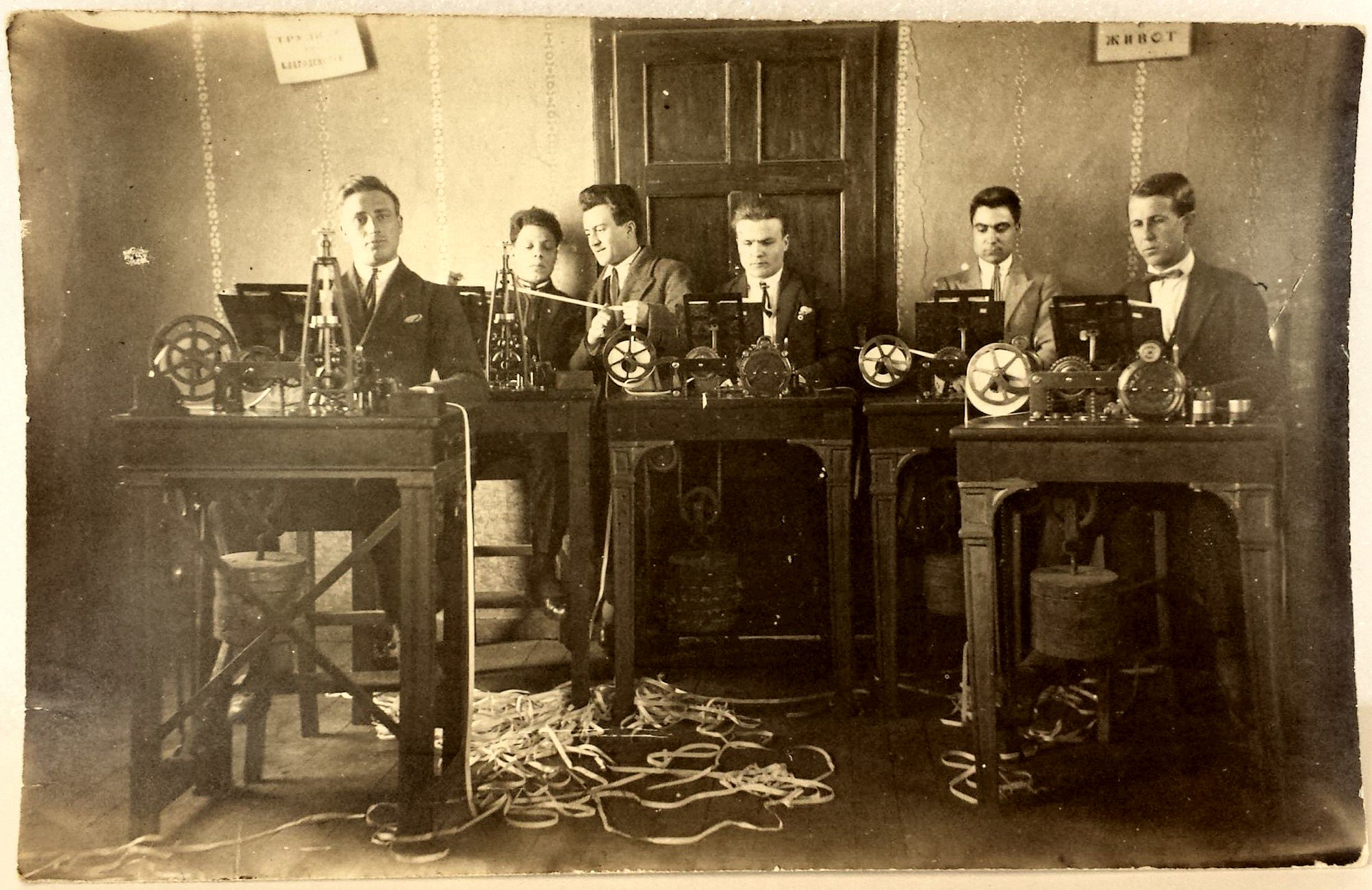
Long before the 1879 wireless experiments, Hughes had already changed telegraphy. His keyboard-operated printing telegraph sent letters, numbers, and signs directly to a synchronized printer. That mattered because it reduced dependence on operators trained in Morse code and delivered readable text at the receiving office.
The development story is also important to Hughes's later science. A self-taught young inventor began with a working room-built prototype, secured patents in the mid-1850s, and then saw the system manufactured and adopted on major European telegraph lines. The success gave Hughes both international standing and the financial independence to pursue research in microphones, induction balances, magnetism, self-induction, and finally the 1879 wireless experiments.
Auction Team Breker identifies the featured instrument as a Siemens & Halske synchronic printing telegraph, no. 5423, built circa 1900 after Hughes's 1856 design. Its motor drive, centrifugal governor, and 28 double-function keys show that Hughes's mid-19th-century invention remained a practical communications machine into the age when wireless telegraphy was beginning to emerge.
1858: Atlantic Cable Work and Long-Line Telegraphy
Hughes also belongs in the history of the first Atlantic cable attempt. Contemporary cable news reported that Professor Hughes had successfully transmitted an electric spark through the whole length of the cable during the 1858 preparations. The stronger documentary record is the 1861 Joint Committee report, where Hughes gave evidence about experiments on the Atlantic cable, signal speed, conductor size, induction coils, batteries, retardation, charge and discharge, insulation, and the use of his printing instrument.
This matters because the Atlantic cable exposed Hughes to the hardest electrical communication problem of the day: getting intelligible signals through a very long, insulated conductor surrounded by dielectric. His testimony shows a practical concern with signal delay, dielectric charge, receiver sensitivity, and damage caused by high-voltage induction-coil practice. Those are not yet radio problems, but they are close ancestors of transmission-line and high-frequency signalling problems.
Key Biography
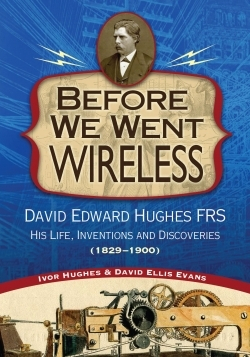
Before We Went Wireless: David Edward Hughes FRS, His Life, Inventions and Discoveries
Ivor Hughes and David Ellis Evans produced the major modern biography of David Edward Hughes. It is especially important to this page because it treats Hughes as a whole person - musician, telegraph inventor, microphone experimenter, induction-balance researcher, and pre-Hertz wireless investigator - rather than reducing him to one invention.
The book's account is grounded in years of archive and museum work, including Hughes family papers and notebooks. Its wireless chapter is a central source for the argument that Hughes transmitted and received electromagnetic signals in 1879, before Hertz's formal proof and before Marconi's practical wireless system.
The Induction Balance Was the Bridge
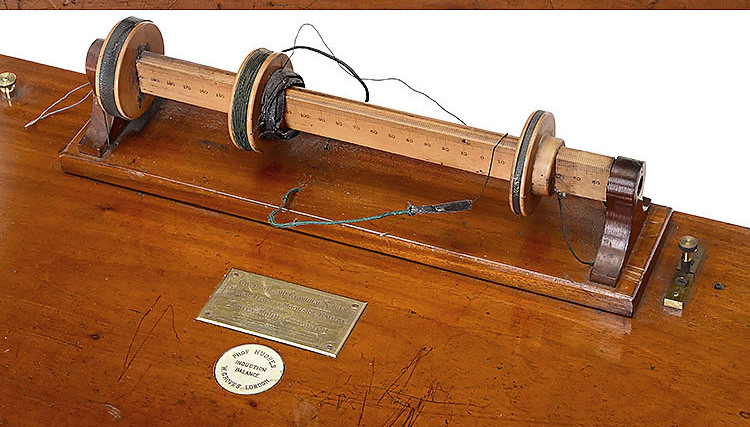
Hughes's induction balance was a precision comparison instrument. Balanced coils cancelled each other electrically; a metal or magnetic specimen placed near the coils disturbed the balance and made a signal audible in a telephone receiver. Hughes used this method to examine metals, alloys, magnetism, and self-induction.
The Science Museum Group records an experimental induction-balance model dated 1879 and credited through the executors of Anna C. Hughes. Hughes's 1879 Royal Society paper, "On an Induction-Currents Balance, and Experimental Researches made therewith," describes the instrument as a way to compare small disturbances in metallic bodies. Later work on self-induction and conductor form made Hughes part of the Victorian discussion that led toward the modern understanding of high-frequency current distribution, now called skin effect.
The Breker connection is useful because it gives this research a physical anchor. The most important collection details to preserve with the object are photographs of the replica, its catalogue description, maker's marks, dimensions, and any lot number.
Auction Team Breker Replica
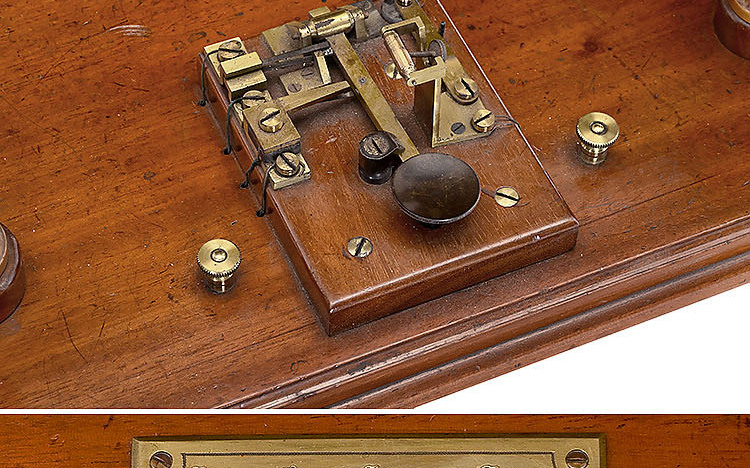
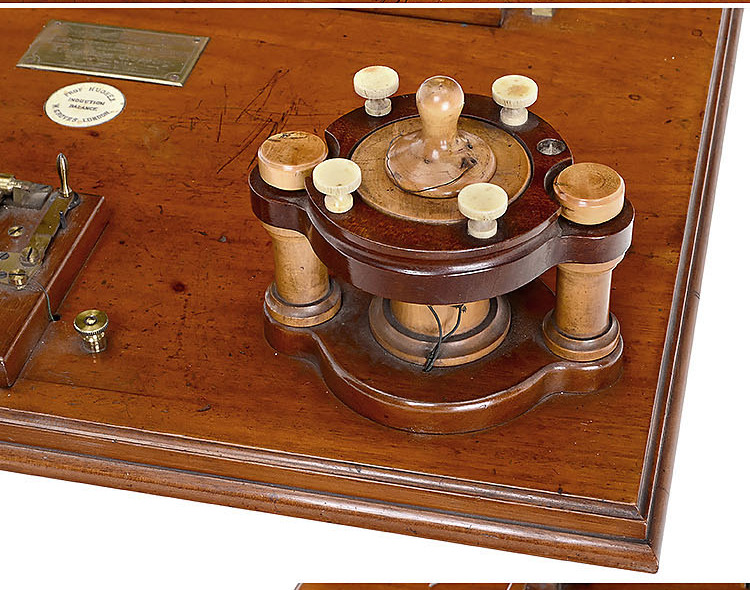
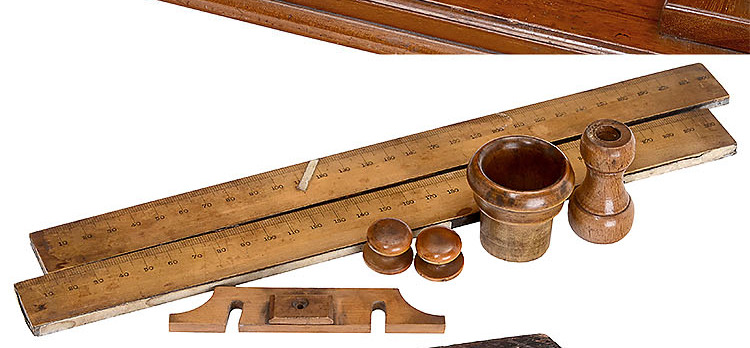
Auction Team Breker's May 2020 science-and-technology highlight page identifies this apparatus as Hughes Induction Balance, 1879. The page listed an estimate of €7,000-10,000, or US$7,800-11,000, and a reserve of €4,000, or US$4,490.
The locally served images below are cropped from Breker's original composite photograph so the object details can be displayed on this page without hotlinking. The full local composite image opens in a new window.
Visible markings in the Breker image appear to include a round label reading "Prof. Hughes Induction Balance, W. Groves, London" and a memorial plaque for Heath Grammar School from the Laboratory at Moorside, Halifax. The personal name on the plaque is not fully legible in the available image and should be confirmed from direct inspection.
Preserved source:
Open local Breker archive
Original source:
Auction Team Breker highlight page
Local full image:
Open the full composite photograph
Local archive status:
The Breker page HTML and images are preserved under WirelessArchive.




Context and Caution
A fair history of Hughes has to make the strong case without overstating it. Maxwell had already published the electromagnetic theory of light in 1865, and his Treatise appeared in 1873. Hughes, however, was a practical experimenter rather than a Maxwellian theorist. He found the effect experimentally but did not publish it as a proof of electromagnetic waves.
On February 20, 1880, William Spottiswoode, George Gabriel Stokes, and Thomas Henry Huxley visited Hughes to witness his experiments. Stokes judged the results to be explainable by known electromagnetic induction. Hughes was discouraged and did not press the claim publicly. Nature later summarized the notebook entry and noted that neither Hughes nor the visitors understood the observations as electromagnetic waves at the time.
This is where Joseph Henry provides an important parallel. Henry detected electrical effects from lightning and spark discharges decades earlier, and modern commentators regard those observations as radio-frequency phenomena. But Henry, like Hughes, did not turn the observation into a complete electromagnetic-wave theory or practical radio service. Both men therefore belong in the "prehistory" of wireless: they saw real effects before the conceptual and technical system for radio had fully formed.
-
Verified
Hughes's own 1899 account to Fahie reports portable reception along Great Portland Street to about 500 yards. Crookes's recollection, Science Museum apparatus records, and later technical summaries independently support the apparatus chain. -
Inferred
The 1879 separated-circuit experiments are best understood today as electromagnetic-radiation detection, but Hughes did not publish them that way in 1879-1880 and did not supply Hertz's later formal proof. -
Needs scan
The Atlantic-cable sources verified so far support Keyham/Plymouth cable testing and later testimony, but not shipboard engineering-crew service.
Condensed Timeline
- David Edward Hughes is born; sources vary on exact year and birthplace, but his Welsh family background and later American career are central to his biography.
- Hughes patents and publicizes his printing telegraph, a keyboard-operated system that printed letters directly.
- Hughes participates in Atlantic cable testing before submergence; later testimony records his views on speed, retardation, batteries, induction coils, insulation, and his printing instrument.
- James Clerk Maxwell publishes "A Dynamical Theory of the Electromagnetic Field," establishing the electromagnetic theory of light.
- Hughes publishes his microphone work, showing the importance of loose electrical contact in carbon transmitters.
- Hughes presents his induction-current balance and begins the wireless experiments that use interrupted circuits, microphones, and a telephone receiver.
- Spottiswoode, Stokes, and Huxley witness Hughes's experiments. Their interpretation as induction discourages publication.
- Hughes continues major work on magnetism, induction, and self-induction; he becomes a Fellow of the Royal Society in 1880 and receives the Royal Medal in 1885.
- Hughes delivers his inaugural address on self-induction and conductor form; Heaviside later credits Hughes's experimental work with helping validate and publicize surface-conduction theory.
- Heinrich Hertz deliberately generates, detects, and characterizes electromagnetic waves, giving Maxwell's theory decisive experimental proof.
- William Crookes publicly discusses the possibility of wireless telegraphy and alludes to earlier unwired experiments later associated with Hughes.
- J. J. Fahie and contemporary electrical journals bring Hughes's 1879 experiments into the published wireless history record.
Research Sources
- Local copy: J. J. Fahie, Hughes appendix, preserved from Early Radio History. Used for Hughes's 1899 account of the 1879 experiments, Great Portland Street reception, and the 500-yard range.
- Local text: Ivor Hughes, AWA Review 2009, "D. E. Hughes' Wireless Discovery in 1879?". Used for the notebook-based reconstruction and the apparatus sequence.
- Local copy: William Crookes, "Some Possibilities of Electricity," 1892, preserved from Early Radio History. Used for Crookes's allusion to earlier unwired experiments later identified with Hughes.
- Local PDF: David Edward Hughes and William Crookes and local PDF: personal communication by wireless, 1879-1922. Used for preserved Crookes/Hughes context.
- Local text: Pierce, Wireless Telegraphy, 1910, Hughes microphonic detector excerpt. Used for the later technical interpretation of Hughes's detector.
- Local archive: Hughes 1886 self-induction page scans and OCR. Used for the Society of Telegraph-Engineers and Electricians inaugural-address section.
- Local PDF: Heaviside, Electrical Papers, vol. I and local OCR, preserved from Internet Archive. Used for Heaviside's own statement crediting Hughes's 1886 experimental work as evidence for surface conduction and as a publication catalyst.
- Local PDF: Heaviside, Electrical Papers, vol. II and local OCR, preserved from Internet Archive. Used for Heaviside's self-induction, surface-conduction, beneficial-inductance, and distortionless-line discussions.
- Local copy: Frank Leslie's Illustrated Newspaper, 1858 cable news, preserved from Atlantic-Cable.com. Used for the contemporary report of Hughes's experiments through the full cable.
- Local PDF: 1861 Joint Committee report on submarine telegraph cables and local OCR, preserved from Internet Archive. Used for Hughes's cable testimony.
- Science Museum Group: Hughes microphone detector, object 1922-222. Used for the detector description and the museum's statement that Hughes unwittingly discovered electromagnetic radiation.
- Science Museum Group: clockwork interruptor, object 1922-149. Used for the automatic interrupter and mobile listening-experiment context.
- Science Museum Group: experimental model of induction balance, object 1922-200. Used for the 1879 induction-balance artifact record.
- Proceedings of the Royal Society of London, vol. 29, 1879. Used for Hughes's paper "On an Induction-Currents Balance, and Experimental Researches made therewith."
- Royal Society: Hughes, "Researches upon the self-induction of an electric current," 1886. Used for the self-induction and conductor-form context.
- Nature, "Calendar of Discovery and Invention," February 19, 1927. Used for the February 20, 1880 notebook entry naming Spottiswoode, Stokes, and Huxley.
- J. J. Fahie, Appendix D, "Hughes, F.R.S., in Electric Waves and Their Application to Wireless Telegraphy, 1879-1886". Used as the late published account of Hughes's own recollections and correspondence.
- William Crookes, "Some Possibilities of Electricity," Fortnightly Review, 1892. Used for Crookes's early public discussion of wireless telegraphy and allusion to earlier unwired experiments.
- Princeton Joseph Henry Project: Henry & Radio. Used for the comparison between Hughes's and Henry's pre-Hertz observations.
- Royal Society commentary on Maxwell's 1865 paper. Used to correct the page's earlier Maxwell chronology.
- CaltechAUTHORS: "What Heinrich Hertz discovered about electric waves in 1887-1888". Used for the distinction between Hughes's earlier observations and Hertz's proof.
- David Edward Hughes - Life and Discoveries: official book page. Used for the book's authorship, scope, research basis, award notes, and stated wireless emphasis.
- Smithsonian Libraries: Before We Went Wireless catalogue record. Used for publication details, edition, extent, ISBNs, and contents.
- Foreword Reviews: Before We Went Wireless. Used for the locally mirrored book-cover image and review context.
- Local archive: Auction Team Breker, Hughes Printing Telegraph, circa 1900. Preserved from the original Breker project page and used for the locally served printing-telegraph image and Siemens & Halske description.
- Local archive: Auction Team Breker, Hughes Induction Balance, 1879. Preserved from the original Breker highlight page and used for the locally served Breker image gallery and estimate/reserve details.
- Science Museum Group: measuring travelling microscope by W. Groves. Used only as a corroborating research lead that W. Groves, London appears in late-19th-century instrument records.