|
M a r c o n i p h o n e V2 Broadcast Receiver (Early version: September 30, 1922) |
||||||||||||||||||
| After Guglielmo Marconi's twenty-seven years of pioneering work in developing worldwide radio communications, the focus shifted from maritime and international cablegram service to public broadcasting. In 1922 Marconi's Wireless Telegraph Company, Limited created the Marconiphone department [*] to service the nascent commercial radio broadcasting market. Marconiphone's first products were radio receivers for domestic radio listeners. | ||||||||||||||||||
|
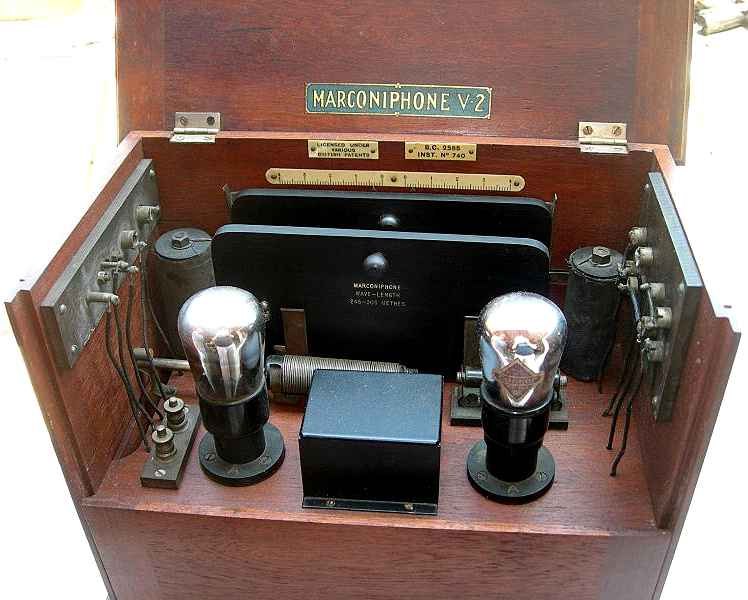
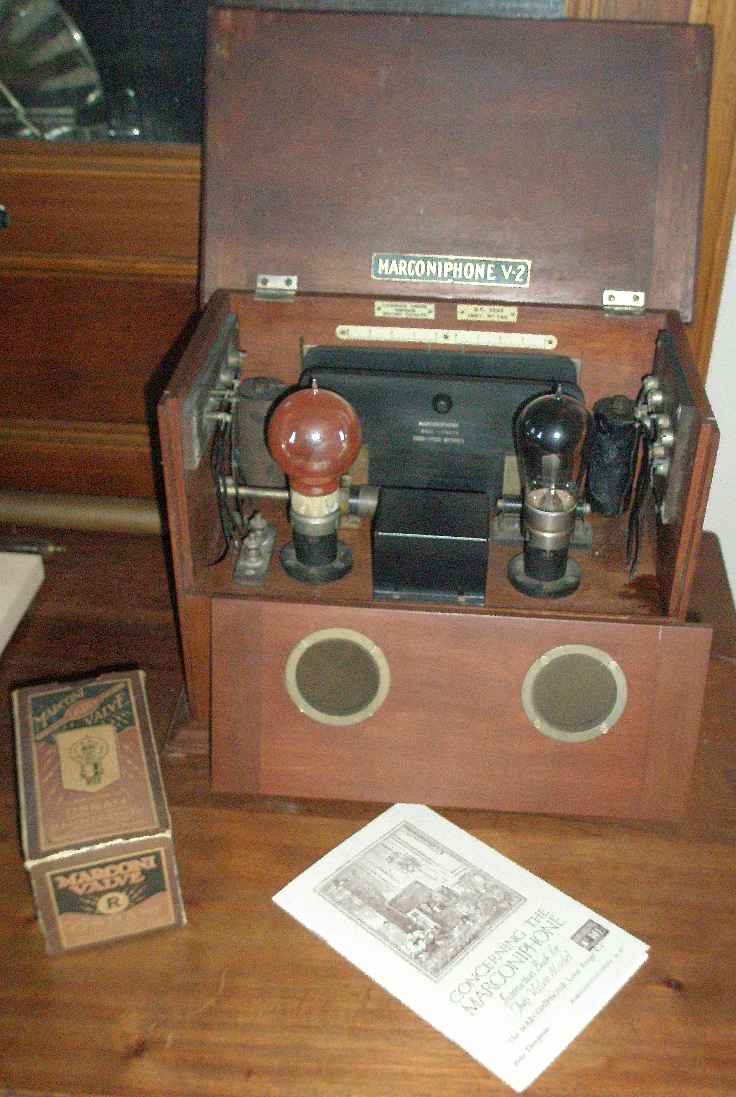
The order slip[*] dated July 4, 1922 confirms Marconi Company's Order No. X1052 to Messers Watshams of Covent Garden, London, England for 500 Marconiphone 'Crystal Junior' Receivers, 5,000 Marconiphone 'Crystal A' Receivers, and 5,000 Marconiphone Type V2 Receivers, at a total cost of £30,625. Sets were made initially at Chelmsford Works. Because the British Broadcasting Company (BBC), being formed to regulate and license wireless radio equipment for use in England, did not come into existence until November 1, 1922, there was a prohibition against the use of regeneration in radio receiving equipment produced for the English market until that date. For this reason, Marconiphone V2 receivers manufactured between July and November 1922 were not equipped with the plug-in Regeneration Unit provided reaction in later V2s and V2As[*]. Note in Figure 1, that there is no Regenerator Unit installed to the right of the valve (tube) as was normal for later V2s. These early V2s were fitted with type 'R' valves (4V, 0.65A filament) or LT1 and LT3 dull emitters as standard[*] After November 1922 many of the early V2s were retrofitted with Regenerator Units. As a consequence, there are very few examples of this early V2 still existent today in their unmodified state. |
|
|||||||||||||||||
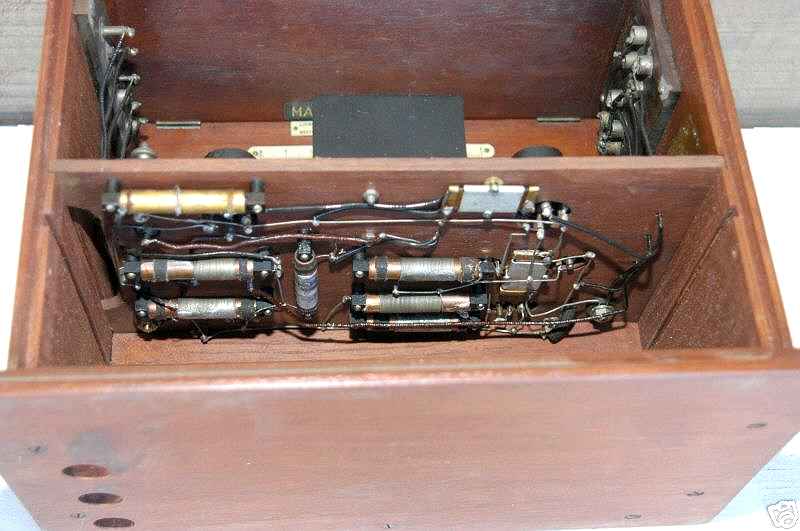
| Figure 2 shows the underside of the chassis. Note that the components mounted there are shifted to the left to accommodate later retrofit of the plug-in Regenerator Unit.
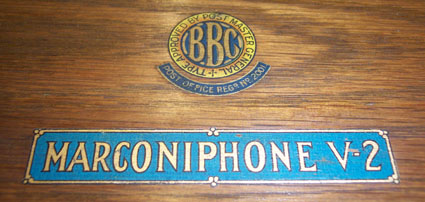
Before going into production, a sample of each new model had to be sent to the Post Office and tested to see that it did not radiate electrical interference to a neighboring aerial. In valve receivers, variable reaction was not allowed in the aerial circuit, but variable reaction was permitted in subsequent stages if there was no specific coupling between these and the aerial circuit. The September, 1922 issue of Wireless World magazine provides this information about the early British prohibition of regenerative receivrs at the dawn of broadcasting: The V.2 model has been constructed to meet the new Post Office requirements, which specify that the receiver must not be capable of radiation. Reaction is not employed, but a throw-back circuit is utilised by means of which additional low frequency magnification is obtained. The "grid condenser" method of rectification is employed, and a novel method of tuning is used in which the inductance of a fixed coil is varied by means of a copper spade. Inductance units are interchangeable. The set has been so designed that either "R" or "Dull Emitter" valves can be fitted, the latter permitting of the operation of the set from dry cells instead of accumulators. This receiver has a guaranteed range of 5o miles from a broadcasting centre, on the broadcasting wavelengths.Later Marconiphone V2 receivers manufactured after November 1922 carried the BBC/PMG stamp (and registration number 2001) signifying that the equipment was made by a member firm of the British Broadcasting Company (and was subject to a royalty payment) and approved by the Post Master General as shown if Figure 3. |
|
|||||||||||||||||
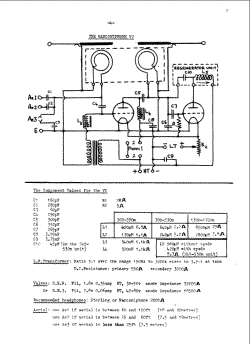
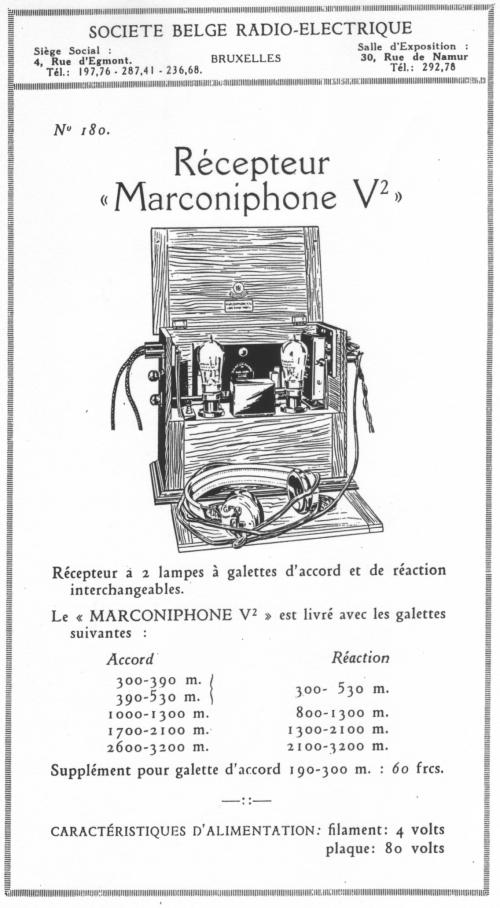
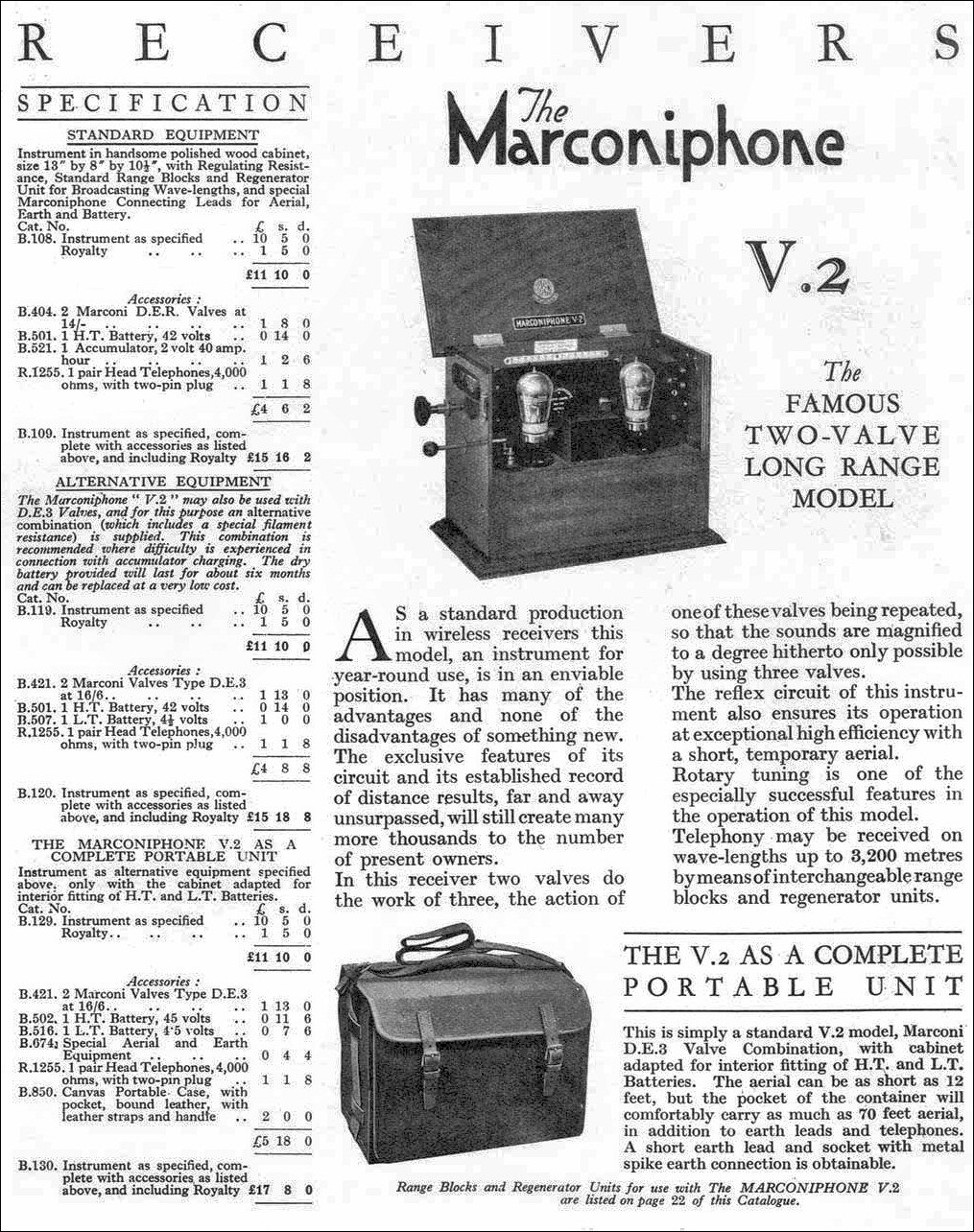 Figure 2B. Marconiphone V2 Catalog Page |
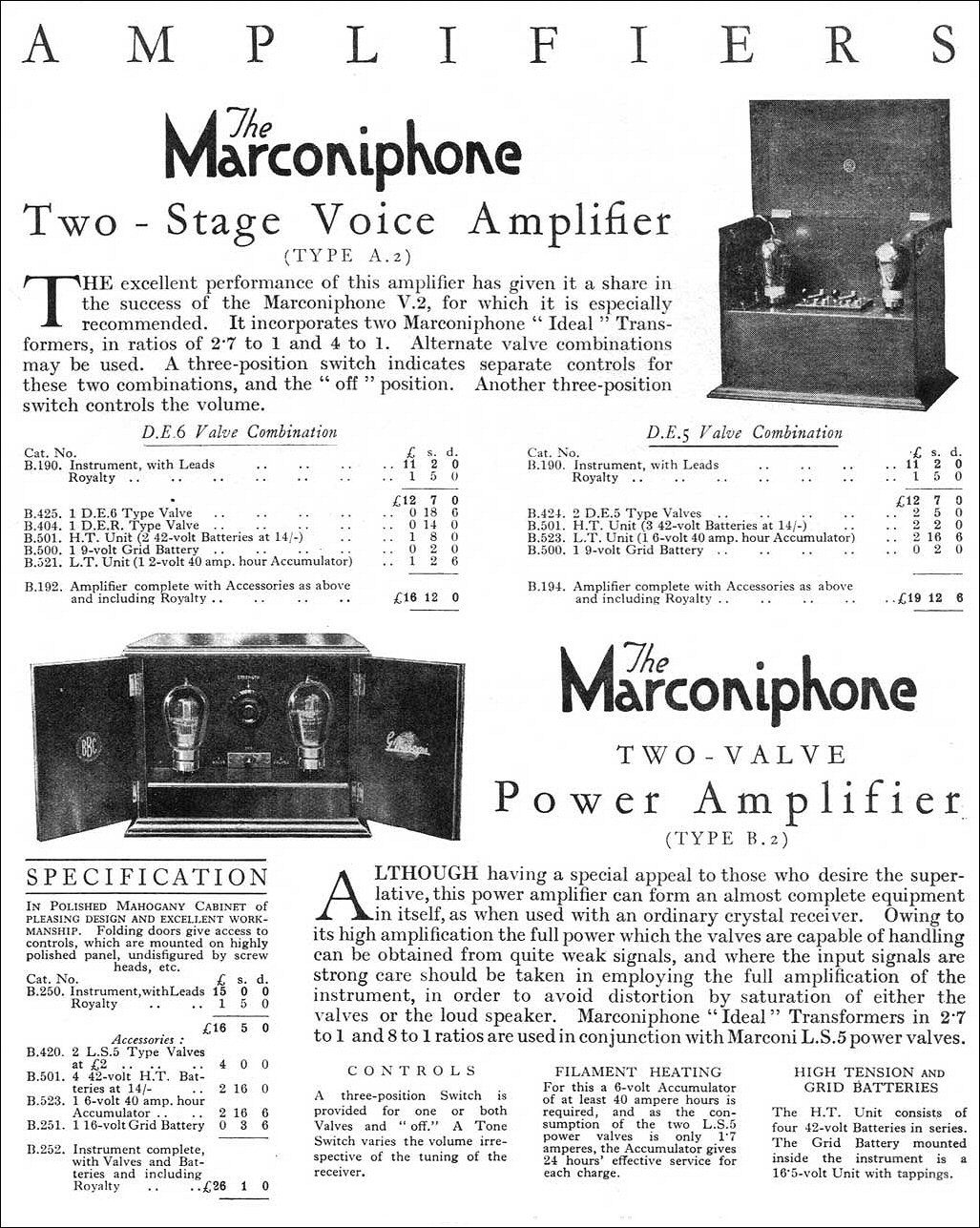 Figure 2C. Marconiphone V2 Amplifier Catalog Page |
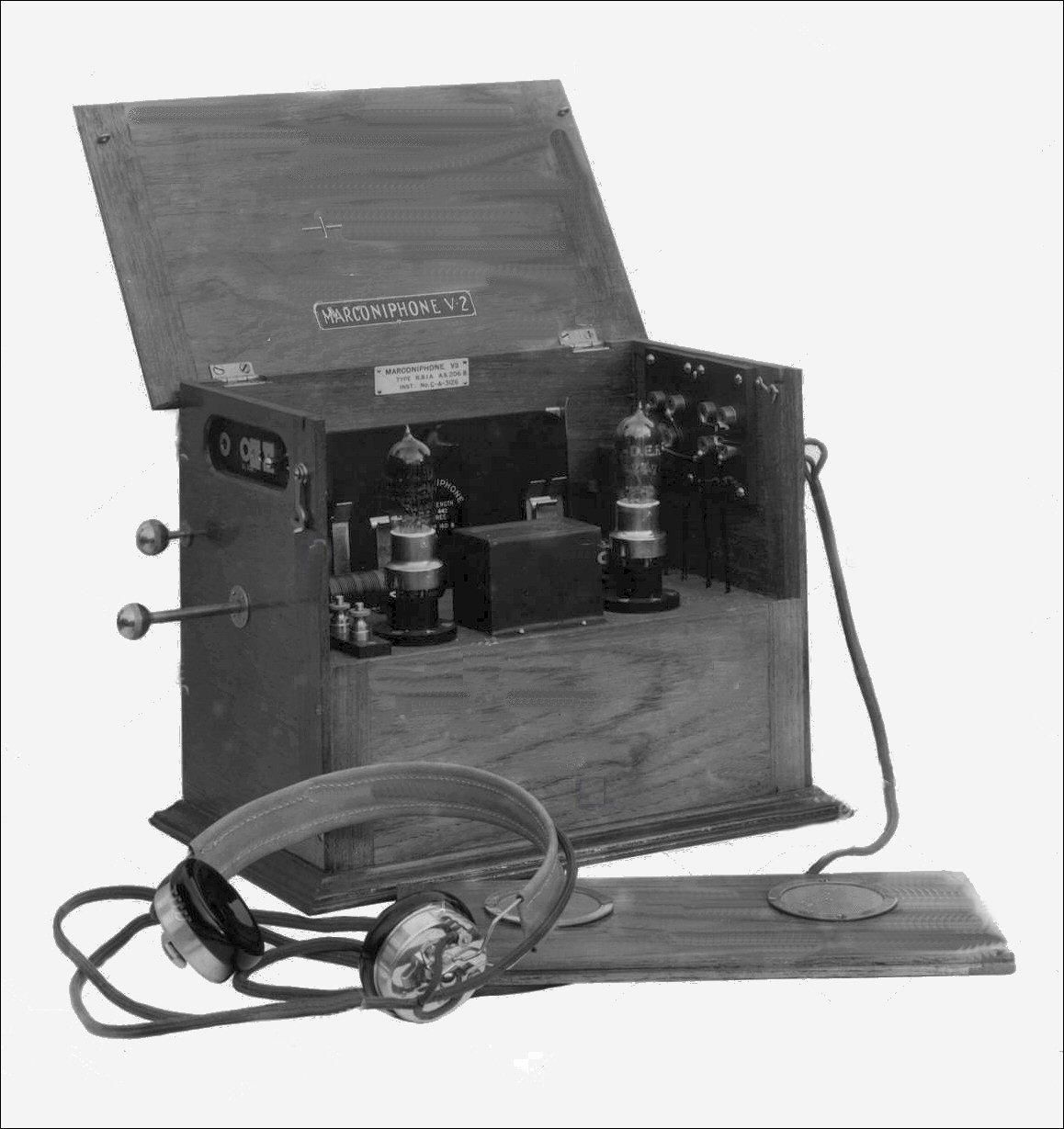 Figure 2A. Early V2 Chassis shows space for retrofit Regenerator Unit at right. |
||||||||||||||||
|
Only non-radiating sets were approved and these were given their own G.P.O. registration number which had to be displayed on the set together with the embossed or transfer printed BBC/PMG stamp which was circled with the words 'TYPE APPROVED BY THE POST MASTER GENERAL'.
The follow on model to the V2 was the V2A "Long Range" produced in the Spring of 1923 and bore the registration number 0175. The V2A was fitted with 'DER' valves (1.8V, 0.35A filament). A receiving licence of 10 shillings— which incidentally remained
at this figure for approximately the next 20 years—was instituted
and by March 1923; 80, 000 licences were issued. In addition, it was
estimated that 200, 000 unlicensed home constructed receivers were
in use. |
|
||||||||||||||||
|
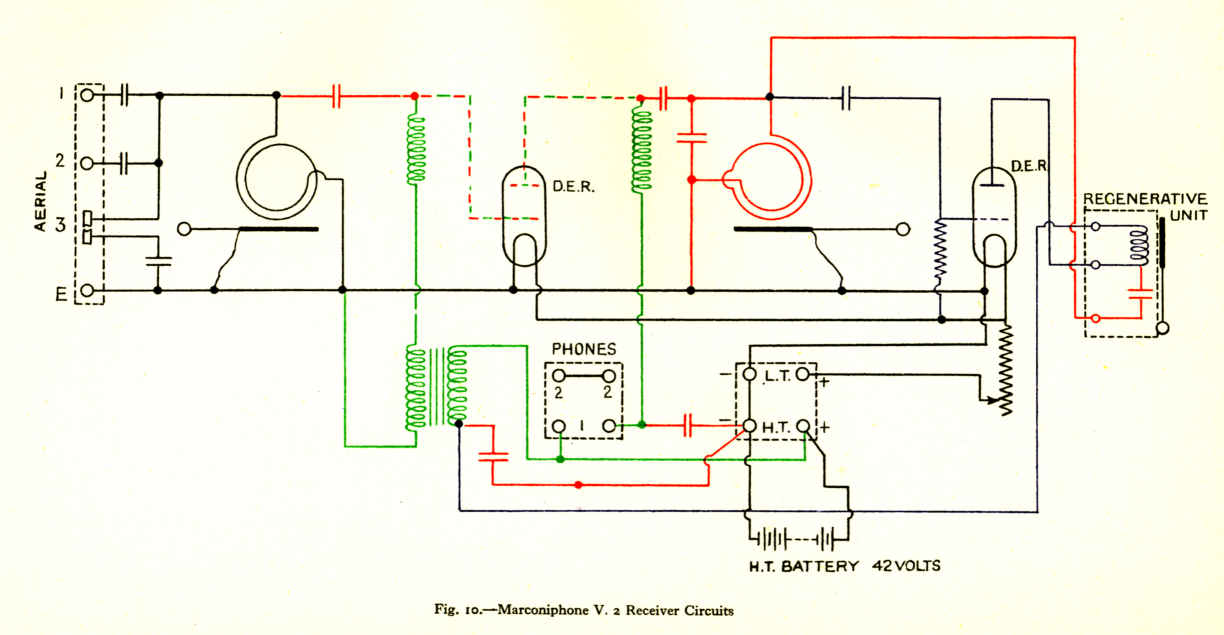
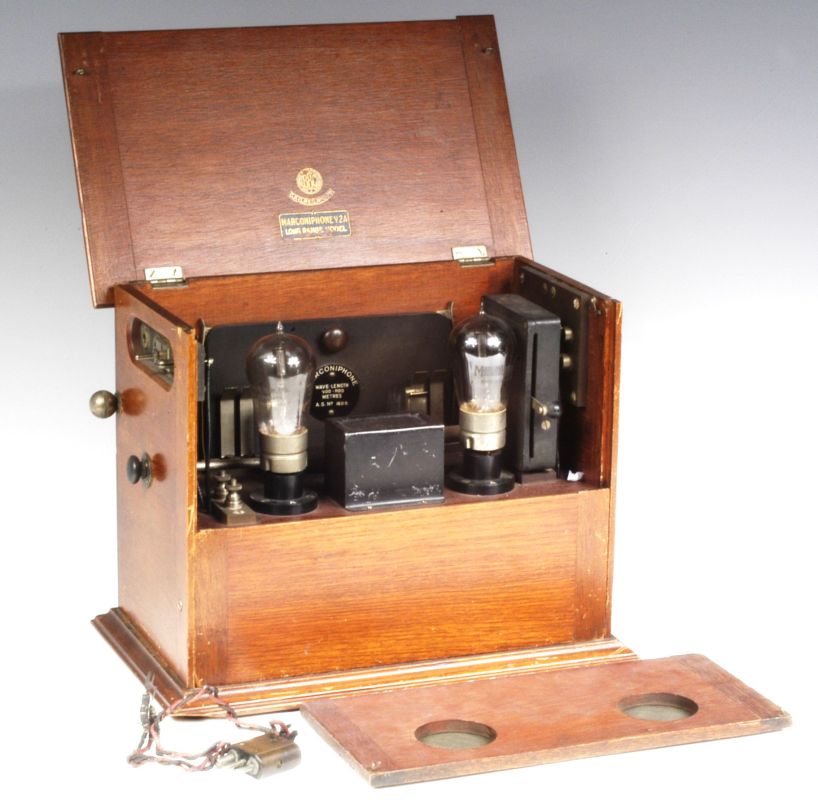
The Marconiphone V2A's performance was superior to its predecessors. Figure 5 shows the circuit diagram of the Marconiphone V2A. The audio circuit is shown in Green and the regeneration circuit is shown in red. In Figure 6 the plug-in Regenerator Unit clearly seen on the right of the right-hand valve. Listen to the Marconiphone V2 in operation: |
|
||||||||||||||||
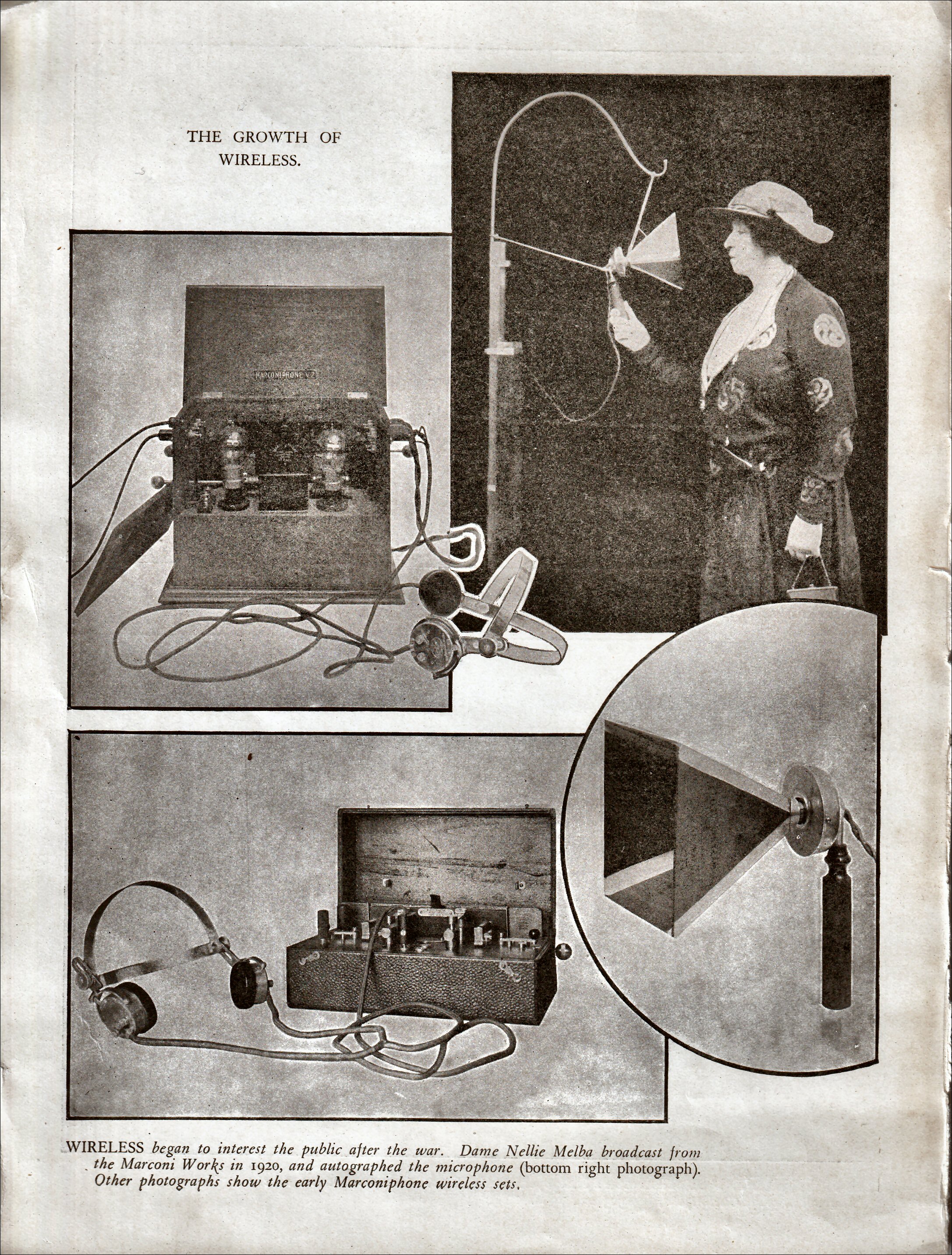 Figure 7. Britain's first advertised live entertainment public broadcast programme June 15, 1920. The Marconiphone V2 receiver shown in this image clearly lacks the regenerator unit that was evident to the right of the tubes in later V2 designs. 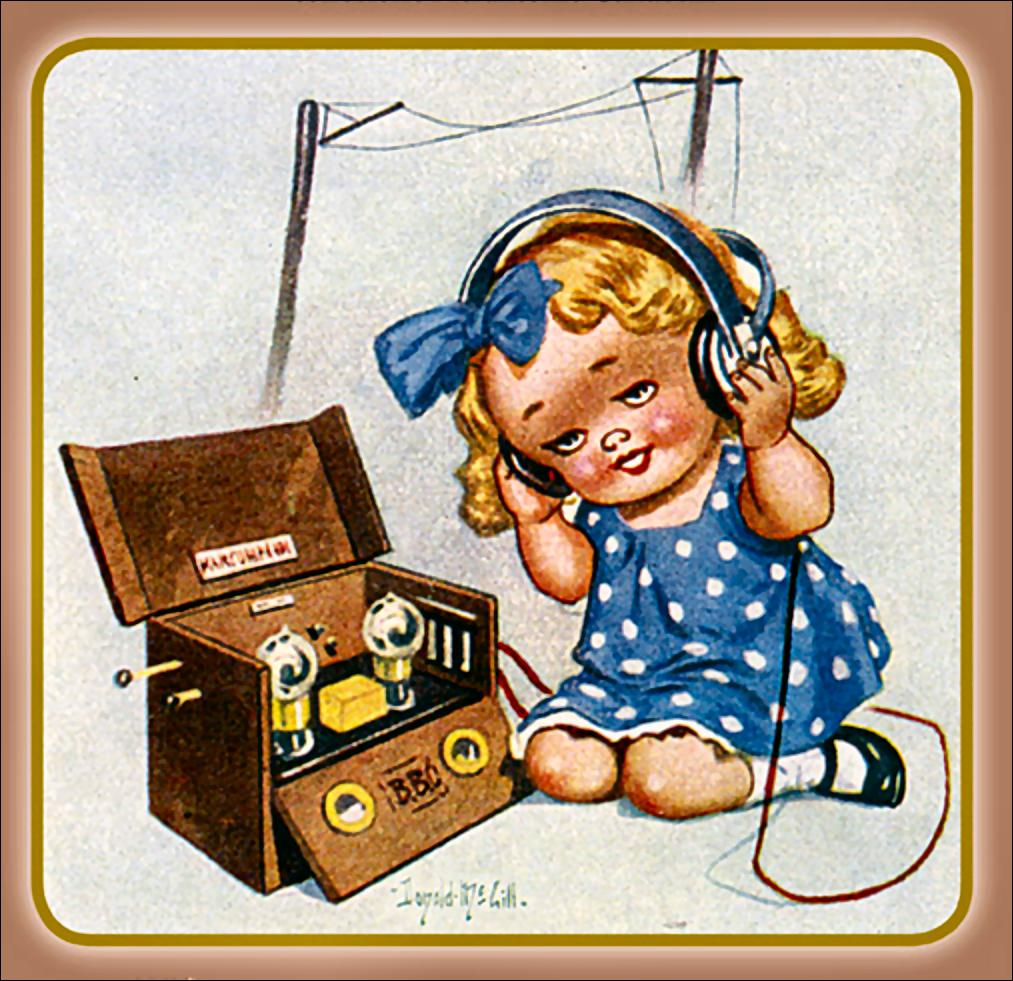 So easy to operate that a child can do it. |
Figure 7. The Marconi Company was persuaded to broadcast the world's first live recital by a professional musician - the legendary Australian diva, Dame Nellie Melba.
This first broadcast was sponsored by the Daily Mail. In a makeshift studio at the Chelmsford "New Street Works" factory, using a microphone created with a telephone mouthpiece and wood from a cigar-box, she opened her recital at 19:10 on 15 June 1920 by singing 'Home Sweet Home', and after other popular favourites and several encores, closed with the National Anthem. Her voice, carried on a 15,000 Watt transmitter from an aerial with 450' high towering masts, was heard from as far as Iran and Newfoundland, and it has been suggested that the signal was received so strongly at the Eiffel Tower in Paris that gramophone records were made. For weeks afterwards congratulatory messages arrived from all over Europe proving the popularity of wireless as a medium of entertainment. More information is available in Bussey's Vintage Crystal Sets. |
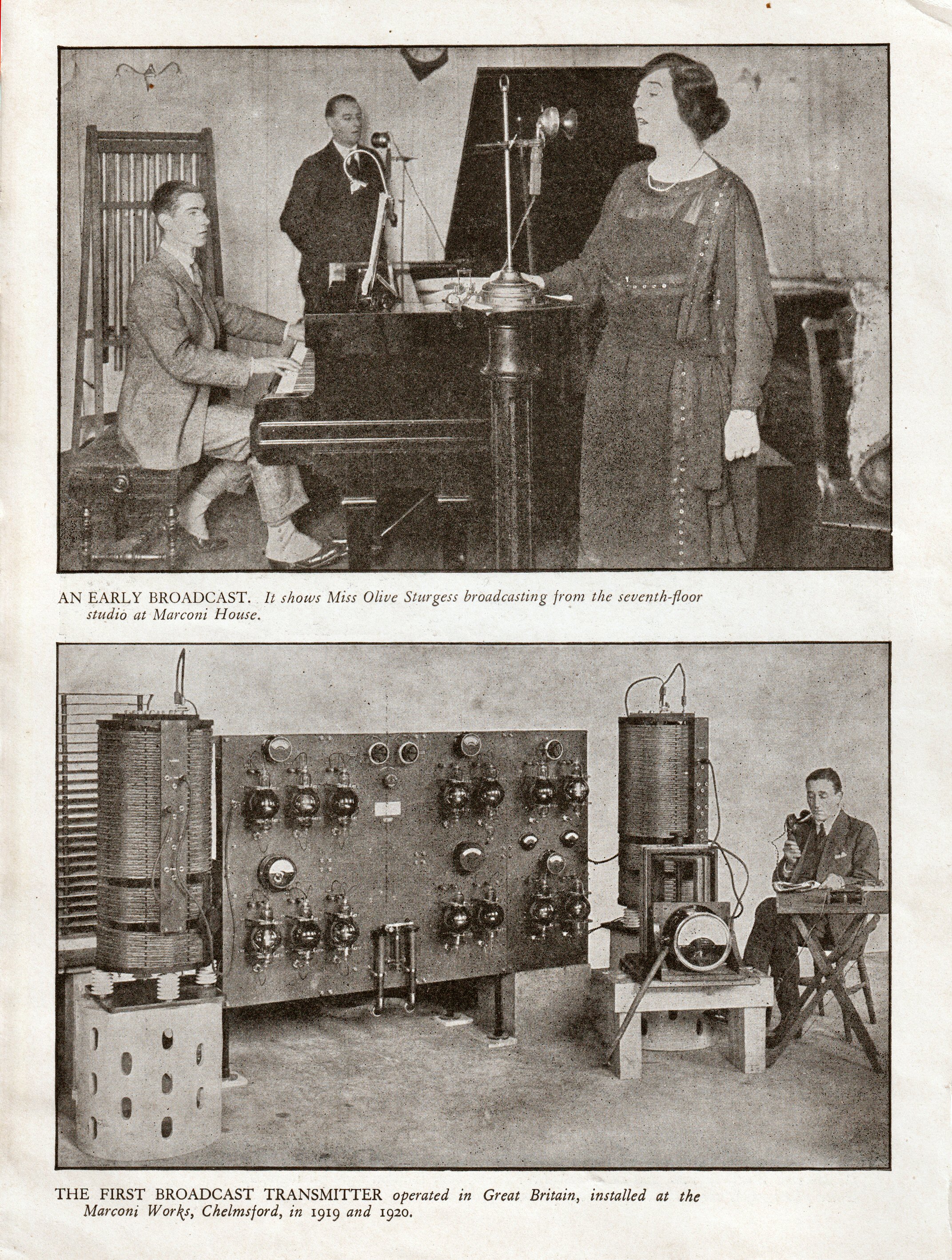 Figure 7C. The First Broadcast Transmitter oerated in Great Britian, Installed in 1919 and 1920. 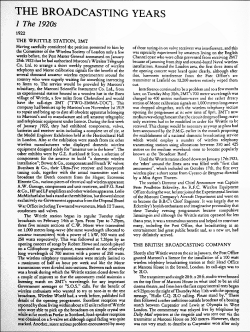 Figure 7D. The Establishment of Britain's First Radio Broadcast Transmitter. |
||||||||||||||||
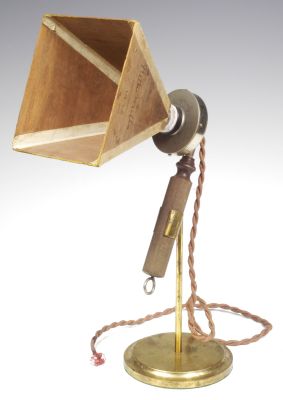 Figure 7A. 'Melba' Telephone Microphone No C100L 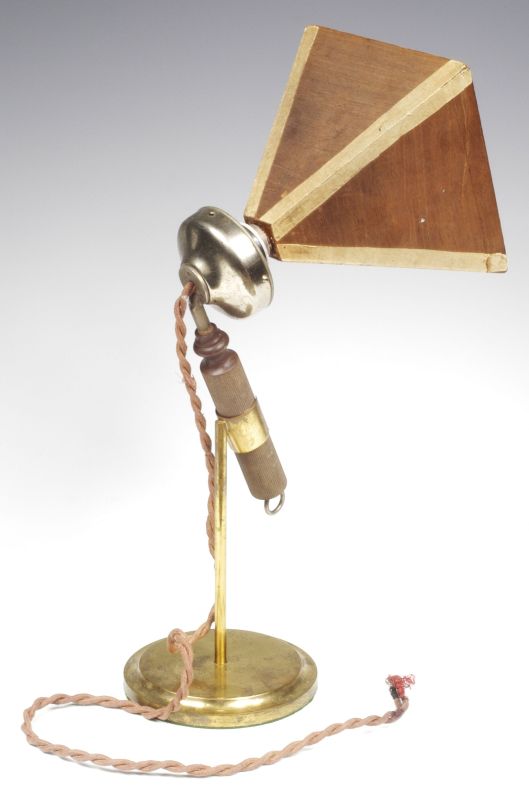 Figure 7B. 'Melba' Telephone Microphone No C100L rear |
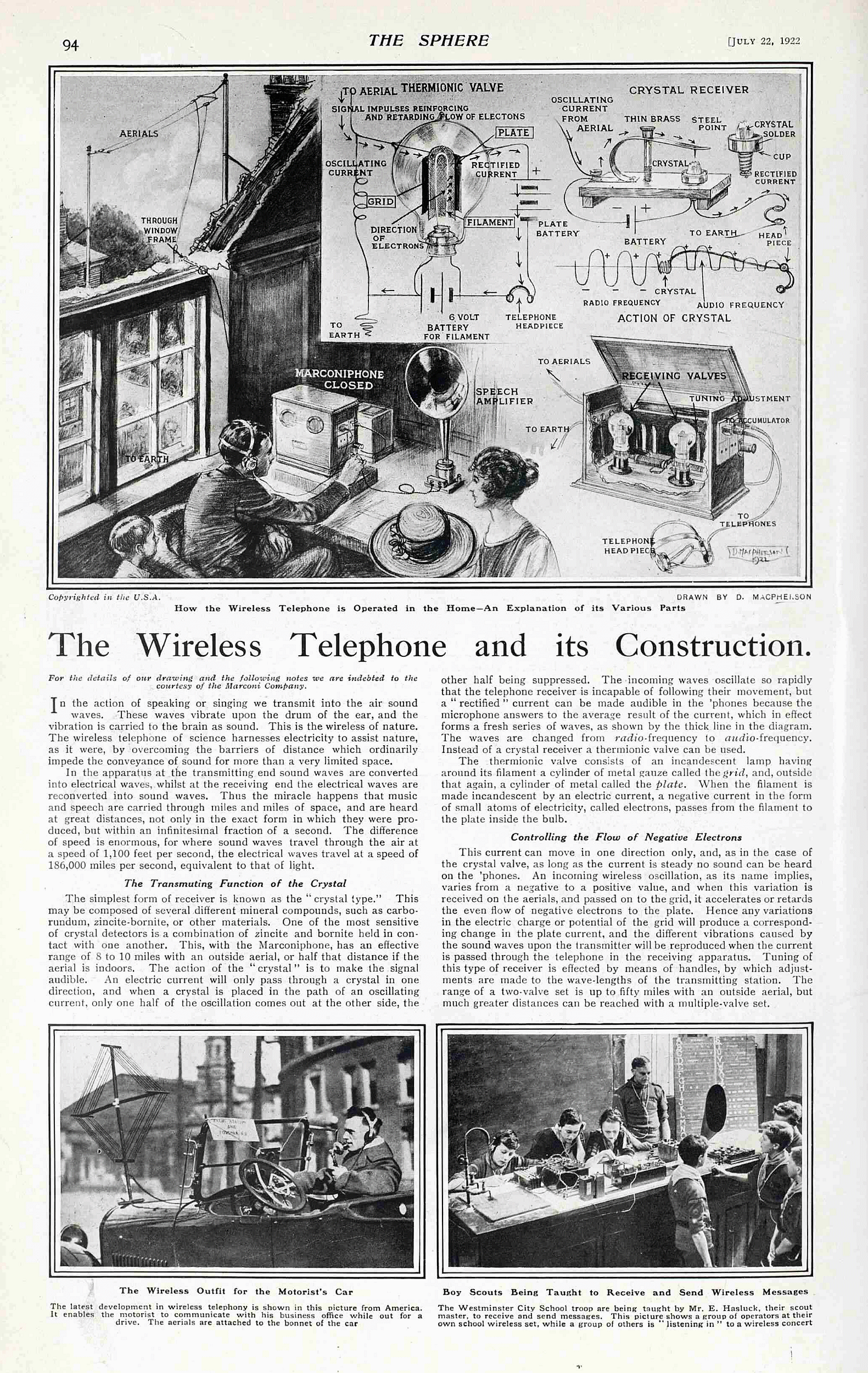 Figure 8. The construction and operation of wireless receivers from The Sphere magazine July 1922 issue. |
|||||||||||||||||
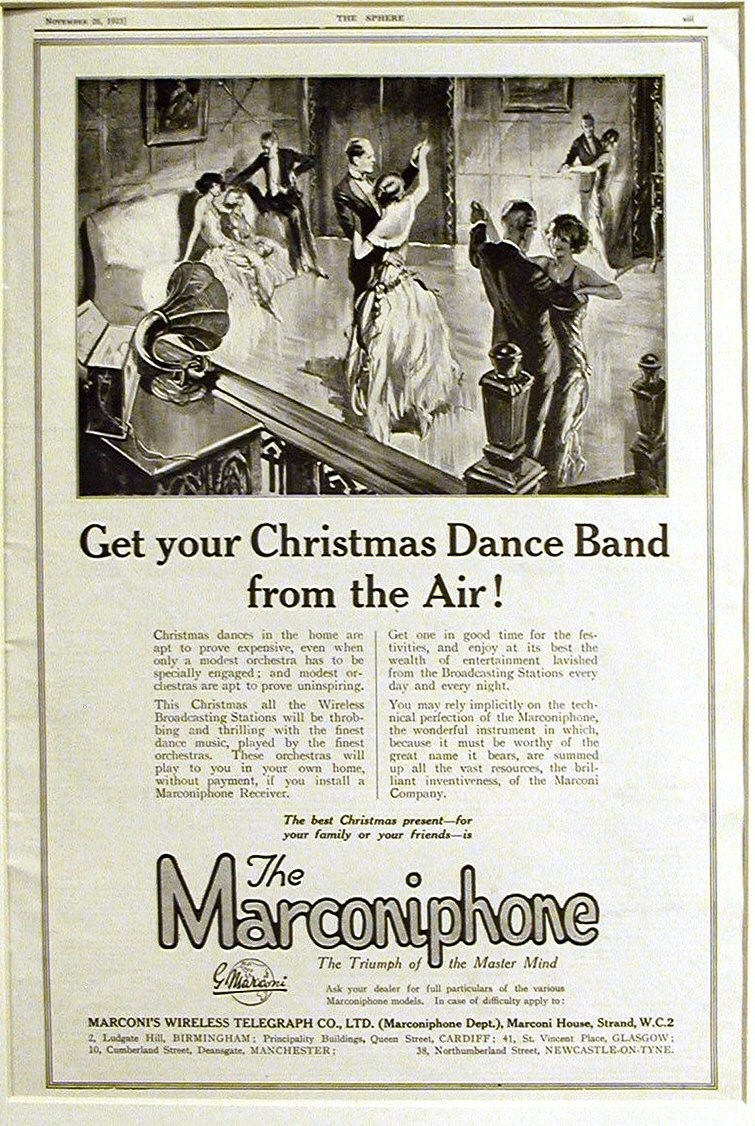 Figure 8. MARCONIPHONE Christmas Advertising 1923. |
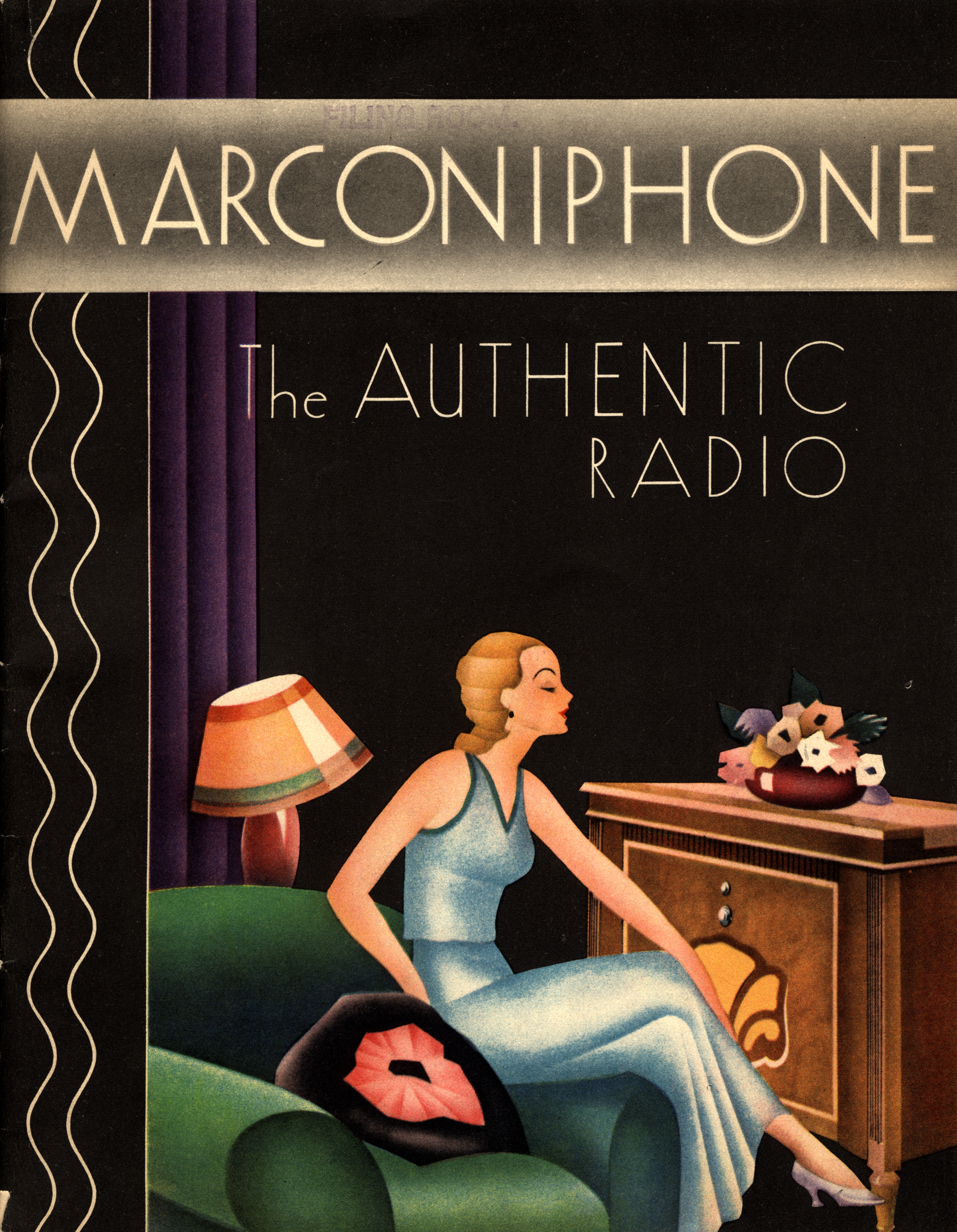 Figure 9. MARCONIPHONE: The Authentic Radio |
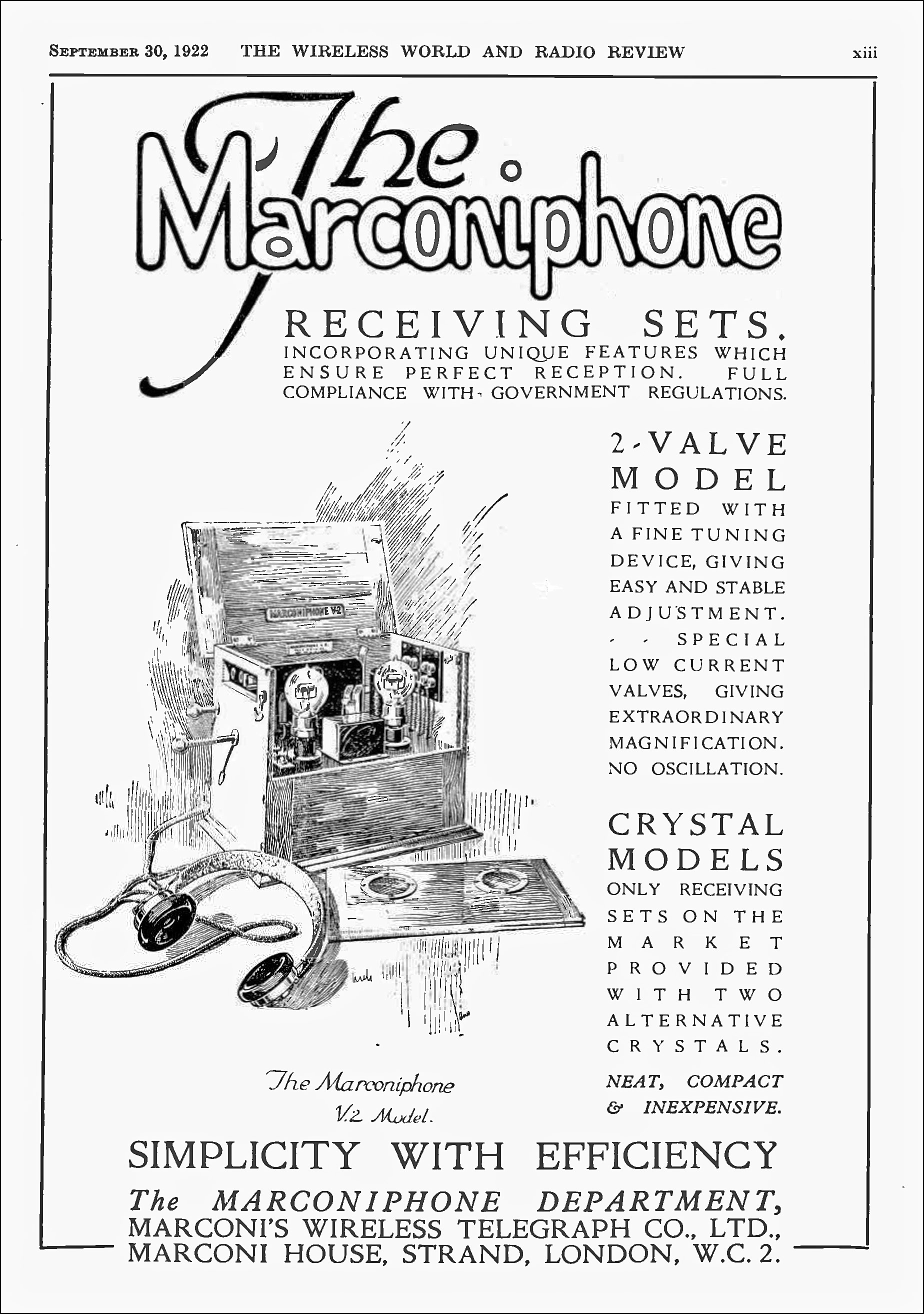 Figure 10. The first Marconiphone V2 advertisement in Wireless World magazine Sept. 30, 1922 issue. |
|
|||||||||||||||
| The British Vintage Society Marconiphone V2 Article part 1 | The British Vintage Society Marconiphone V2 Article part 1 comment | The British Vintage Society Marconiphone V2 Article | The Marconiphone V2 Reflex Receiver | |||||||||||||||
| © Copyright L. Dighera 2007, 2012, 2019; 2021, 2022 All Rights Reserved | ||||||||||||||||||
| Tuesday, 29. November 2022 15:18:25 -0800 | ||||||||||||||||||