Camp Granite
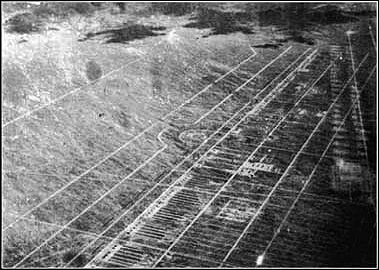
Camp Granite was established in the spring and summer of 1943. The original camp was closer to the highway but, because of flooding, was moved closer to the mountains. The date of this move is unknown. The 90th and 104th Infantry Divisions were both assigned to Camp Granite, at different times. The camp was flooded, and the 90th Division moved to higher ground when they arrived. [John Lynch: E-mail June 16, 1999]
Among the smaller units known to have been stationed at Camp Granite were the 76th Field Artillery Brigade and the 413th Infantry Regiment. The 76th Field Artillery Brigade, in fact, was stationed at Camp Granite prior to the completion of the camp and may have been there to assist in its construction. During the XV Corps occupation of the DTC/CAMA (July-November 1943), the headquarters of the XV Corps' artillery was at Camp Granite.
Facilities constructed at the camp include 40 shower buildings, 157 latrines, 191 pyramidal wooden tent frames, and one 50,000-gallon water tank.
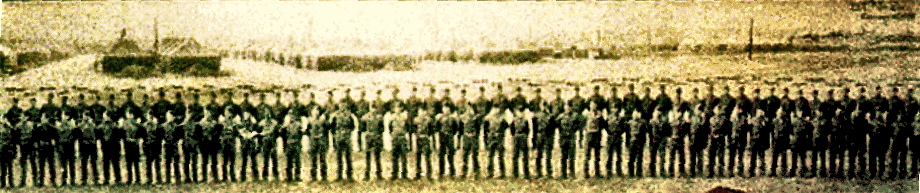
There were a total of nine ranges south of the camp, all of which faced into the Granite Mountains. The ranges were used for artillery, rifle and pistol, regimental, towed target (57- and 105-mm), and antiaircraft (.30-caliber and .50-caliber) weapons.
Location & Condition
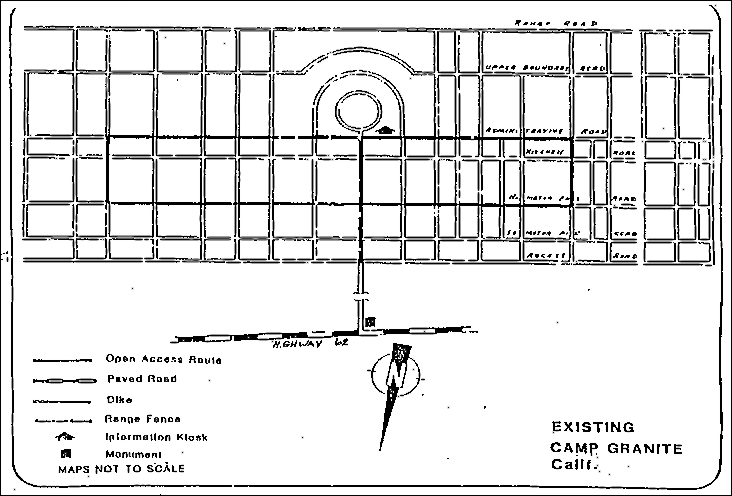
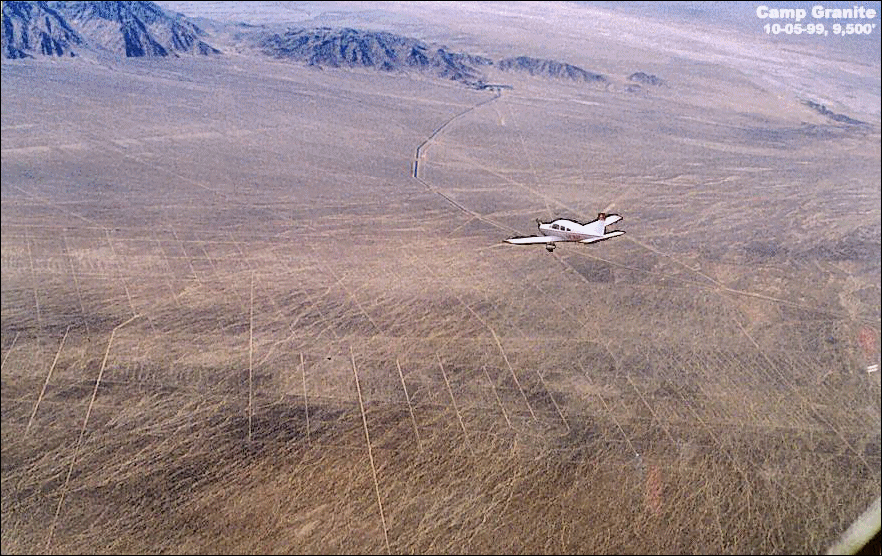
Camp Granite is located south across California Highway 62 from Camp Iron Mountain, near the base of the Granite Mountains. The MWD aqueduct was located northeast of camp and supplied it with water. The camp was located near the Palen Pass area to the south, where several large maneuvers took place.
Current Condition: The remains of numerous rock-lined roadways can still be discerned, as can several rock insignias. Reports of ordnance have been made south of the camp area, indicating the presence of artillery ranges in the vicinity. The majority of the eastern portion of the camp has been washed away. The western portion of the camp, particularly that lying at the foot of the Granite Mountains, is extremely well preserved. Numerous rock-lined walkways can be found in this portion of the camp, as can unit insignias, several of which have been roped off. Access to this portion of the camp is easy, although the road leading from the highway is extremely sandy.
484th Quartermaster Battalion
Freda: A camp, complete with rock-lined walkways and roads and the insignia of the 484th Quartermaster Battalion, exists west of the Freda railroad siding, immediately south of the MWD aqueduct and northwest of Camp Granite. There also appear to be several pieces of water tanks, as well as other miscellaneous metal. The camp is well preserved and should be considered eligible for listing in the NRHP.
Palen Pass
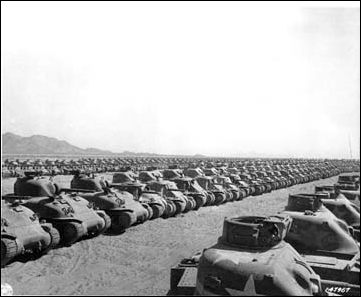
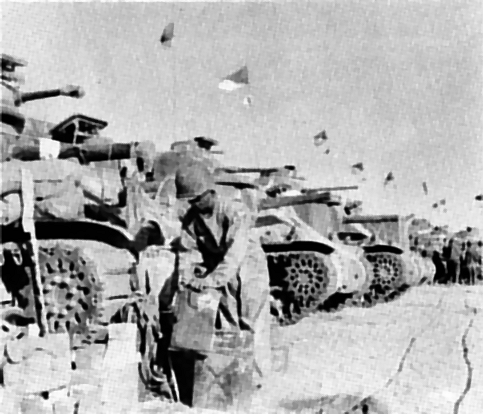
The site of the largest maneuvers during the life of the DTC/C-AMA, Palen Pass received heavy impacts from the army. Fortifications were constructed throughout the pass... Vestiges of maneuvers can also be found in the valley east of the pass.
Perhaps the largest maneuver to take place was the first mock battle of Palen Pass. One of the participants, Sgt. Joe Delgado, recalled:
"First came the airplanes and strafed hell out of it... Then the artillery shells began to cover the ground, next came tanks rumbling into the pass... And just like nothing at all had been going on, this old dusty prospector and his burro... came walking through all that smoke and dust..."
On August 20, 1943, the 85th Division was treated to a tremendous fire power demonstration... The Palen Pass maneuver area was left as is, and only marked with signs (Blake 1987: 30).