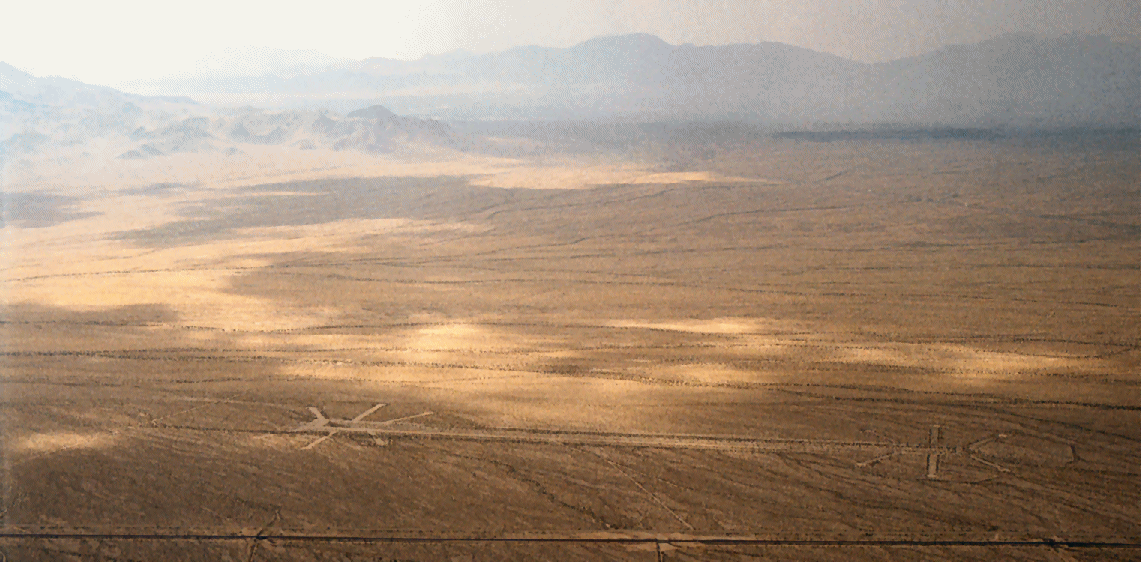
Essex Army Airfield
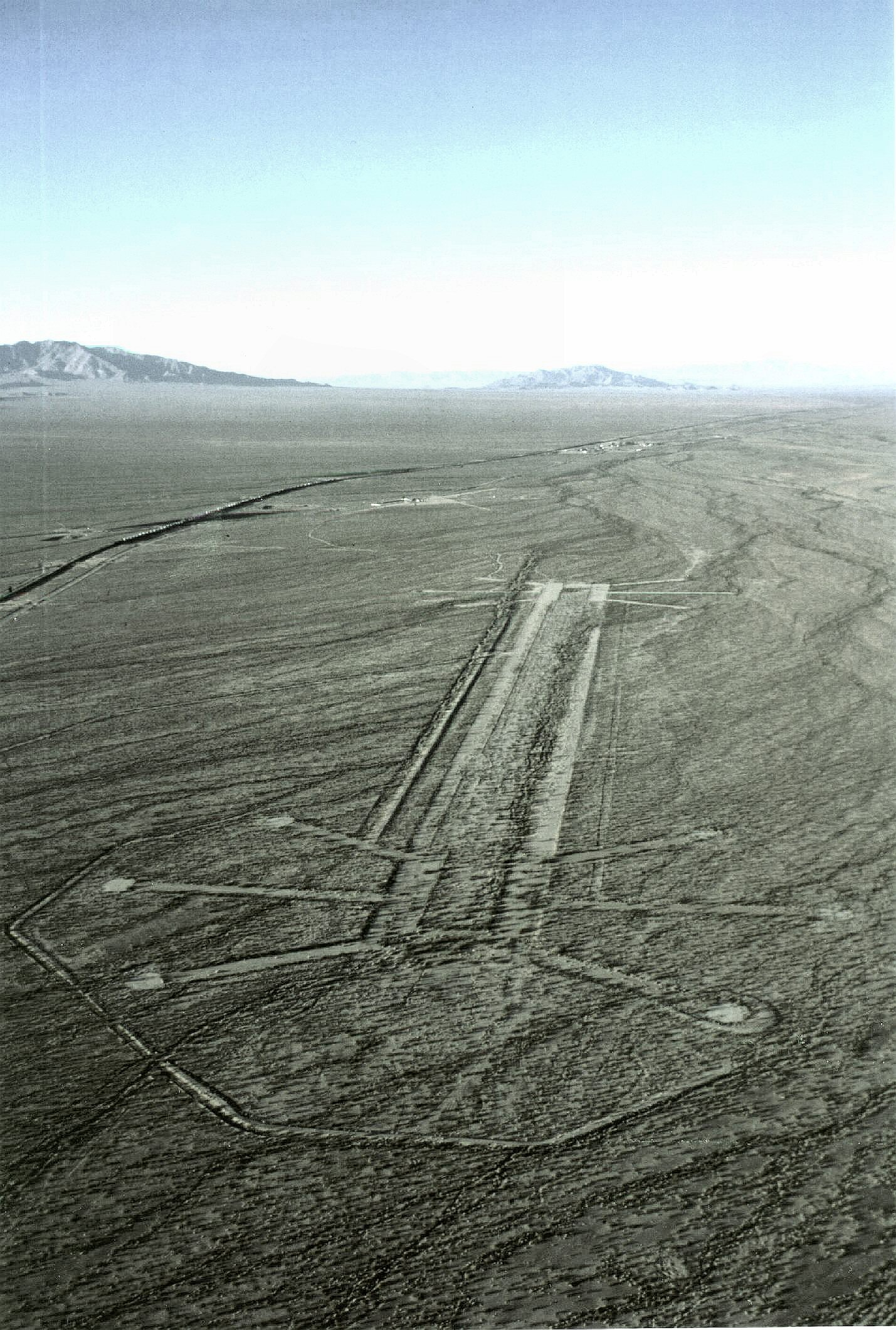
This was a less-permanent field than Rice or Desert Center. Built adjacent to Camp Essex, it included several runways, taxiways, and parking areas on largely natural surface, with some taxiways stabilized by a sand-and-cement mix; the main runway measured 4,000 by 150 feet.[2]
Although obscured by vegetation today, the field still retains a high degree of integrity and stands as one of the best examples of a temporary DTC/C-AMA air facility.[2]
At the height of DTC/C-AMA operations, when total personnel reached 190,000, only 4,000 of these troops were from the Army Air Forces. Beginning on December 1, 1943, all air units and installations in the DTC/C-AMA were taken over by the commanding general of the Army Air Forces. The III Tactical Air Division, which had been overseeing the air operations, came under the control of the Third Air Force. From the AGF's perspective, this was not a welcome change. The army felt that the headquarters of the DTC/C-AMA must command the entire facility, including all air activities; if not, a great deal of realism would be lost. According to some, air support became almost nonexistent by 1944 (Meller 1946:43).
By August 1944, after the DTC/C-AMA closure, most of the airfields were assigned to March Field as sub-bases, and the number of personnel stationed at them decreased (U.S. Air Force Historical Division n.d.b:1-2).
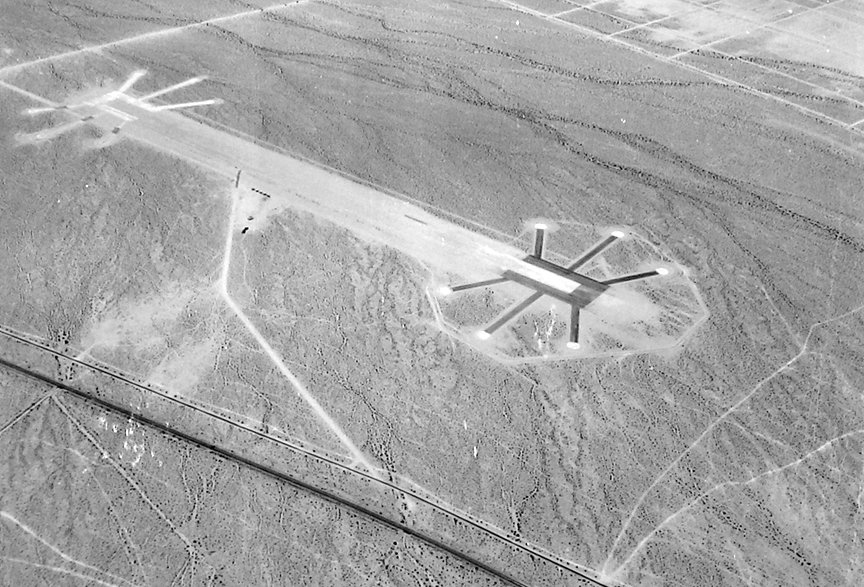
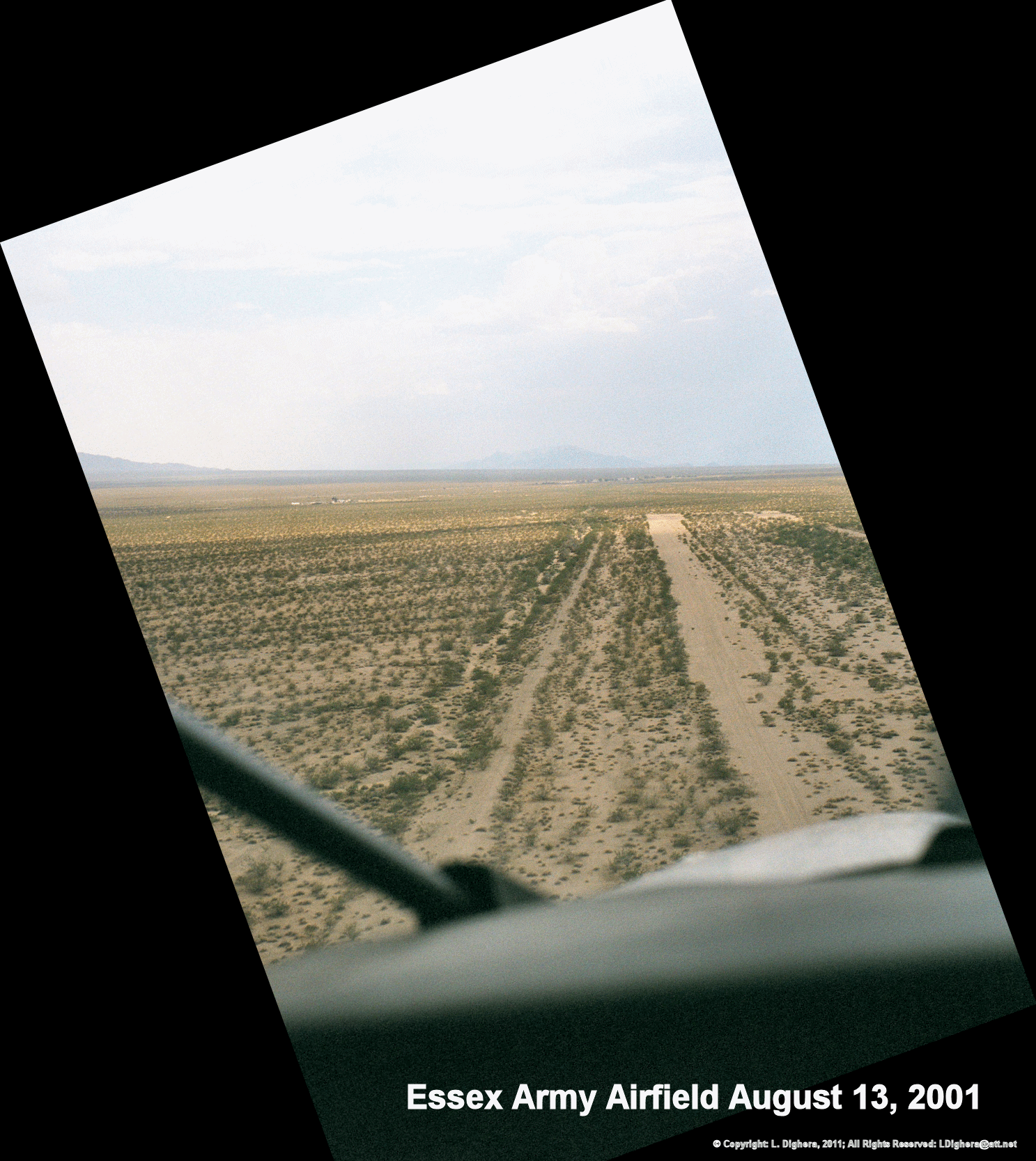
The air strip associated with Camp Essex and the tie-down area are still in good condition. However, fuel cans and the remains of lighting equipment still litter the area.
Map reference: The Essex Army Airfield location can be examined on Google Maps here: Essex Army Airfield map location.
Camp Essex
Camp Essex is located in an undeveloped region of San Bernardino County, California, approximately 32 miles west of Needles, California.
HISTORY
Within the organization of the Desert Training Center, the Camp Essex site was established as one of the several divisional camps. Therefore, on 13 December 1943, the U.S. Department of the Interior transferred, by means of a use permit, 21,537.78 acres to the War Department in lieu of a formal real estate directive. An additional 8,998.72 acres was granted by permit. The camp was established during 1942 and subsequently occupied by the 93rd Infantry Division among others. Camp Clipper, a temporary camp, was located adjacent to and west of the encampment area on the site formally acquired for Camp Essex. Camp Clipper was occupied by the 33rd Infantry Division before Camp Essex was prepared.
Temporary improvements constructed at Camp Essex consisted of 24 enlisted men's shower buildings, 12 officers' shower buildings, 191 latrines, 149 pyramidal tent frames, an outdoor theater, two 740-foot-deep wells, and a 50,000 gallon
water storage tank. In addition, 14 firing ranges were located on the abandoned Camp Clipper encampment area. The only permanent structure constructed on the site was a 500,000 gallon concrete reservoir.
Camp Essex was declared surplus on 16 March 1944. On 7 February 1945, 21,537.78 acres were relinquished back to the U.S. Department of the Interior. On 1 June 1949, this acreage was formally retransferred to the Department of the Interior.
TODAY
According to a BLM report, 14 firing range areas are located within the boundaries of the camp. No incident reports have been handled for the area, however, local residents have found unexploded mortars several miles to the southeast of the site, in an uninhabited area that may have been one of the firing ranges associated with Camp Essex.
The infrastructure of the camp is difficult to identify and most of the area has been obscured by desert vegetation and surface erosion. The roads within the camp are sandy and at several points have been overgrown by vegetation. Few of the major access roads into the camp area are visible and most are impassable except by 4-wheel drive vehicles. The rock work which outlined roads and trails is in varying degrees of deterioration. In most areas, the rock work is barely visible.
The air strip associated with Camp Essex and the tie-down area are still in good condition. However, fuel cans and the remains of lighting equipment still litter the area. The only permanent structure reportedly on the site was a 500,000 gallon concrete reservoir located south of Division Headquarters.
The BLM manages the majority of the land within the camp area. The northern portion of the camp is primarily owned by the Southern Pacific Land Company and the State of California. In the southeast portion of the camp site in the vicinity of the air strip, is partially owned by private parties. The entire site is currently undeveloped.
SITE VISIT
The site was visited on 19 October 1993. The Postmaster for Essex provided relevant information about site conditions and the mortars that were found to the southeast of the site.
AVAILABLE STUDIES AND REPORTS
Real estate documents, aerial photographs, and other information was obtained at the Needles Branch of San Bernardino County Public Library. Extensive personal interviews were conducted with Mr. John Lynch of the Council on America's
Military Past and local townspeople. Other reports includes "Iron Mountain Divisional Camp, Resource Management Plan" by the U.S. Department of the Interior, Bureau of Land Management, 1984; Desert Training Center, California-Arizona Maneuver Area, Interpretive Plan", by U.S. Department of the Interior, Bureau of Land Management, 1986; "Patton's Desert Training Center" by Lynch, Kennedy and Wooley, Council on America's Military Past, 1982; and "The Desert Training Center and C-AMA, Study No. 15", by Sgt. Sidney L. Meller, Historical Section--Army Ground Forces, 1946.